Zmorzynski Szymon, Szudy-Szczyrek Aneta, Popek-Marciniec Sylwia, Korszen-Pilecka Iwona, Wojcierowska-Litwin Magdalena, Luterek Małgorzata, Chocholska Sylwia, Styk Wojciech, Swiderska-Kołacz Grazyna, Januszewska Joanna, Mielnik Michal, Hus Marek, Filip Agata A
Department of Cancer Genetics with Cytogenetic Laboratory, Medical University of Lublin, Lublin, Poland.
Chair and Department of Hematooncology and Bone Marrow Transplantation, Medical University of Lublin, Lublin, Poland.
Front Oncol. 2019 Feb 6;9:44. doi: 10.3389/fonc.2019.00044. eCollection 2019.
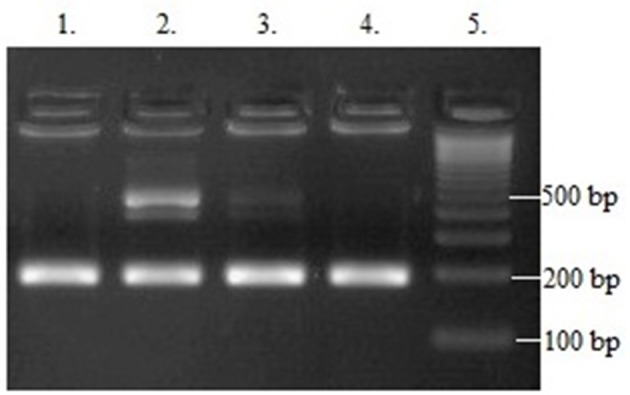
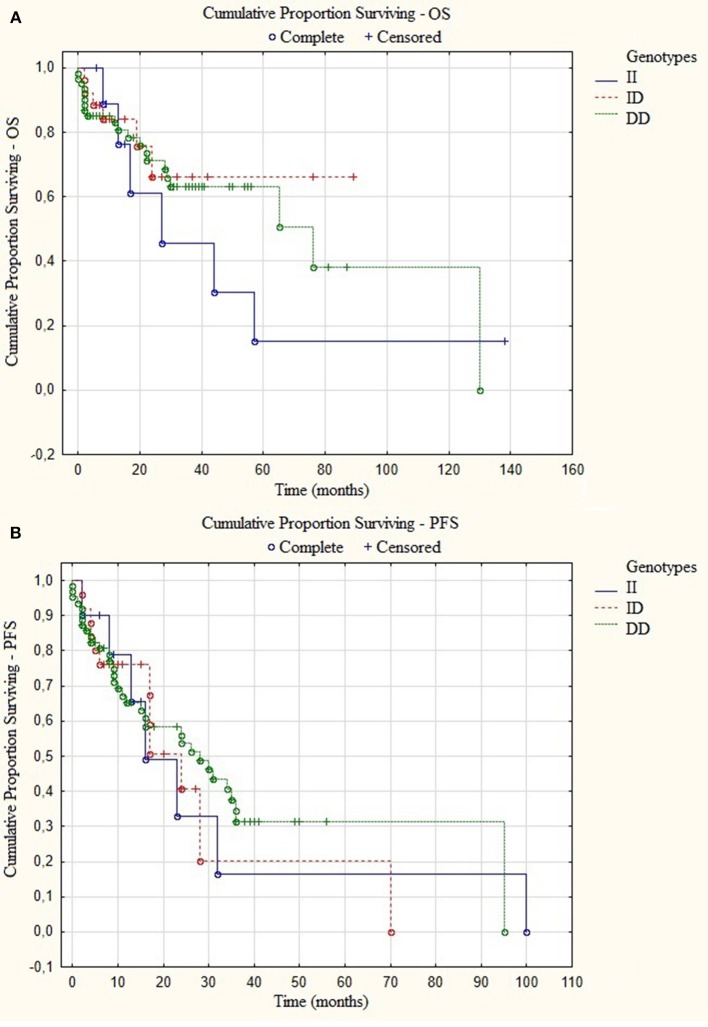
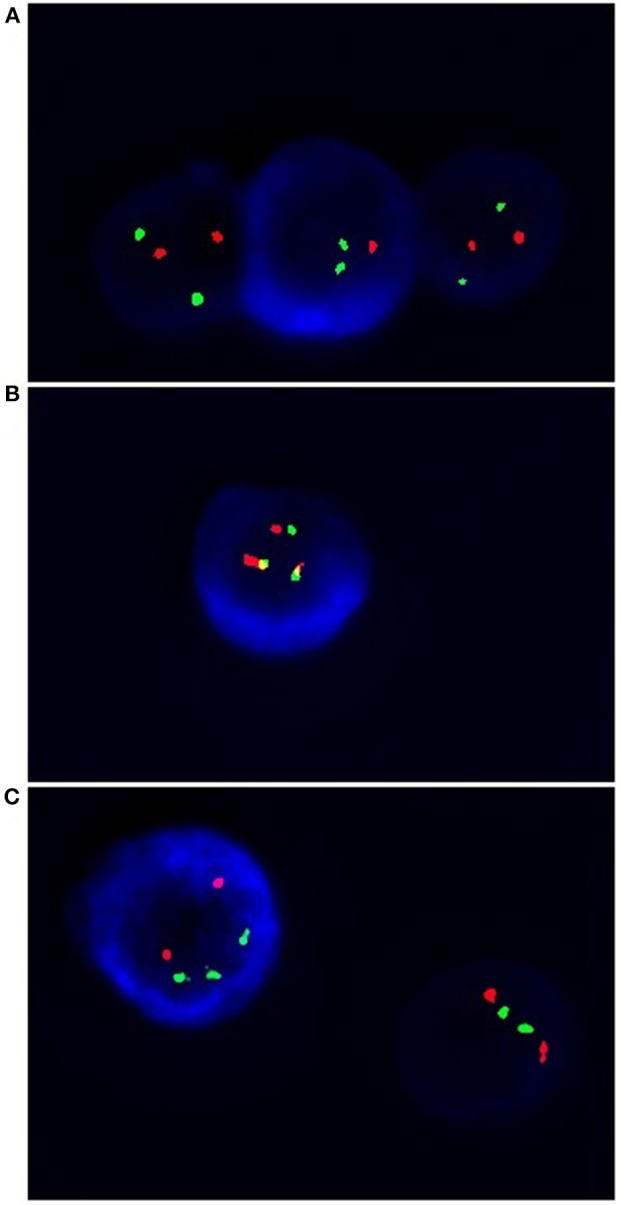
The insertion (I allele) deletion (D allele) polymorphism of gene (rs4646994) may influence the etiopathogenesis of multiple myeloma (MM). gene is expressed in bone marrow cells and encodes angiotensin converting enzyme (ACE). It converts angiotensin I to active peptide angiotensin II, which stimulates proliferation of hematopoietic stem cells. This suggests possible association of I/D gene polymorphism with MM. The aim of our study was to check possible impact of this polymorphism on risk of development and outcome of MM, as well as, sensitivity to bortezomib in cell cultures derived from MM patients. Genomic DNA from 98 newly diagnosed MM patients and 100 healthy blood donors were analyzed by PCR method. Chromosomal aberrations were detected by use of cIg-FISH. In a subgroup of 40 MM patients nucleated bone marrow cells were treated with bortezomib . The Hardy-Weinberg equilibrium test showed that genotypic frequencies diverged significantly from the equilibrium. The differences between I and D allele frequencies in control and study population were significant ( = 0.046). We observed the association between DD genotype and more than 2-fold risk of MM - OR = 2.69; < 0.0001. We did not detect any significant differences among studied genotypes regarding clinical and laboratory parameters. Moreover, we did not observe the association between survival of MM patients and I/D genotypes. Bortezomib increased number of apoptotic and necrotic cells, but the only statistically significant differences were observed in the number of viable cells at 1 nM between ID and DD genotypes ( = 0.026). Presented results confirmed the significant relationship between (I/D) polymorphism and risk of MM development. We did not observe the association of I/D polymorphism with disease outcome and bortezomib sensitivity.
基因(rs4646994)的插入(I等位基因)/缺失(D等位基因)多态性可能影响多发性骨髓瘤(MM)的发病机制。该基因在骨髓细胞中表达,编码血管紧张素转换酶(ACE)。它将血管紧张素I转化为活性肽血管紧张素II,后者刺激造血干细胞增殖。这表明I/D基因多态性可能与MM相关。我们研究的目的是检验这种多态性对MM发生风险和预后的可能影响,以及对来自MM患者的细胞培养物中硼替佐米敏感性的影响。采用聚合酶链反应(PCR)方法分析了98例新诊断MM患者和100例健康献血者的基因组DNA。使用cIg-FISH检测染色体畸变。在40例MM患者的亚组中,用硼替佐米处理有核骨髓细胞。哈迪-温伯格平衡检验表明基因型频率与平衡有显著差异。对照组和研究人群中I和D等位基因频率的差异具有显著性(P = 0.046)。我们观察到DD基因型与MM风险增加2倍以上相关——比值比(OR)= 2.69;P < 0.0001。在临床和实验室参数方面,我们未检测到研究基因型之间有任何显著差异。此外,我们未观察到MM患者生存率与I/D基因型之间的关联。硼替佐米增加了凋亡和坏死细胞的数量,但仅在1 nM时ID和DD基因型之间活细胞数量上观察到有统计学意义的差异(P = 0.026)。呈现的结果证实了(I/D)多态性与MM发生风险之间存在显著关系。我们未观察到I/D多态性与疾病预后和硼替佐米敏感性之间的关联。