State Key Laboratory of Cell Biology, CAS Center for Excellence in Molecular Cell Science, Innovation Center for Cell Signaling Network, Shanghai Institute of Biochemistry and Cell Biology, Chinese Academy of Sciences, University of Chinese Academy of Sciences, Shanghai, China.
Institute for Cardiovascular Regeneration, Goethe-University Hospital, Frankfurt, Germany.
PLoS Genet. 2019 Feb 21;15(2):e1007977. doi: 10.1371/journal.pgen.1007977. eCollection 2019 Feb.
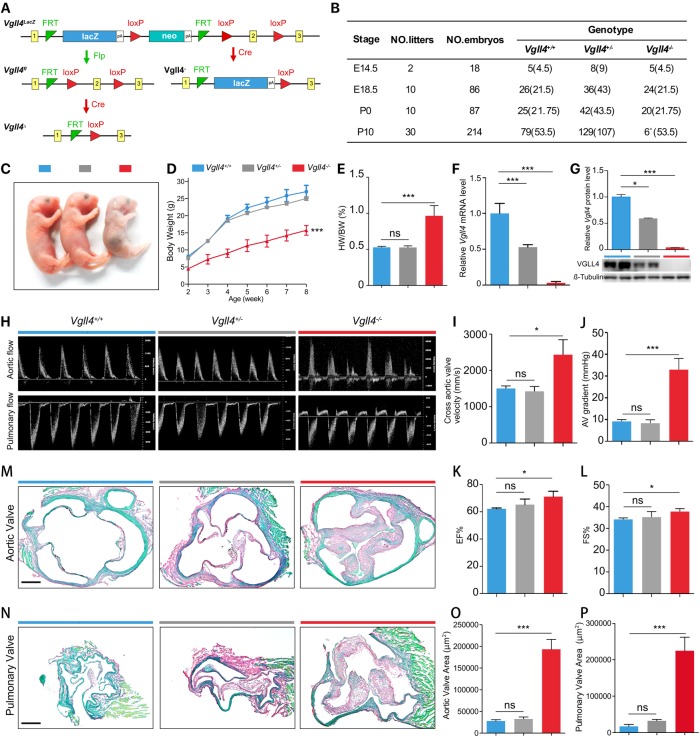
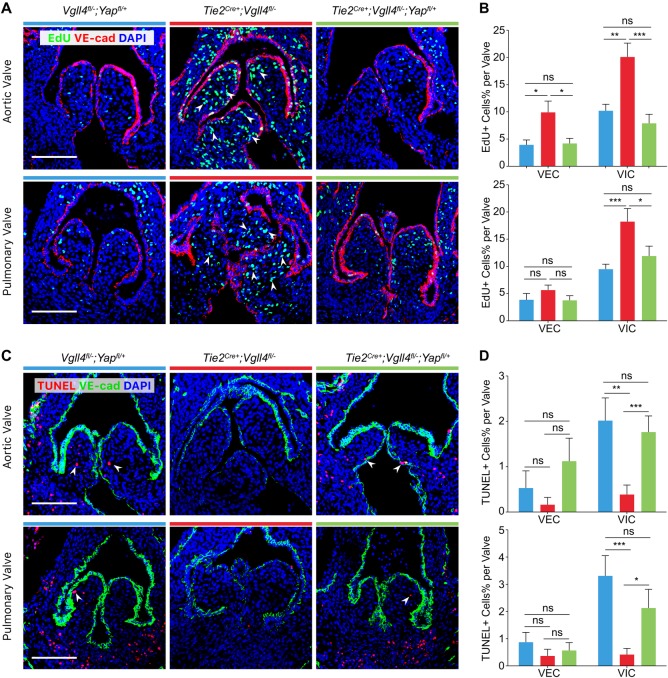
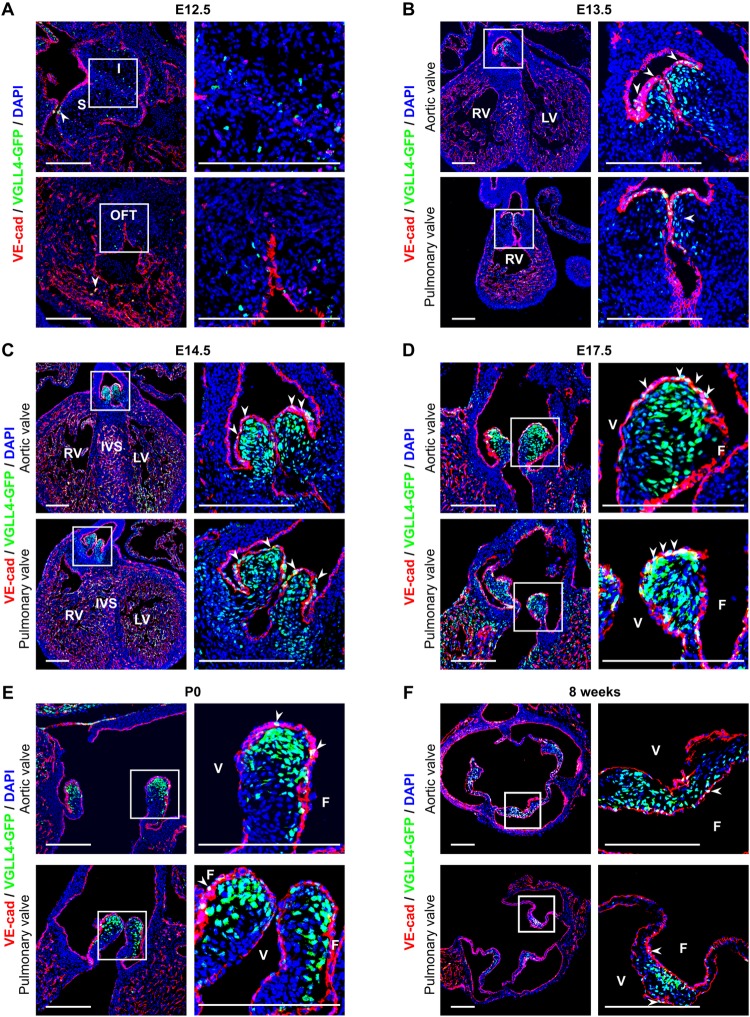
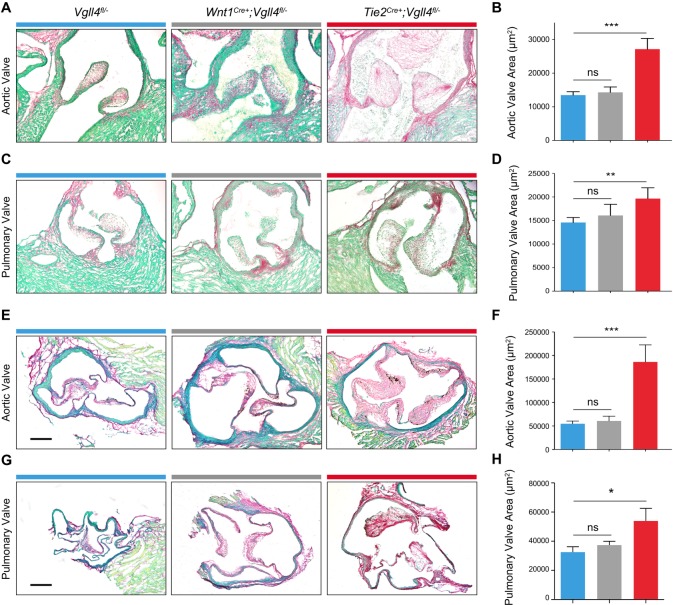
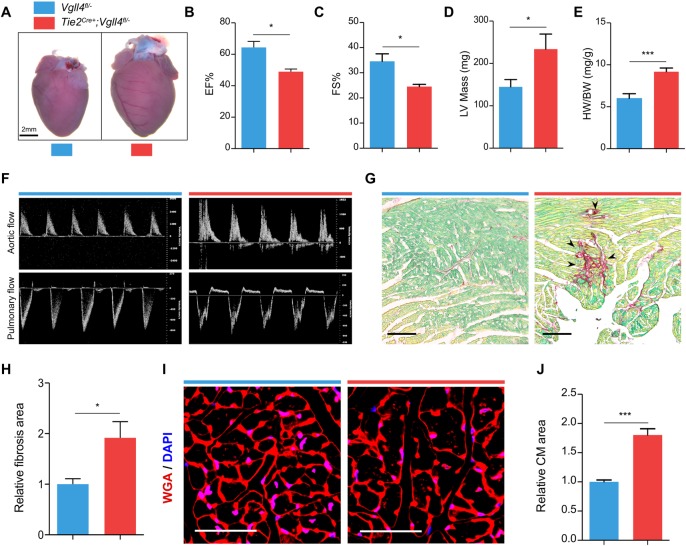
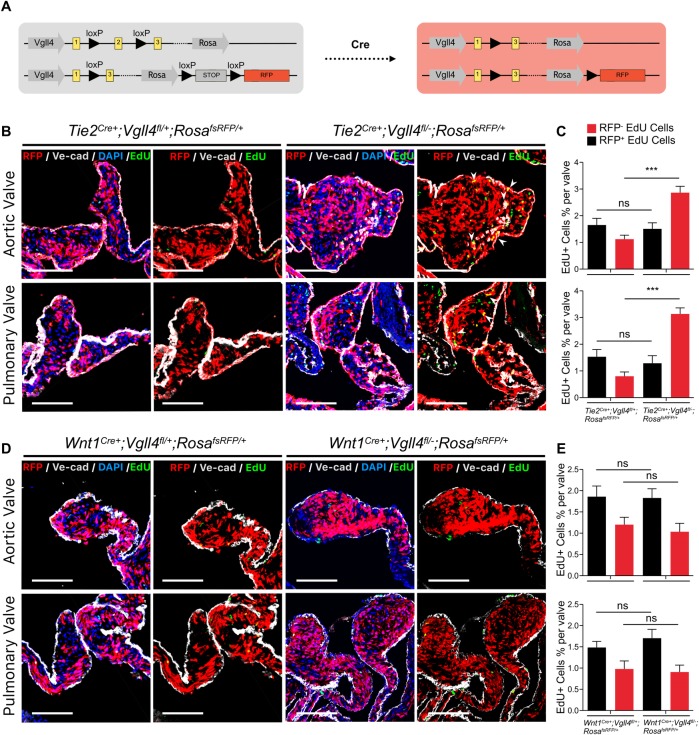
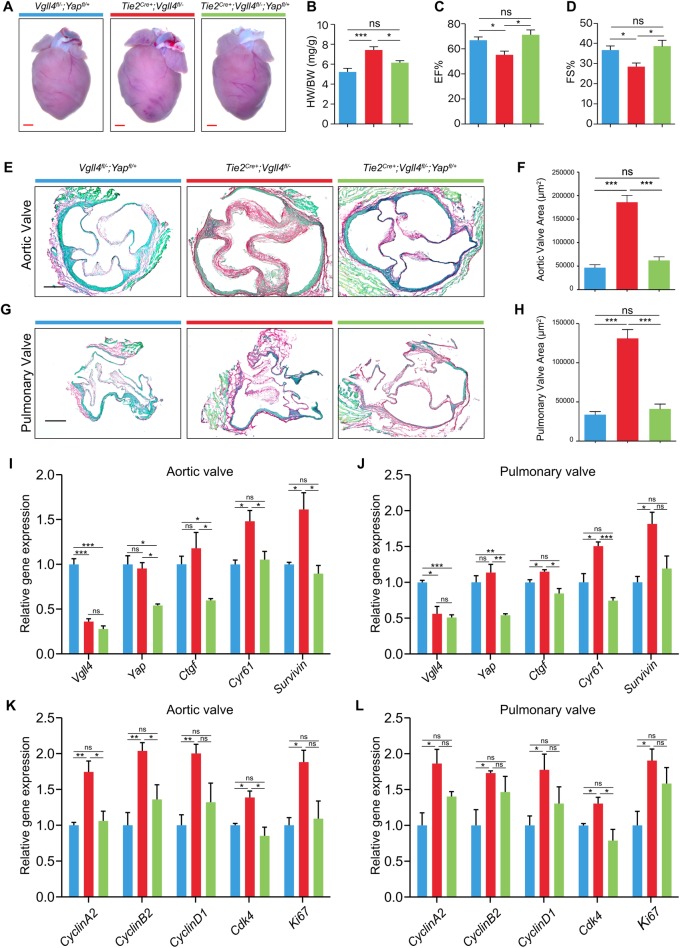
Heart valve disease is a major clinical problem worldwide. Cardiac valve development and homeostasis need to be precisely controlled. Hippo signaling is essential for organ development and tissue homeostasis, while its role in valve formation and morphology maintenance remains unknown. VGLL4 is a transcription cofactor in vertebrates and we found it was mainly expressed in valve interstitial cells at the post-EMT stage and was maintained till the adult stage. Tissue specific knockout of VGLL4 in different cell lineages revealed that only loss of VGLL4 in endothelial cell lineage led to valve malformation with expanded expression of YAP targets. We further semi-knockout YAP in VGLL4 ablated hearts, and found hyper proliferation of arterial valve interstitial cells was significantly constrained. These findings suggest that VGLL4 is important for valve development and manipulation of Hippo components would be a potential therapy for preventing the progression of congenital valve disease.
心脏瓣膜疾病是全球范围内的一个主要临床问题。心脏瓣膜的发育和稳态需要精确控制。Hippo 信号通路对于器官发育和组织稳态至关重要,但其在瓣膜形成和形态维持中的作用尚不清楚。VGLL4 是脊椎动物中的转录共激活因子,我们发现它主要在 EMT 后阶段的瓣膜间质细胞中表达,并维持到成年期。在不同细胞谱系中组织特异性敲除 VGLL4 表明,只有内皮细胞谱系中 VGLL4 的缺失会导致瓣膜畸形,同时 YAP 靶基因的表达扩大。我们进一步在 VGLL4 缺失的心脏中半敲除 YAP,发现动脉瓣膜间质细胞的过度增殖受到显著抑制。这些发现表明,VGLL4 对于瓣膜发育很重要,操纵 Hippo 成分可能是预防先天性瓣膜疾病进展的一种潜在治疗方法。