Correale Jorge, Marrodan Mariano, Ysrraelit María Célica
Department of Neurology, FLENI, Buenos Aires 1428, Argentina.
Biomedicines. 2019 Feb 20;7(1):14. doi: 10.3390/biomedicines7010014.
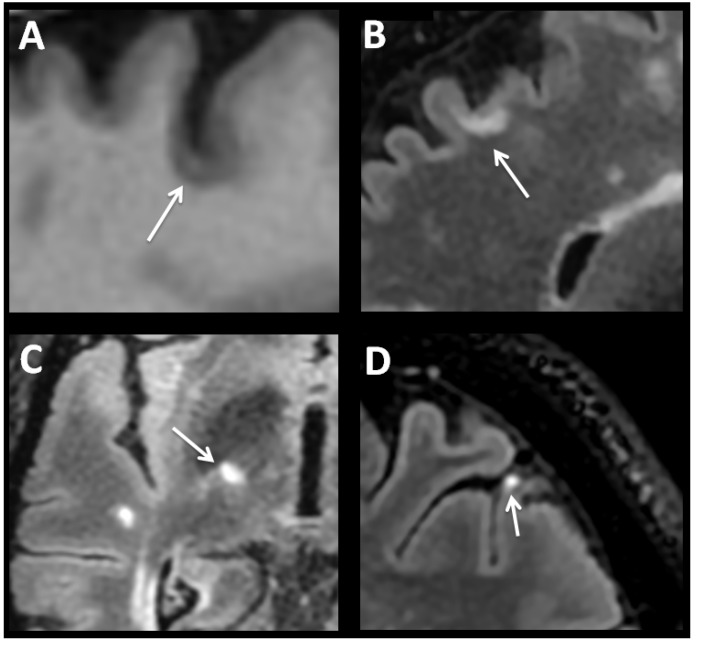
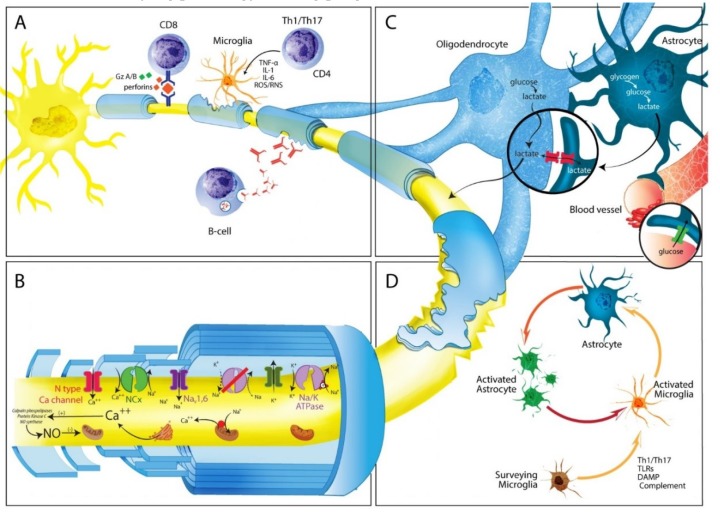
Multiple Sclerosis (MS) is a major cause of neurological disability, which increases predominantly during disease progression as a result of cortical and grey matter structures involvement. The gradual accumulation of disability characteristic of the disease seems to also result from a different set of mechanisms, including in particular immune reactions confined to the Central Nervous System such as: (a) B-cell dysregulation, (b) CD8⁺ T cells causing demyelination or axonal/neuronal damage, and (c) microglial cell activation associated with neuritic transection found in cortical demyelinating lesions. Other potential drivers of neurodegeneration are generation of oxygen and nitrogen reactive species, and mitochondrial damage, inducing impaired energy production, and intra-axonal accumulation of Ca, which in turn activates a variety of catabolic enzymes ultimately leading to progressive proteolytic degradation of cytoskeleton proteins. Loss of axon energy provided by oligodendrocytes determines further axonal degeneration and neuronal loss. Clearly, these different mechanisms are not mutually exclusive and could act in combination. Given the multifactorial pathophysiology of progressive MS, many potential therapeutic targets could be investigated in the future. This remains however, an objective that has yet to be undertaken.
多发性硬化症(MS)是导致神经功能残疾的主要原因,在疾病进展过程中,由于皮质和灰质结构受累,神经功能残疾主要呈上升趋势。该疾病特有的残疾逐渐累积似乎也源于一系列不同的机制,尤其包括局限于中枢神经系统的免疫反应,例如:(a)B细胞失调;(b)导致脱髓鞘或轴突/神经元损伤的CD8⁺T细胞;以及(c)与皮质脱髓鞘病变中发现的神经突横断相关的小胶质细胞激活。神经退行性变的其他潜在驱动因素包括氧和氮反应性物质的产生以及线粒体损伤,这会导致能量产生受损以及轴突内钙的积累,进而激活多种分解代谢酶,最终导致细胞骨架蛋白的渐进性蛋白水解降解。少突胶质细胞提供的轴突能量丧失决定了进一步的轴突变性和神经元丢失。显然,这些不同的机制并非相互排斥,可能会共同起作用。鉴于进行性MS的多因素病理生理学,未来可以研究许多潜在的治疗靶点。然而,这仍然是一个尚未开展的目标。