• 文献检索
  • 文档翻译
  • 深度研究
  • 学术资讯
  • Suppr Zotero 插件Zotero 插件
  • 邀请有礼
  • 套餐&价格
  • 历史记录
应用&插件
Suppr Zotero 插件Zotero 插件浏览器插件Mac 客户端Windows 客户端微信小程序
定价
高级版会员购买积分包购买API积分包
服务
文献检索文档翻译深度研究API 文档MCP 服务
关于我们
关于 Suppr公司介绍联系我们用户协议隐私条款
关注我们

Suppr 超能文献

核心技术专利:CN118964589B侵权必究
粤ICP备2023148730 号-1Suppr @ 2026

文献检索

告别复杂PubMed语法,用中文像聊天一样搜索,搜遍4000万医学文献。AI智能推荐,让科研检索更轻松。

立即免费搜索

文件翻译

保留排版,准确专业,支持PDF/Word/PPT等文件格式,支持 12+语言互译。

免费翻译文档

深度研究

AI帮你快速写综述,25分钟生成高质量综述,智能提取关键信息,辅助科研写作。

立即免费体验

可穿戴传感器在孕期健康与环境监测中的应用:患者与医护人员视角的描述性结果

Use of wearable sensors for pregnancy health and environmental monitoring: Descriptive findings from the perspective of patients and providers.

作者信息

Runkle Jennifer, Sugg Maggie, Boase Danielle, Galvin Shelley L, C Coulson Carol

机构信息

North Carolina Institute for Climate Studies, North Carolina State University, USA.

Department of Geography and Planning, Appalachian State University, USA.

出版信息

Digit Health. 2019 Feb 6;5:2055207619828220. doi: 10.1177/2055207619828220. eCollection 2019 Jan-Dec.

DOI:10.1177/2055207619828220
PMID:30792878
原文链接:https://pmc.ncbi.nlm.nih.gov/articles/PMC6376550/
Abstract

BACKGROUND

Wearable sensors and other smart technology may be especially beneficial in providing remote monitoring of sub-clinical changes in pregnancy health status. Yet, limited research has examined perceptions among pregnant patients and providers in incorporating smart technology into their daily routine and clinical practice.

OBJECTIVE

The purpose of this study was to examine the perceptions of pregnant women and their providers at a rural health clinic on the use of wearable technology to monitor health and environmental exposures during pregnancy.

METHODS

An anonymous 21-item e-survey was administered to family medicine or obstetrics and gynecology (=28) providers at a rural health clinic; while a 21-item paper survey was administered to pregnant women (=103) attending the clinic for prenatal care.

RESULTS

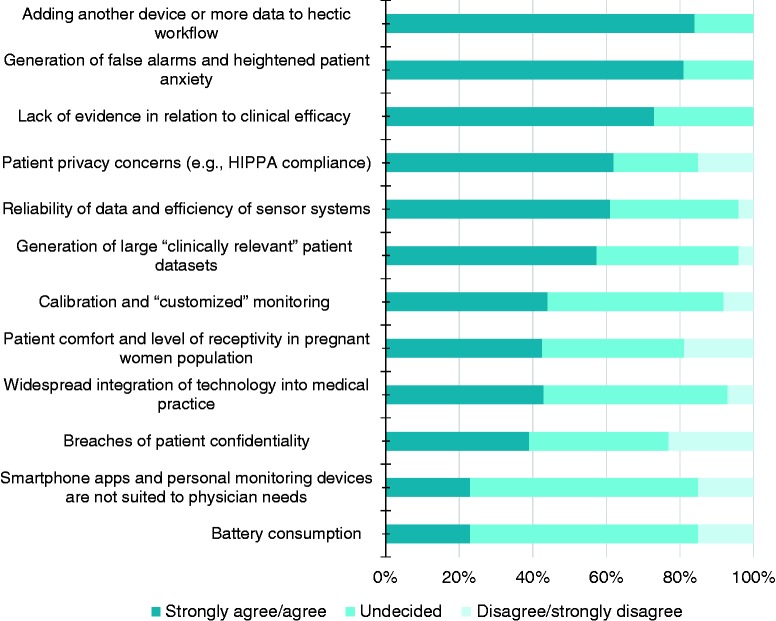
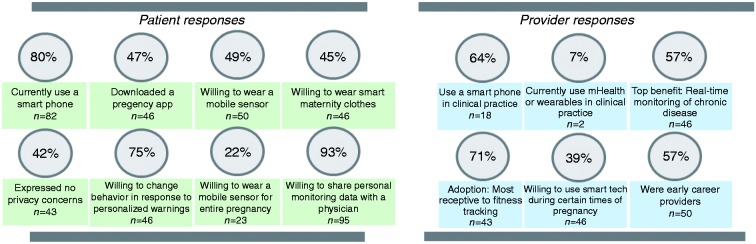
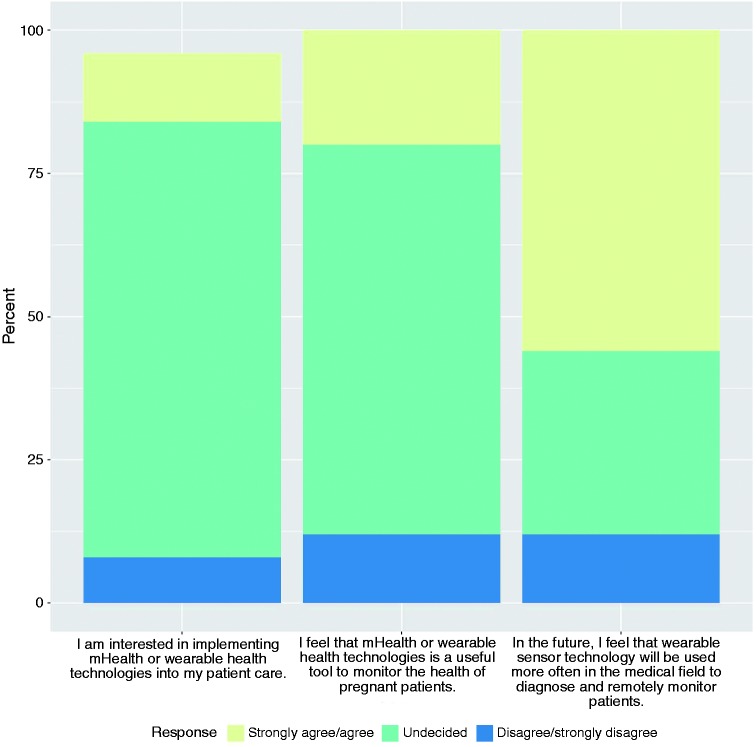
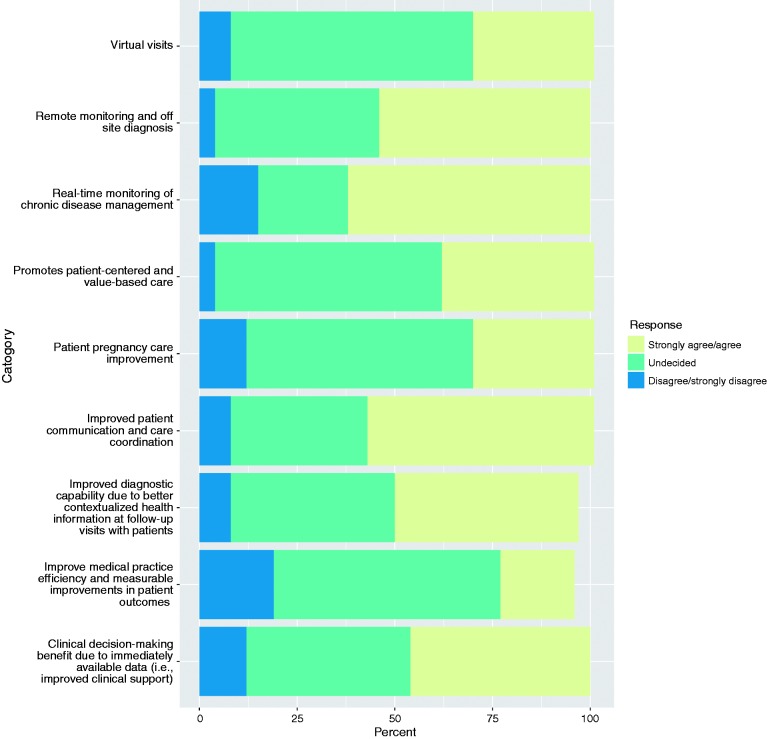
Smartphone and digital technology use was high among patients and providers. Patients would consider wearing a mobile sensor during pregnancy, reported no privacy concerns, and felt comfortable sharing information from these devices with their physician. About seven out of 10 women expressed willingness to change their behavior during pregnancy in response to receiving personalized recommendations from a smartphone. While most providers did not currently use smart technologies in their medical practice, about half felt it will be used more often in the future to diagnose and remotely monitor patients. Patients ranked fetal heart rate and blood pressure as their top preference for health monitoring compared to physicians who ranked blood pressure and blood glucose. Patients and providers demonstrated similar preferences for environmental monitoring, but patients as a whole expressed more interests in tracking environmental measures compared to their providers.

CONCLUSIONS

Patients and providers responded positively to the use of wearable sensor technology in prenatal care. More research is needed to understand what factors might motivate provider use and implementation of wearable technology to improve the delivery of prenatal care.

摘要

背景

可穿戴传感器和其他智能技术在远程监测孕期健康状况的亚临床变化方面可能特别有益。然而,关于将智能技术融入日常和临床实践中,孕妇患者和医疗服务提供者的看法的研究有限。

目的

本研究的目的是调查农村健康诊所的孕妇及其医疗服务提供者对使用可穿戴技术监测孕期健康和环境暴露的看法。

方法

对农村健康诊所的家庭医学或妇产科医生(n = 28)进行了一项21项的匿名电子调查;同时,对前来诊所进行产前检查的孕妇(n = 103)进行了一项21项的纸质调查。

结果

患者和医疗服务提供者对智能手机和数字技术的使用率很高。患者会考虑在孕期佩戴移动传感器,报告没有隐私担忧,并愿意与医生分享这些设备中的信息。十分之七左右的女性表示,愿意在孕期根据智能手机收到的个性化建议改变自己的行为。虽然大多数医疗服务提供者目前在医疗实践中未使用智能技术,但约有一半的人认为未来会更频繁地使用智能技术来诊断和远程监测患者。与医生将血压和血糖列为首选相比,患者将胎儿心率和血压列为健康监测的首选。患者和医疗服务提供者对环境监测的偏好相似,但总体而言,患者比医疗服务提供者对跟踪环境指标更感兴趣。

结论

患者和医疗服务提供者对在产前护理中使用可穿戴传感器技术持积极态度。需要更多研究来了解哪些因素可能促使医疗服务提供者使用和实施可穿戴技术,以改善产前护理服务。
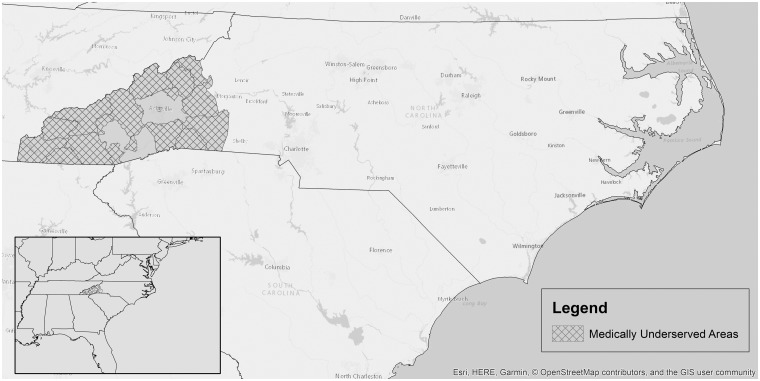
https://cdn.ncbi.nlm.nih.gov/pmc/blobs/8105/6376550/1fc4b74531af/10.1177_2055207619828220-fig5.jpg
https://cdn.ncbi.nlm.nih.gov/pmc/blobs/8105/6376550/b929c5ca3a33/10.1177_2055207619828220-fig1.jpg
https://cdn.ncbi.nlm.nih.gov/pmc/blobs/8105/6376550/56838ebf9e58/10.1177_2055207619828220-fig2.jpg
https://cdn.ncbi.nlm.nih.gov/pmc/blobs/8105/6376550/c0649365b001/10.1177_2055207619828220-fig3.jpg
https://cdn.ncbi.nlm.nih.gov/pmc/blobs/8105/6376550/02375d2f6ef1/10.1177_2055207619828220-fig4.jpg
https://cdn.ncbi.nlm.nih.gov/pmc/blobs/8105/6376550/1fc4b74531af/10.1177_2055207619828220-fig5.jpg
https://cdn.ncbi.nlm.nih.gov/pmc/blobs/8105/6376550/b929c5ca3a33/10.1177_2055207619828220-fig1.jpg
https://cdn.ncbi.nlm.nih.gov/pmc/blobs/8105/6376550/56838ebf9e58/10.1177_2055207619828220-fig2.jpg
https://cdn.ncbi.nlm.nih.gov/pmc/blobs/8105/6376550/c0649365b001/10.1177_2055207619828220-fig3.jpg
https://cdn.ncbi.nlm.nih.gov/pmc/blobs/8105/6376550/02375d2f6ef1/10.1177_2055207619828220-fig4.jpg
https://cdn.ncbi.nlm.nih.gov/pmc/blobs/8105/6376550/1fc4b74531af/10.1177_2055207619828220-fig5.jpg

相似文献

1
Use of wearable sensors for pregnancy health and environmental monitoring: Descriptive findings from the perspective of patients and providers.可穿戴传感器在孕期健康与环境监测中的应用:患者与医护人员视角的描述性结果
Digit Health. 2019 Feb 6;5:2055207619828220. doi: 10.1177/2055207619828220. eCollection 2019 Jan-Dec.
2
Users' Perceptions Toward mHealth Technologies for Health and Well-being Monitoring in Pregnancy Care: Qualitative Interview Study.用户对用于孕期保健中健康与幸福感监测的移动健康技术的认知:定性访谈研究
JMIR Form Res. 2021 Dec 2;5(12):e28628. doi: 10.2196/28628.
3
Mobile and Connected Health Technology Needs for Older Adults Aging in Place: Cross-Sectional Survey Study.居家养老老年人对移动和联网健康技术的需求:横断面调查研究
JMIR Aging. 2019 May 15;2(1):e13864. doi: 10.2196/13864.
4
Examining the Feasibility of Smart Blood Pressure Home Monitoring: Advancing Remote Prenatal Care in Rural Appalachia.考察智能血压家庭监测的可行性:推进阿巴拉契亚农村地区的远程产前护理
Telemed Rep. 2021 Mar 24;2(1):125-134. doi: 10.1089/tmr.2020.0021. eCollection 2021.
5
[Smart sensors in pregnancy: Narrative review on the use of smart home technology in routine prenatal care].孕期智能传感器:关于智能家居技术在常规产前护理中应用的叙述性综述
Z Evid Fortbild Qual Gesundhwes. 2021 Aug;164:35-43. doi: 10.1016/j.zefq.2021.05.004. Epub 2021 Jun 30.
6
Smart wearable body sensors for patient self-assessment and monitoring.用于患者自我评估和监测的智能可穿戴身体传感器。
Arch Public Health. 2014 Aug 22;72(1):28. doi: 10.1186/2049-3258-72-28. eCollection 2014.
7
A survey-based study of Zika virus communication preferences among pregnant women in Georgia, United States.一项基于调查的研究,探讨了美国佐治亚州孕妇对寨卡病毒传播偏好的看法。
BMC Pregnancy Childbirth. 2017 Sep 26;17(1):325. doi: 10.1186/s12884-017-1516-0.
8
Wearable Health Devices in Health Care: Narrative Systematic Review.可穿戴健康设备在医疗保健中的应用:叙事系统性综述。
JMIR Mhealth Uhealth. 2020 Nov 9;8(11):e18907. doi: 10.2196/18907.
9
Health Care Provider Perceptions of Consumer-Grade Devices and Apps for Tracking Health: A Pilot Study.医疗保健提供者对用于跟踪健康的消费级设备和应用程序的看法:一项试点研究。
JMIR Mhealth Uhealth. 2019 Jan 22;7(1):e9929. doi: 10.2196/mhealth.9929.
10
Patterns of Use and Key Predictors for the Use of Wearable Health Care Devices by US Adults: Insights from a National Survey.美国成年人使用可穿戴医疗设备的模式及关键预测因素:一项全国性调查的见解
J Med Internet Res. 2020 Oct 16;22(10):e22443. doi: 10.2196/22443.

引用本文的文献

1
Exploring nurse and patient perspectives on WeChat-based prenatal education in Chinese public hospitals: a qualitative inquiry.探索中国公立医院中护士和患者对基于微信的产前教育的看法:一项定性研究。
BMC Nurs. 2025 Apr 26;24(1):459. doi: 10.1186/s12912-025-03108-7.
2
Heterogeneous effects of physical activity on physiological stress during pregnancy.孕期身体活动对生理应激的异质性影响。
medRxiv. 2025 Mar 31:2025.03.30.25324909. doi: 10.1101/2025.03.30.25324909.
3
Biometrics of complete human pregnancy recorded by wearable devices.

本文引用的文献

1
Wearable Health Trackers: A Revolution in Cancer Care.可穿戴健康追踪器:癌症护理领域的一场革命。
J Natl Cancer Inst. 2017 Mar 1;109(3). doi: 10.1093/jnci/djx046.
2
Managing Psychiatrist-Patient Relationships in the Digital Age: a Summary Review of the Impact of Technology-enabled Care on Clinical Processes and Rapport.数字时代的精神科医患关系管理:技术支持的护理对临床流程和融洽关系的影响综述
Curr Psychiatry Rep. 2017 Oct 27;19(11):90. doi: 10.1007/s11920-017-0839-x.
3
Testing the Feasibility of Remote Patient Monitoring in Prenatal Care Using a Mobile App and Connected Devices: A Prospective Observational Trial.
可穿戴设备记录的完整人类孕期生物特征。
NPJ Digit Med. 2024 Aug 12;7(1):207. doi: 10.1038/s41746-024-01183-9.
4
Feasibility of continuous smart health monitoring in pregnant population: A mixed-method approach.孕妇群体中持续智能健康监测的可行性:一种混合方法研究。
PLOS Digit Health. 2024 Jun 5;3(6):e0000517. doi: 10.1371/journal.pdig.0000517. eCollection 2024 Jun.
5
Person-Generated Health Data in Women's Health: Scoping Review.女性健康中的个体生成健康数据:范围综述。
J Med Internet Res. 2024 May 16;26:e53327. doi: 10.2196/53327.
6
Feasibility and acceptability of measuring prenatal stress in daily life using smartphone-based ecological momentary assessment and wearable physiological monitors.使用基于智能手机的生态瞬时评估和可穿戴生理监测器在日常生活中测量产前压力的可行性和可接受性。
J Behav Med. 2024 Aug;47(4):635-646. doi: 10.1007/s10865-024-00484-4. Epub 2024 Apr 6.
7
Health data sharing attitudes towards primary and secondary use of data: a systematic review.对健康数据初次使用和二次使用的共享态度:一项系统综述
EClinicalMedicine. 2024 Mar 18;71:102551. doi: 10.1016/j.eclinm.2024.102551. eCollection 2024 May.
8
Mitigating Health-Related Uncertainties During Pregnancy: The Role of Smart Health Monitoring Technologies.减轻孕期健康相关不确定性:智能健康监测技术的作用。
J Med Internet Res. 2024 Mar 25;26:e48493. doi: 10.2196/48493.
9
The Future of Remote Monitoring for Pregnancy.孕期远程监测的未来
Bridge (Wash D C). 2022 Spring;52(1):16-24. Epub 2022 Mar 29.
10
Supporting the Management of Gestational Diabetes Mellitus With Comprehensive Self-Tracking: Mixed Methods Study of Wearable Sensors.通过全面自我追踪支持妊娠期糖尿病管理:可穿戴传感器的混合方法研究
JMIR Diabetes. 2023 Oct 31;8:e43979. doi: 10.2196/43979.
使用移动应用程序和连接设备测试远程患者监测在产前护理中的可行性:一项前瞻性观察性试验。
JMIR Res Protoc. 2016 Nov 18;5(4):e200. doi: 10.2196/resprot.6167.
4
New technologies to reduce medicalization of prenatal care: a contradiction with realistic perspectives.减少产前护理医学化的新技术:与现实观点相矛盾。
Expert Rev Med Devices. 2016 Aug;13(8):697-9. doi: 10.1080/17434440.2016.1205484. Epub 2016 Jul 14.
5
Remote Patient Monitoring via Non-Invasive Digital Technologies: A Systematic Review.通过非侵入性数字技术进行远程患者监测:一项系统综述。
Telemed J E Health. 2017 Jan;23(1):3-17. doi: 10.1089/tmj.2016.0051. Epub 2016 Apr 26.
6
Implementation of a new prenatal care model to reduce office visits and increase connectivity and continuity of care: protocol for a mixed-methods study.实施一种新的产前护理模式以减少门诊就诊次数并增强护理的连通性和连续性:一项混合方法研究的方案
BMC Pregnancy Childbirth. 2015 Dec 2;15:323. doi: 10.1186/s12884-015-0762-2.
7
Alternative versus standard packages of antenatal care for low-risk pregnancy.低风险妊娠的替代方案与标准产前护理套餐
Cochrane Database Syst Rev. 2015 Jul 16;2015(7):CD000934. doi: 10.1002/14651858.CD000934.pub3.
8
Mobile devices and apps for health care professionals: uses and benefits.面向医疗保健专业人员的移动设备和应用程序:用途与益处。
P T. 2014 May;39(5):356-64.
9
Smartphone Medical Applications for Women's Health: What Is the Evidence-Base and Feedback?用于女性健康的智能手机医疗应用程序:循证依据与反馈情况如何?
Int J Telemed Appl. 2013;2013:782074. doi: 10.1155/2013/782074. Epub 2013 Dec 18.
10
Data mining for wearable sensors in health monitoring systems: a review of recent trends and challenges.可穿戴传感器在健康监测系统中的数据挖掘:最新趋势和挑战综述。
Sensors (Basel). 2013 Dec 17;13(12):17472-500. doi: 10.3390/s131217472.