Yoon Young Eun, Kim Tae Yoon, Shin Tai Eun, Lee Eunji, Choi Kyung Hwa, Lee Seung Ryeol, Hong Young Kwon, Park Dong Soo, Kim Dae Keun
Department of Urology, Hanyang University College of Medicine, Seoul, Korea.
TopHealth Company, Seoul, Korea.
World J Mens Health. 2020 Apr;38(2):191-197. doi: 10.5534/wjmh.180095. Epub 2019 Jan 18.
We evaluated the usefulness of a home-based device (SwimCount™) compared with World Health Organization (WHO) 5th semen analysis in screening for male fertility in Asian men.
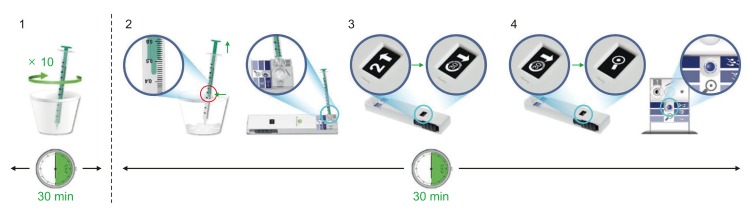
One hundred Asian men who visited CHA Seoul Station Fertility Center for evaluation of fertility were included. Semen samples were analyzed and compared with the SwimCount™ results. An aliquot of 0.5 mL of the semen sample was added to the SwimCount™ and a WHO 5th semen analysis was performed. Results were categorized as low (<5×10⁶/mL), and normal to high (≥5×10⁶/mL) total progressively motile sperm concentration. Receiver operating characteristic curve analysis was performed to evaluate the accuracy of the SwimCount™.
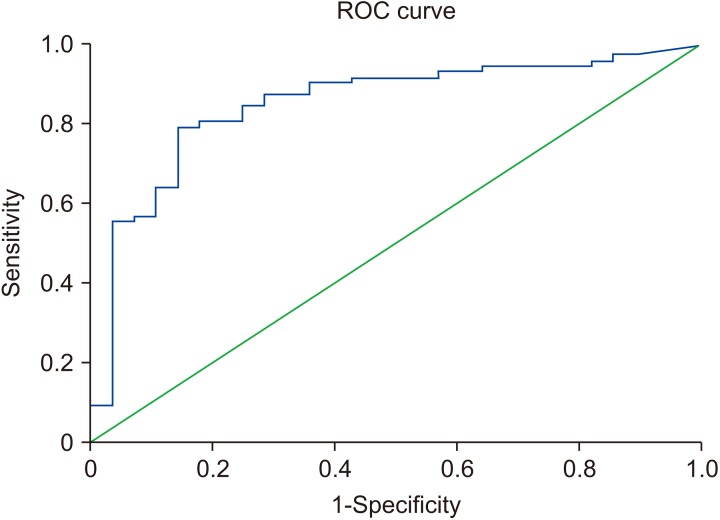
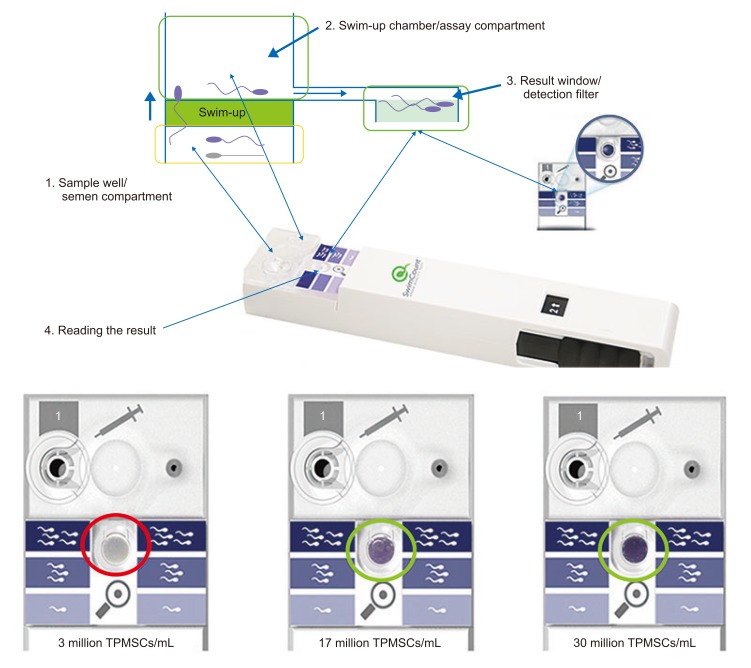
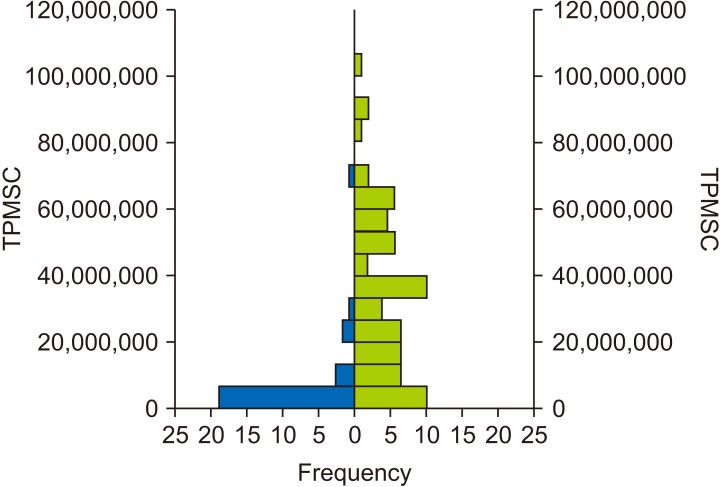
The mean total progressively motile sperm concentration was 26.7×10⁶/mL. Semen analysis revealed that 28% of the samples were below the threshold count of 5 million/mL total progressively motile sperm concentration. The mean total progressively motile sperm concentration of the light color SwimCount™ result group determined by semen analysis was 7.5×10⁶/mL, and the mean total progressively motile sperm concentration of the moderate to dark color SwimCount™ result group was 34.2×10⁶/mL. An area under the receiver operating characteristic curve of 0.85 (95% confidence interval, 0.77-0.94; p<0.001) was obtained when the SwimCount™ was compared with semen analysis. The sensitivity and specificity were obtained at a cut off value of 5.0×10⁶/mL total progressively motile sperm concentration, giving a sensitivity and specificity of 87.5% and 73.4%.
We confirmed the reliability of the SwimCount™ as a home-based device for male fertility by evaluating the total progressively motile sperm concentration.
我们评估了一种家用设备(SwimCount™)与世界卫生组织(WHO)第五版精液分析在亚洲男性生育力筛查中的有效性。
纳入了100名前往CHA首尔站生育中心评估生育力的亚洲男性。对精液样本进行分析,并与SwimCount™的结果进行比较。将0.5 mL精液样本的等分试样加入到SwimCount™中,并进行WHO第五版精液分析。结果分为低(<5×10⁶/mL)以及正常至高(≥5×10⁶/mL)的总渐进性活动精子浓度。进行受试者操作特征曲线分析以评估SwimCount™的准确性。
总渐进性活动精子浓度的平均值为26.7×10⁶/mL。精液分析显示,28%的样本低于500万/mL总渐进性活动精子浓度的阈值计数。通过精液分析确定的浅色SwimCount™结果组的总渐进性活动精子浓度平均值为7.5×10⁶/mL,中度至深色SwimCount™结果组的总渐进性活动精子浓度平均值为34.2×10⁶/mL。当将SwimCount™与精液分析进行比较时,受试者操作特征曲线下面积为0.85(95%置信区间,0.77 - 0.94;p<0.001)。在总渐进性活动精子浓度截断值为5.0×10⁶/mL时获得敏感性和特异性,敏感性和特异性分别为87.5%和73.4%。
我们通过评估总渐进性活动精子浓度,证实了SwimCount™作为一种用于男性生育力的家用设备的可靠性。