Neuman Hadar, Mor Hadar, Bashi Tomer, Givol Or, Watad Abdulla, Shemer Asaf, Volkov Alexander, Barshack Iris, Fridkin Mati, Blank Miri, Shoenfeld Yehuda, Koren Omry
Azrieli Faculty of Medicine, Bar Ilan University, Safed, Israel.
Zabludowicz Center for Autoimmune Diseases, Tel-Hashomer, affiliated to Sackler Faculty of Medicine, Tel-Aviv University, Tel Aviv, Israel.
mSystems. 2019 Feb 19;4(1). doi: 10.1128/mSystems.00160-18. eCollection 2019 Jan-Feb.
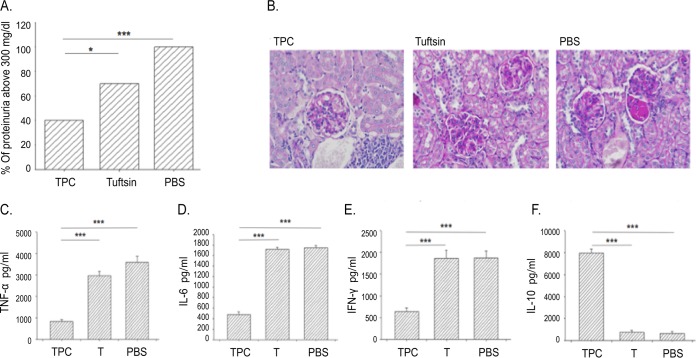
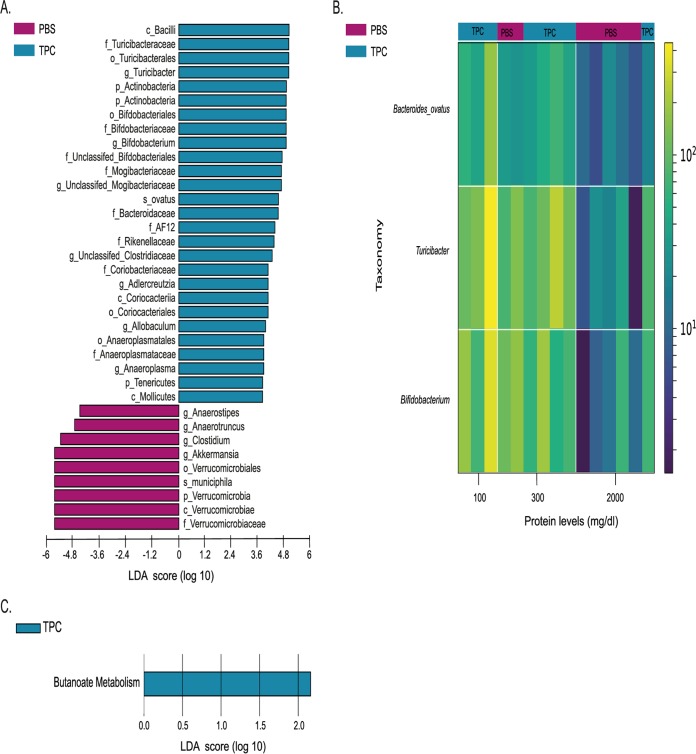
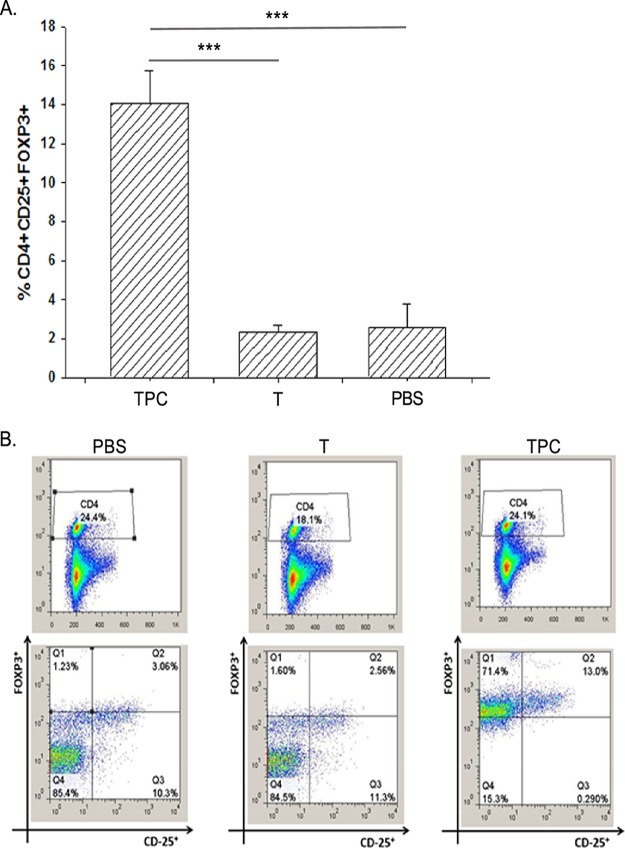
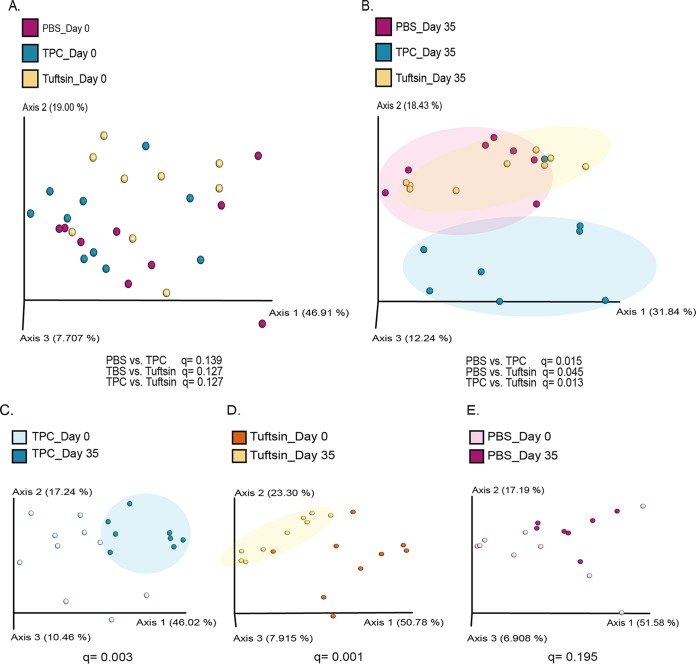
The hygiene hypothesis claims that the lack of exposure to microorganisms in developed countries correlates with a rise in the incidence of autoimmune diseases. It was also found that helminths are able to modulate the immune response in hosts in order to survive. Consequently, several successful trials using helminths as a treatment for autoimmune patients have been reported. The helminth derivative, phosphorylcholine (PC), was discovered as an immunomodulatory molecule. We have recently shown in a murine model that when a conjugate of tuftsin and PC, termed TPC, is prophylactically administered before the onset of glomerulonephritis, it attenuates the development of systemic lupus erythematosus (SLE). The current study aimed to examine the TPC effect on the gut microbiome in a mouse model of lupus. TPC treatment altered the gut composition in the mice with active lupus, in correlation with a significant decrease in glomerulonephritis, followed by an increased level of anti-inflammatory interleukin 10 (IL-10), decreased levels of proinflammatory mediators, and expansion of the T regulatory cell population. Importantly, we found that TPC treatment altered the mouse gut microbiome composition, in correlation with a significant decrease in protein secretion and improved disease parameters. The major effects of TPC treatment on the gut microbiome included decreased abundances of and increased abundance of several genera, including , unclassified , unclassified , , , and . Overall, our results associate microbial changes with the immunomodulation of glomerulonephritis in mice with lupus. Recently, several papers referred to the association of different bacteria with lupus in mice and humans. This is the first report to demonstrate the effect of a compound derived from helminths on the induction of remission in mice with lupus and its association with a bacterial change. We show that several genera, including , are associated with clinical and serological parameters of lupus, while other genera, including butyrate-producing bacteria, are associated with amelioration of disease following tuftsin and phosphorylcholine treatment.
卫生假说认为,发达国家中缺乏接触微生物的机会与自身免疫性疾病发病率的上升相关。还发现蠕虫能够调节宿主的免疫反应以实现生存。因此,已有多项使用蠕虫治疗自身免疫性疾病患者的成功试验报告。蠕虫衍生物磷酰胆碱(PC)被发现是一种免疫调节分子。我们最近在小鼠模型中表明,当在肾小球肾炎发作前预防性给予名为TPC的促吞噬肽与PC的缀合物时,它可减轻系统性红斑狼疮(SLE)的发展。当前的研究旨在检查TPC对狼疮小鼠模型肠道微生物群的影响。TPC治疗改变了活动性狼疮小鼠的肠道组成,这与肾小球肾炎的显著减轻相关,随后抗炎性白细胞介素10(IL - 10)水平升高、促炎介质水平降低以及调节性T细胞群体的扩大。重要的是,我们发现TPC治疗改变了小鼠肠道微生物群组成,这与蛋白质分泌的显著减少和疾病参数的改善相关。TPC治疗对肠道微生物群的主要影响包括几个属的丰度降低以及几个属的丰度增加,包括 、未分类的 、未分类的 、 、 以及 。总体而言,我们的结果将微生物变化与狼疮小鼠肾小球肾炎的免疫调节联系起来。最近,几篇论文提到了不同细菌与小鼠和人类狼疮的关联。这是第一份证明源自蠕虫的化合物对狼疮小鼠诱导缓解的作用及其与细菌变化关联的报告。我们表明,包括 在内的几个属与狼疮的临床和血清学参数相关,而包括产丁酸细菌在内的其他属与促吞噬肽和磷酰胆碱治疗后疾病的改善相关。