School of Molecular Biosciences and Center for Reproductive Biology, Washington State University, Pullman, Washington, 99164.
Bioessays. 2019 Mar;41(3):e1800152. doi: 10.1002/bies.201800152. Epub 2019 Feb 25.
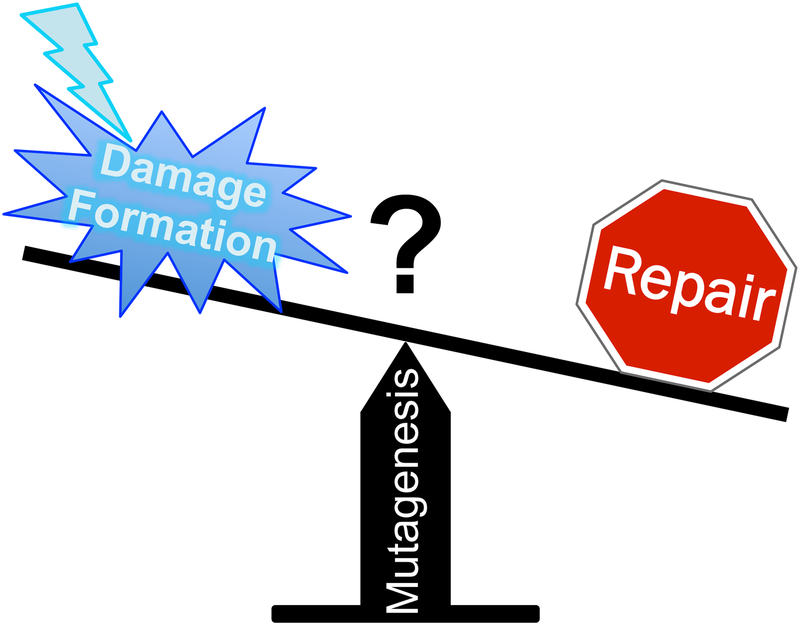
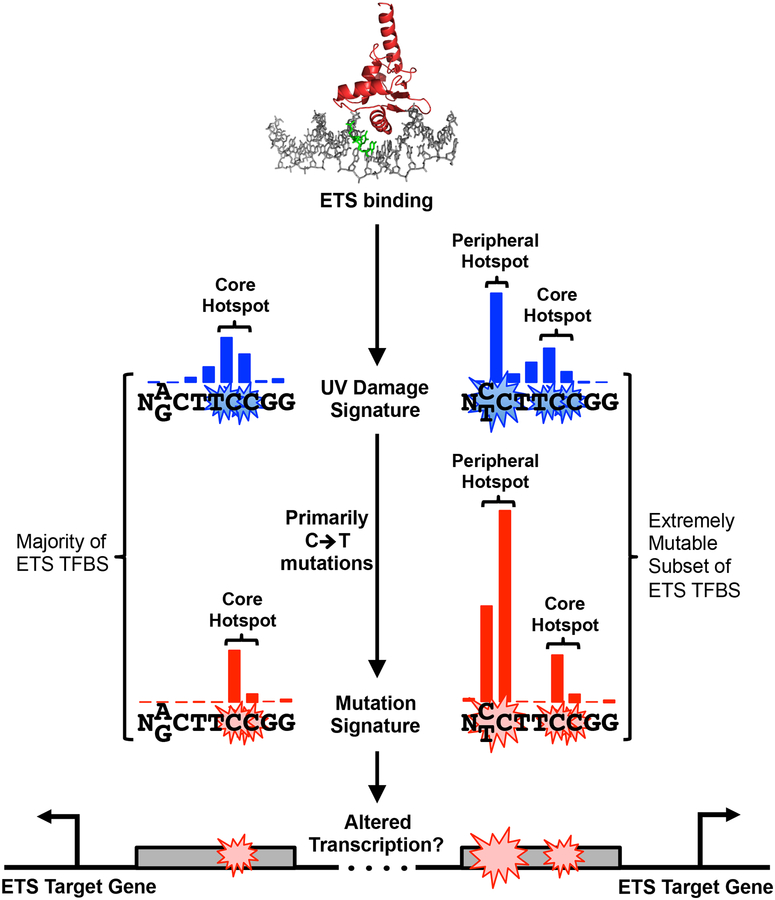
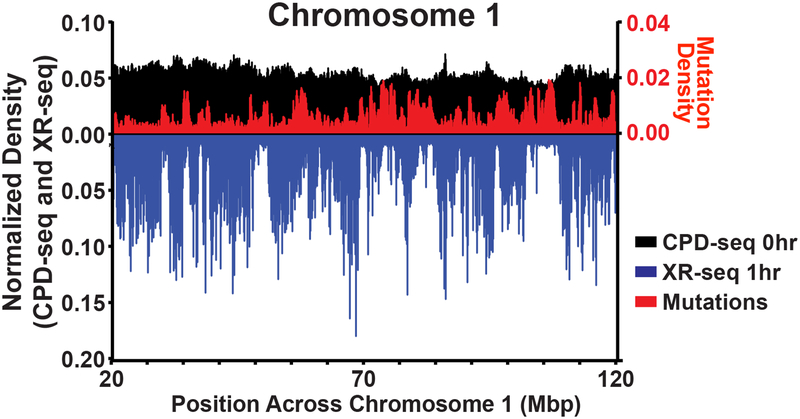
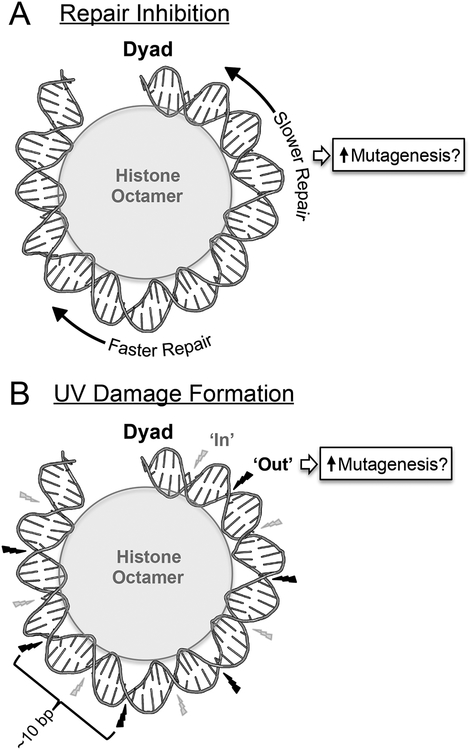
Somatic mutations arising in human skin cancers are heterogeneously distributed across the genome, meaning that certain genomic regions (e.g., heterochromatin or transcription factor binding sites) have much higher mutation densities than others. Regional variations in mutation rates are typically not a consequence of selection, as the vast majority of somatic mutations in skin cancers are passenger mutations that do not promote cell growth or transformation. Instead, variations in DNA repair activity, due to chromatin organization and transcription factor binding, have been proposed to be a primary driver of mutational heterogeneity in melanoma. However, as discussed in this review here, recent studies indicate that chromatin organization and transcription factor binding also significantly modulate the rate at which UV lesions form in DNA. The authors propose that local variations in lesion susceptibility may be an important driver of mutational hotspots in melanoma and other skin cancers, particularly at binding sites for ETS transcription factors.
在人类皮肤癌中出现的体细胞突变在整个基因组中呈异质性分布,这意味着某些基因组区域(例如异染色质或转录因子结合位点)的突变密度比其他区域高得多。突变率的区域变化通常不是选择的结果,因为皮肤癌中的绝大多数体细胞突变都是不促进细胞生长或转化的乘客突变。相反,由于染色质组织和转录因子结合,DNA 修复活性的变化被认为是黑色素瘤中突变异质性的主要驱动因素。然而,正如本综述中所讨论的,最近的研究表明,染色质组织和转录因子结合也显著调节 DNA 中 UV 损伤形成的速度。作者提出,局部易感性的变化可能是黑色素瘤和其他皮肤癌中突变热点的一个重要驱动因素,特别是在 ETS 转录因子结合位点。