School of Molecular Biosciences, Washington State University, Pullman, WA, 99164, USA.
Department of Chemistry, Georgia State University, Atlanta, GA, 30303, USA.
Nat Commun. 2018 Jul 6;9(1):2626. doi: 10.1038/s41467-018-05064-0.
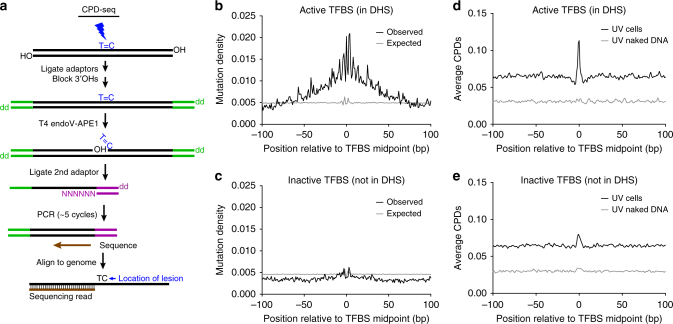
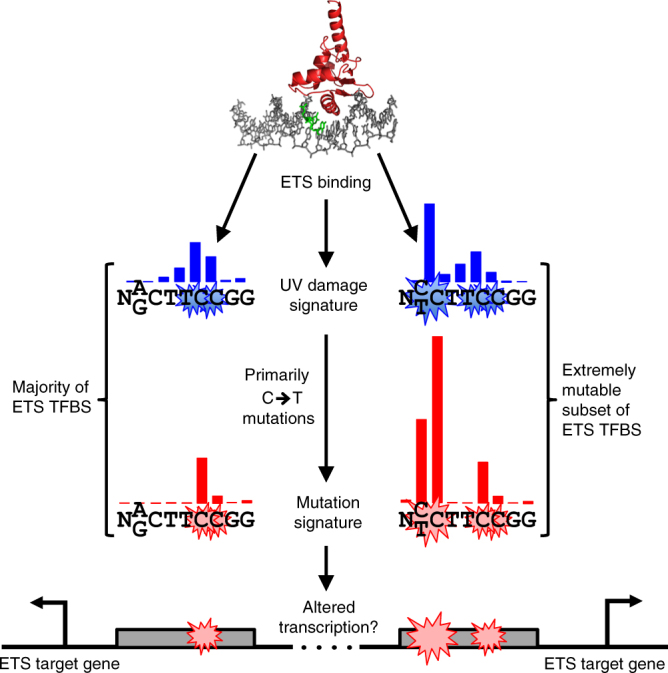
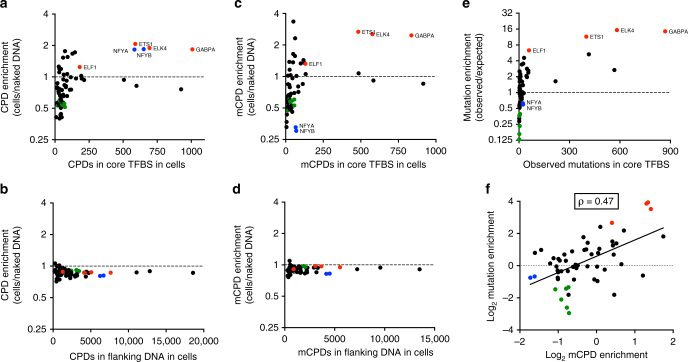
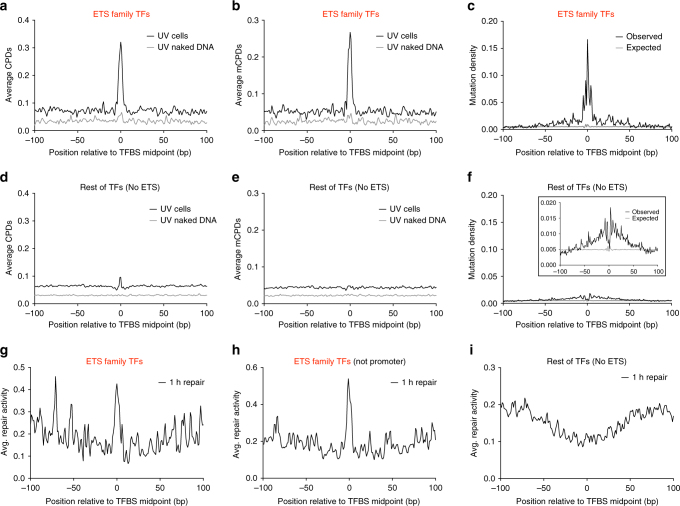
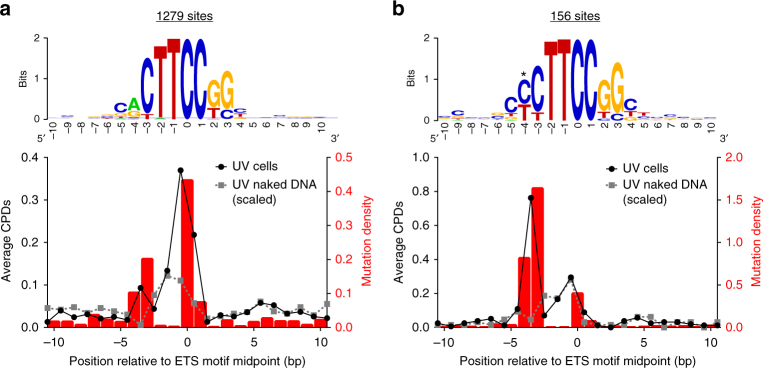
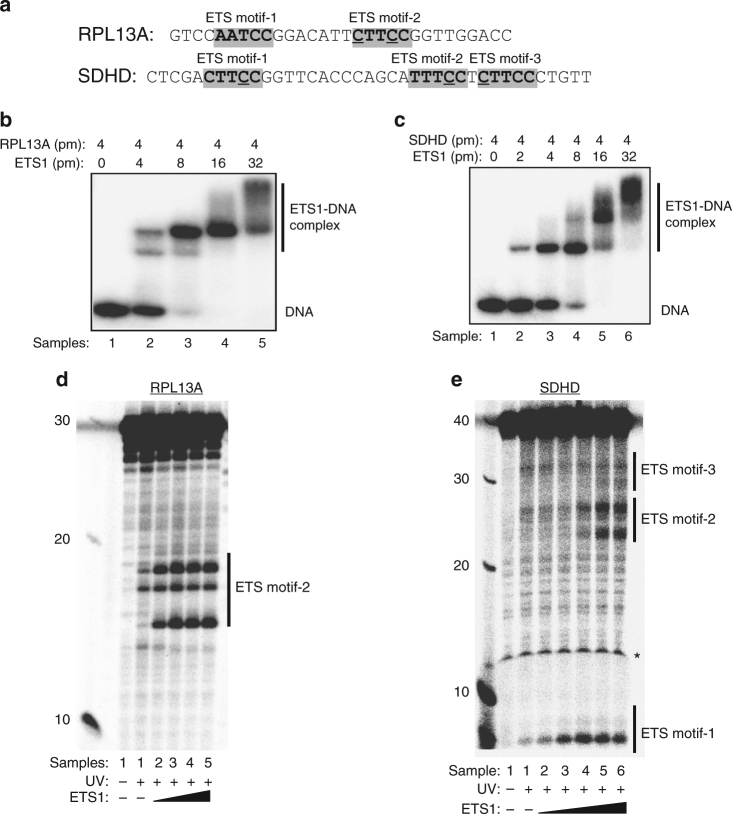
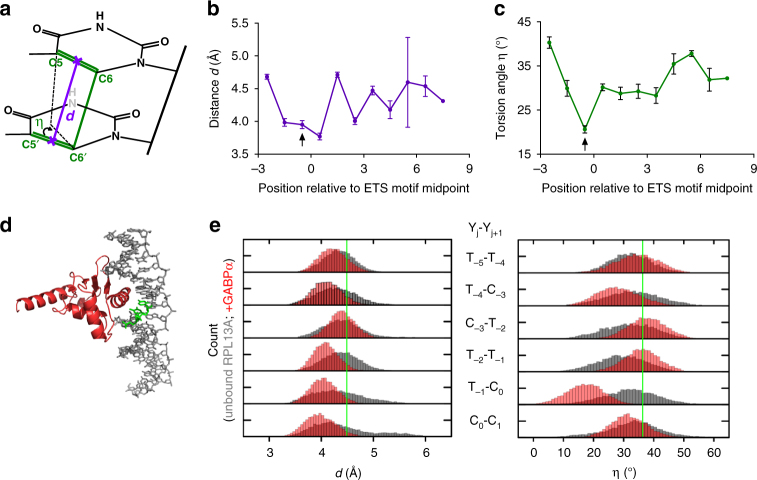
Recurrent mutations are frequently associated with transcription factor (TF) binding sites (TFBS) in melanoma, but the mechanism driving mutagenesis at TFBS is unclear. Here, we use a method called CPD-seq to map the distribution of UV-induced cyclobutane pyrimidine dimers (CPDs) across the human genome at single nucleotide resolution. Our results indicate that CPD lesions are elevated at active TFBS, an effect that is primarily due to E26 transformation-specific (ETS) TFs. We show that ETS TFs induce a unique signature of CPD hotspots that are highly correlated with recurrent mutations in melanomas, despite high repair activity at these sites. ETS1 protein renders its DNA binding targets extremely susceptible to UV damage in vitro, due to binding-induced perturbations in the DNA structure that favor CPD formation. These findings define a mechanism responsible for recurrent mutations in melanoma and reveal that DNA binding by ETS TFs is inherently mutagenic in UV-exposed cells.
在黑色素瘤中,经常与转录因子 (TF) 结合位点 (TFBS) 相关的是反复出现的突变,但驱动 TFBS 突变的机制尚不清楚。在这里,我们使用一种称为 CPD-seq 的方法,以单核苷酸分辨率绘制人类基因组中紫外线诱导的环丁烷嘧啶二聚体 (CPD) 的分布。我们的结果表明,CPD 损伤在活跃的 TFBS 处升高,这种效应主要是由于 E26 转化特异性 (ETS) TF 引起的。我们表明,ETS TF 诱导 CPD 热点的独特特征,这些热点与黑色素瘤中的反复突变高度相关,尽管这些位点的修复活性很高。由于 ETS1 蛋白结合诱导的 DNA 结构扰动有利于 CPD 的形成,因此 ETS1 蛋白使它的 DNA 结合靶标在体外对 UV 损伤极其敏感。这些发现定义了导致黑色素瘤中反复出现突变的机制,并表明在暴露于 UV 的细胞中,ETS TF 的 DNA 结合具有内在的致突变性。