Laboratory for Cell Polarity and Organogenesis, Max Planck Institute for Heart and Lung Research, Bad Nauheim, Germany.
Department of Dermatology, Hokkaido University Graduate School of Medicine, Hokkaido, Japan.
Cancer Sci. 2019 May;110(5):1780-1789. doi: 10.1111/cas.13981. Epub 2019 Mar 21.
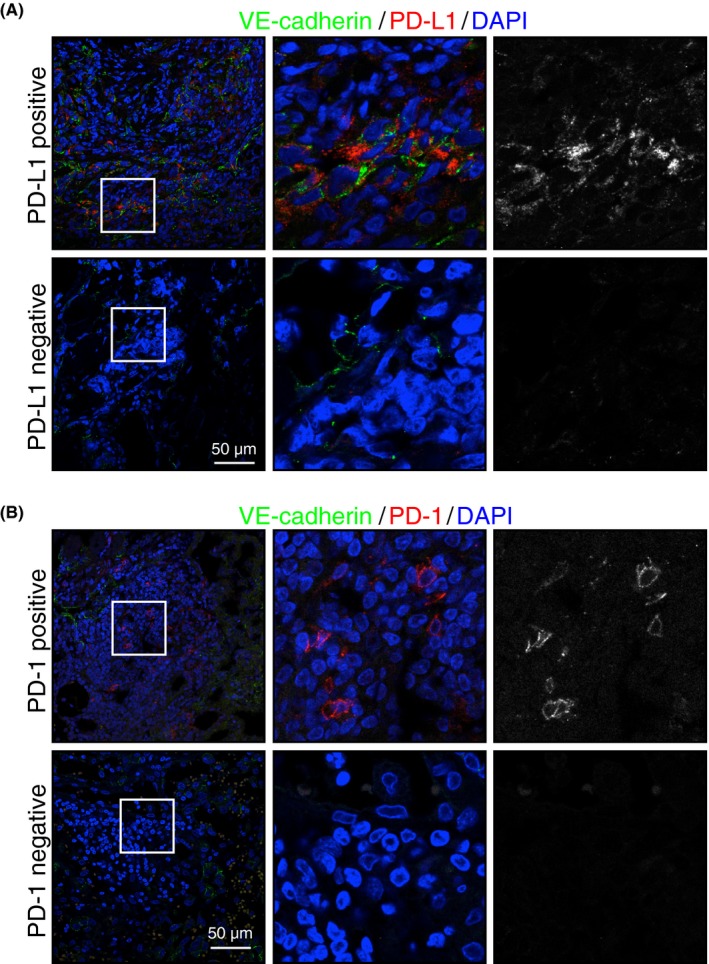
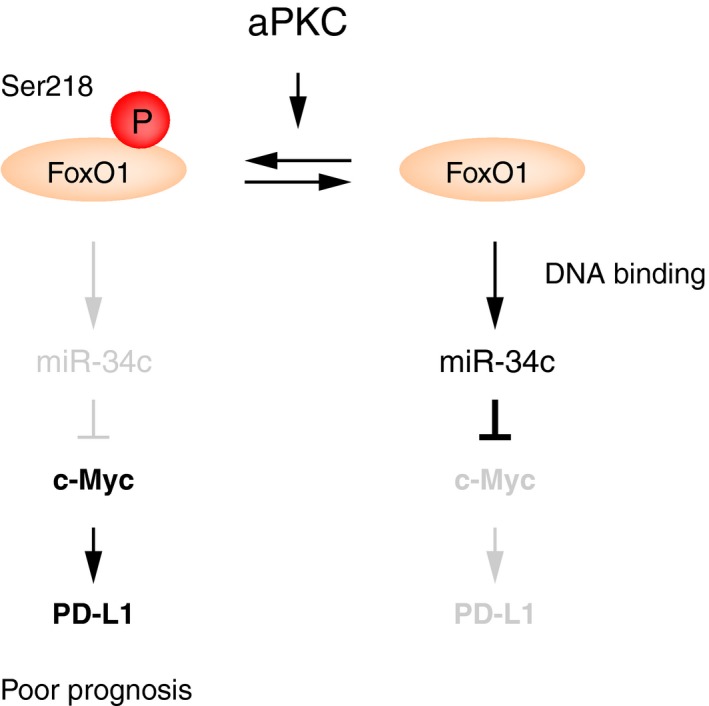
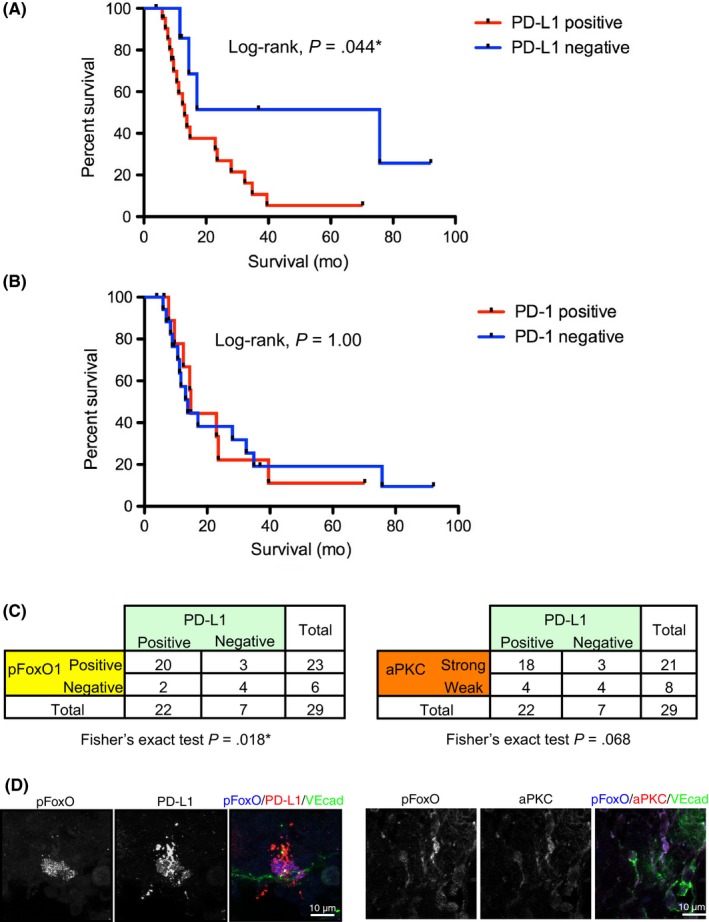
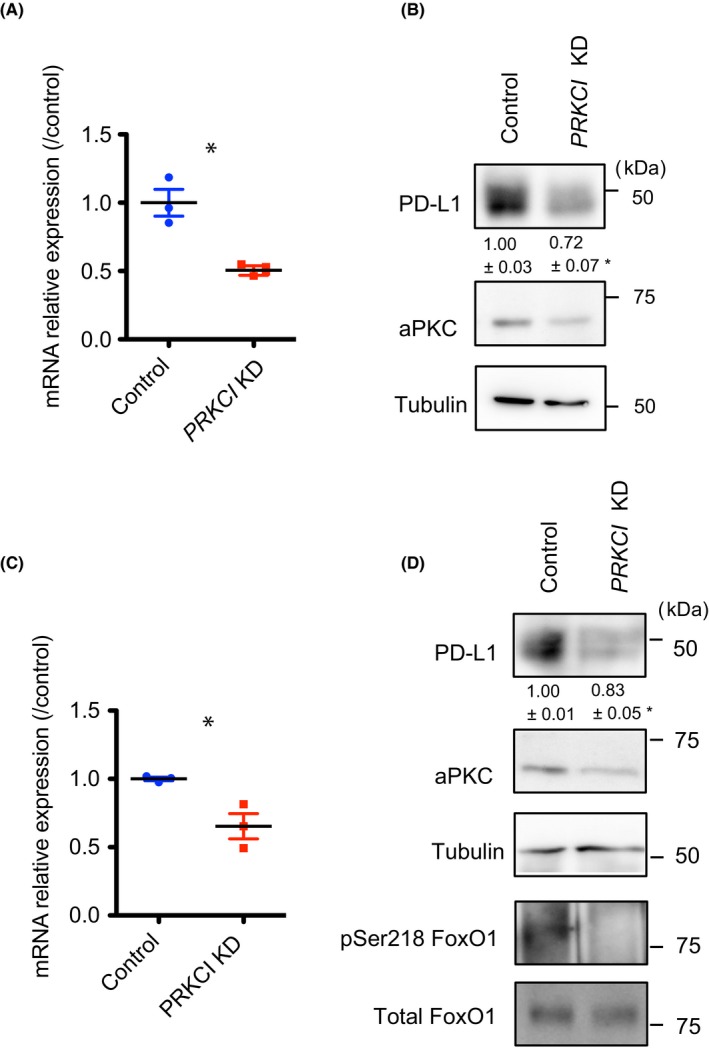
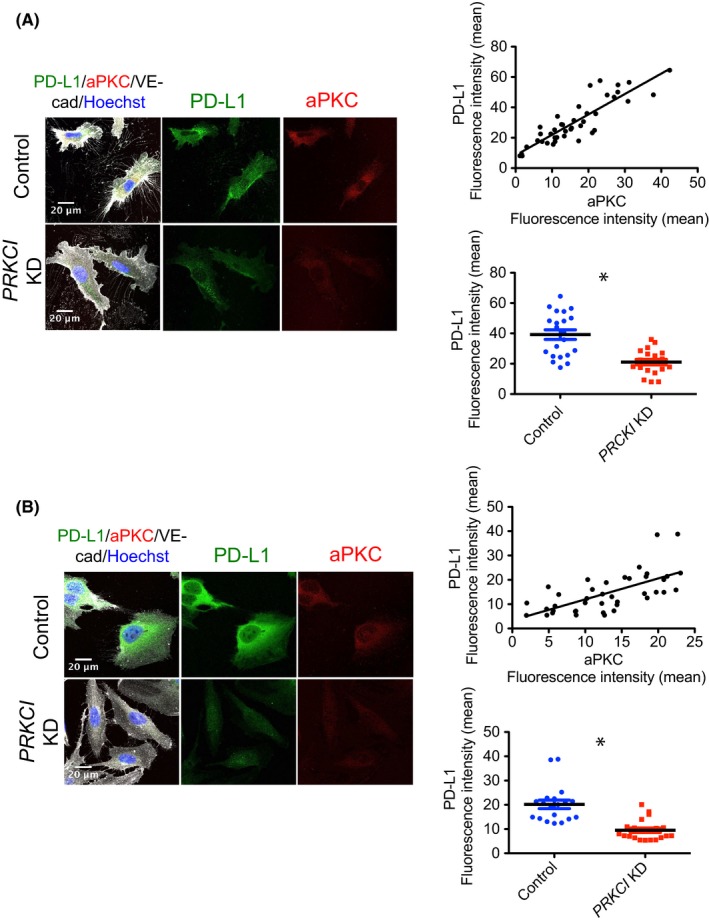
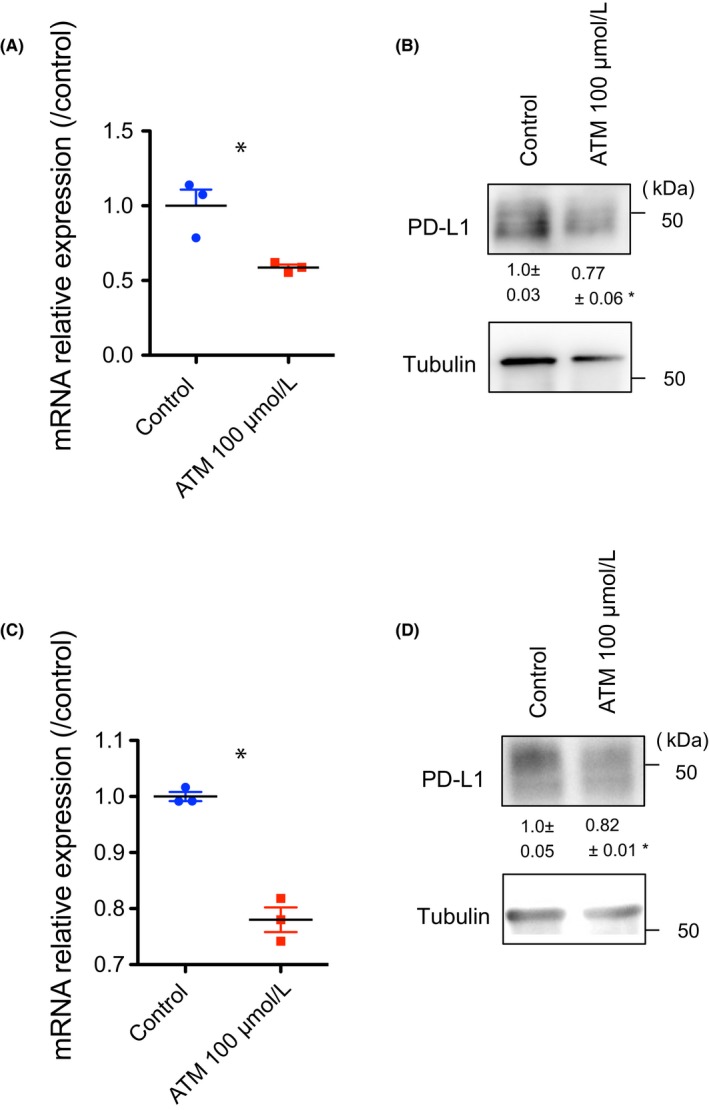
The expression of immune checkpoint proteins such as programmed cell death protein 1 (PD-1) and its ligand (PD-L1) has been shown to correlate with patient prognosis in many malignant cancers. The expression of PD-L1 is controlled by c-Myc; however, further upstream regulation of PD-L1 expression is largely unknown. We have previously shown that atypical protein kinase C lambda/iota (aPKCλ) phosphorylates the Forkhead box protein O1 (FoxO1) transcription factor at Ser218 to suppress its DNA-binding ability, thereby regulating c-Myc expression and controlling physiologic and pathologic endothelial proliferation. The presence of phosphorylation of FoxO1 at Ser218 (pSer218 FoxO1) in cutaneous angiosarcoma (CAS) strongly correlates with poor patient prognosis. Here, we reported that patients with PD-L1 cells in CAS lesions showed significantly worse prognosis compared to those that were PD-L1 . Expression of PD-L1 correlated with that of aPKCλ or the presence of pSer218FoxO1. Moreover, suppression of aPKCλ expression or inhibition of its activity in HUVECs or AS-M, an established human angiosarcoma cell line, resulted in decreased PD-L1 expression. Our results suggest that combined treatment with immune checkpoint inhibitors and aPKCλ inhibitors could be a novel treatment strategy for CAS patients.
免疫检查点蛋白的表达,如程序性细胞死亡蛋白 1(PD-1)及其配体(PD-L1),已被证明与许多恶性肿瘤患者的预后相关。PD-L1 的表达受 c-Myc 控制;然而,PD-L1 表达的进一步上游调控在很大程度上是未知的。我们之前已经表明,非典型蛋白激酶 C 样/iota(aPKCλ)在丝氨酸 218 处磷酸化叉头框蛋白 O1(FoxO1)转录因子,以抑制其 DNA 结合能力,从而调节 c-Myc 表达并控制生理和病理内皮细胞增殖。在皮肤血管肉瘤(CAS)中 FoxO1 丝氨酸 218 磷酸化(pSer218 FoxO1)的存在与患者预后不良强烈相关。在这里,我们报道了 CAS 病变中 PD-L1 细胞阳性的患者与 PD-L1 细胞阴性的患者相比,预后明显更差。PD-L1 的表达与 aPKCλ的表达或 pSer218FoxO1 的存在相关。此外,在 HUVECs 或 AS-M(一种已建立的人类血管肉瘤细胞系)中抑制 aPKCλ 的表达或抑制其活性,导致 PD-L1 表达降低。我们的结果表明,联合使用免疫检查点抑制剂和 aPKCλ抑制剂可能是 CAS 患者的一种新的治疗策略。