Department of Orthopaedics, China-Japan Friendship Hospital, No.2 Yinghuayuan east street, Beijing 100029, China.
Department of Orthopaedics, China-Japan Friendship Hospital, No.2 Yinghuayuan east street, Beijing 100029, China
Biosci Rep. 2019 Mar 26;39(3). doi: 10.1042/BSR20181108. Print 2019 Mar 29.
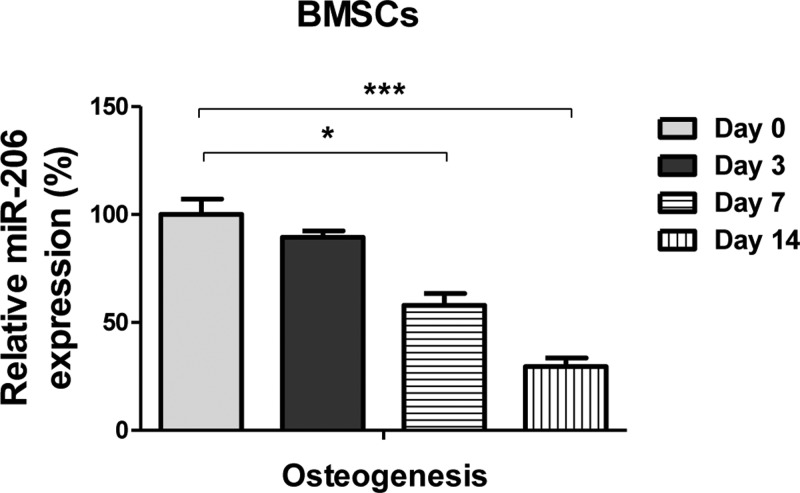
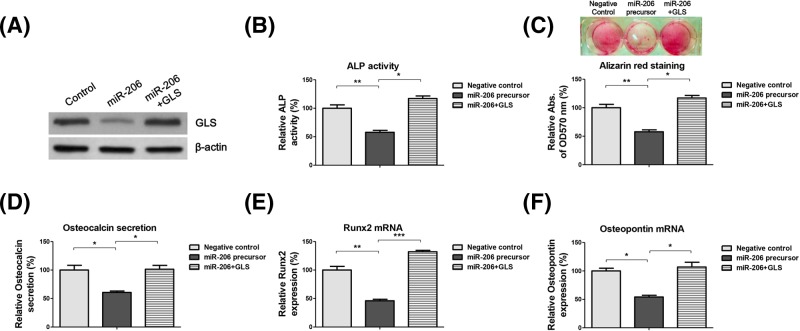
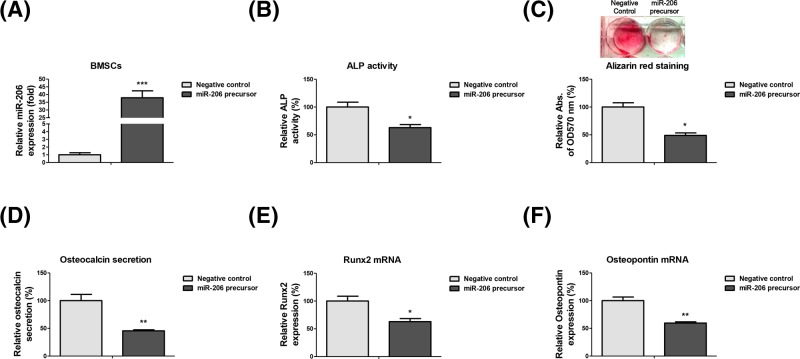
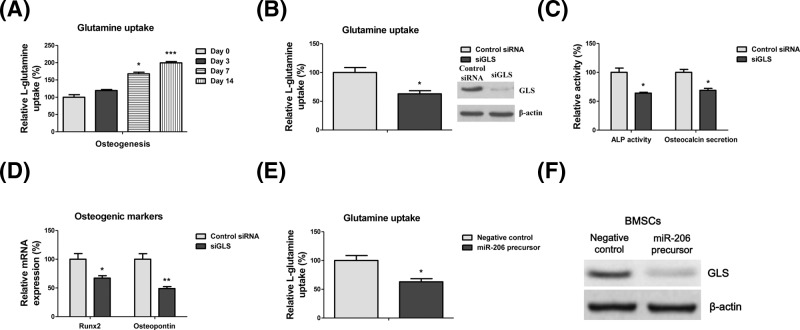
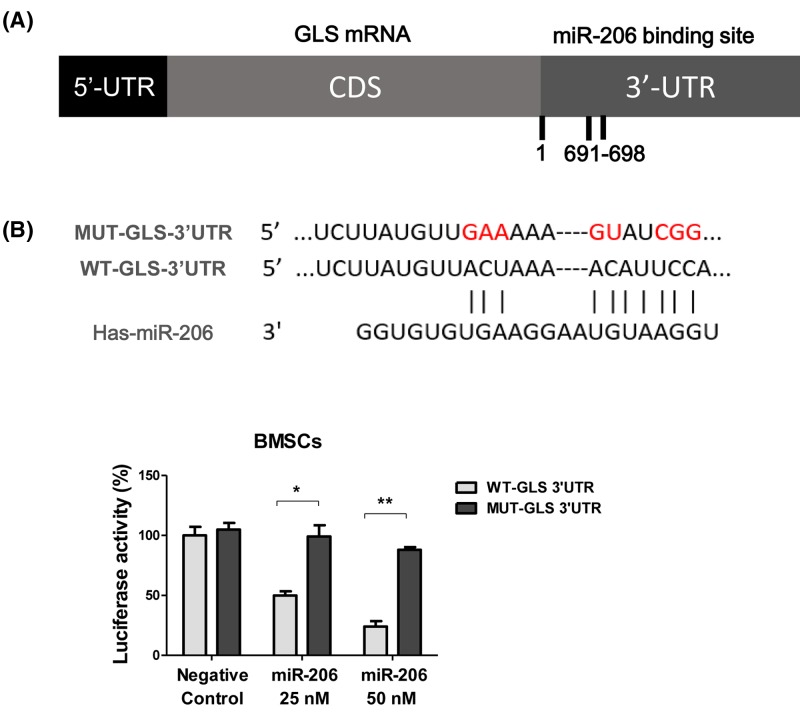
Osteoblast-mediated bone formation is a complex process involving various pathways and regulatory factors, including cytokines, growth factors, and hormones. Investigating the regulatory mechanisms behind osteoblast differentiation is important for bone regeneration therapy. miRNAs are known as important regulators, not only in a variety of cellular processes, but also in the pathogenesis of bone diseases. In the present study, we investigated the potential roles of miR-206 during osteoblast differentiation. We report that miR-206 expression was significantly down-regulated in human bone marrow mesenchymal stem cells (BMSCs) at days 7 and 14 during osteogenic induction. Furthermore, miR-206 overexpressing BMSCs showed attenuated alkaline phosphatase (ALP) activity, Alizarin Red staining, and osteocalcin secretion. The mRNA levels of osteogenic markers, Runx2 and Osteopontin (OPN), were significantly down-regulated in miR-206 overexpressing BMSCs. We observed that significantly increased glutamine uptake at days 7 and 14 during the osteogenic induction and inhibition of glutamine metabolism by knocking down glutaminase (GLS)-suppressed osteogenic differentiation of BMSCs. Here, we discover that miR-206 could directly bind to the 3'-UTR region of mRNA, resulting in suppressed GLS expression and glutamine metabolism. Finally, restoration of GLS in miR-206 overexpressing BMSCs led to recovery of glutamine metabolism and osteogenic differentiation. In summary, these results reveal a new insight into the mechanisms of the miR-206-mediated osteogenesis through regulating glutamine metabolism. Our study may contribute to the development of therapeutic agents against bone diseases.
成骨细胞介导的骨形成是一个复杂的过程,涉及多种途径和调节因子,包括细胞因子、生长因子和激素。研究成骨细胞分化的调节机制对于骨再生治疗很重要。miRNA 不仅在各种细胞过程中,而且在骨疾病的发病机制中,都是重要的调节因子。在本研究中,我们研究了 miR-206 在成骨细胞分化中的潜在作用。我们报告说,在成骨诱导的第 7 天和第 14 天,人骨髓间充质干细胞(BMSCs)中 miR-206 的表达明显下调。此外,miR-206 过表达的 BMSCs 表现出碱性磷酸酶(ALP)活性、茜素红染色和骨钙素分泌减弱。miR-206 过表达的 BMSCs 中成骨标志物 Runx2 和 Osteopontin(OPN)的 mRNA 水平显著下调。我们观察到,在成骨诱导的第 7 天和第 14 天,glutamine 摄取显著增加,通过敲低谷氨酰胺酶(GLS)抑制 glutamine 代谢,抑制 BMSCs 的成骨分化。在这里,我们发现 miR-206 可以直接结合 mRNA 的 3'-UTR 区域,导致 GLS 表达和 glutamine 代谢受到抑制。最后,在 miR-206 过表达的 BMSCs 中恢复 GLS,导致 glutamine 代谢和成骨分化恢复。总之,这些结果揭示了 miR-206 通过调节 glutamine 代谢介导成骨作用的新机制。我们的研究可能有助于开发针对骨疾病的治疗药物。