Molecular Medicine Laboratory, International Centre for Genetic Engineering and Biotechnology (ICGEB), Padriciano 99, 34149, Trieste, Italy.
Department of Cardiovascular Medicine & Sciences, King's College London, The James Black Centre, 125 Coldharbour Lane, London, SE5 9N, UK.
Nat Commun. 2019 Feb 25;10(1):926. doi: 10.1038/s41467-019-08810-0.
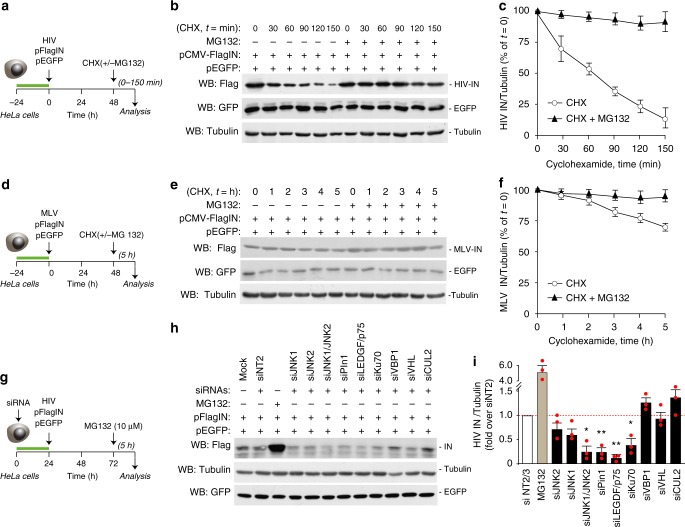
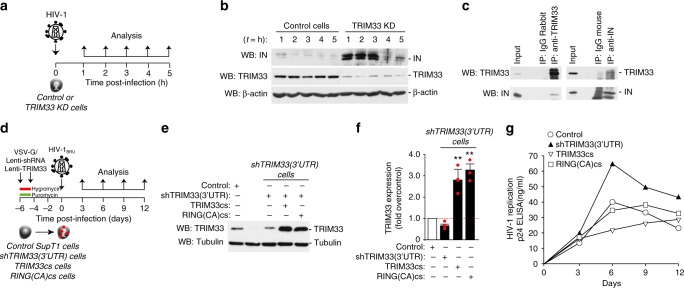
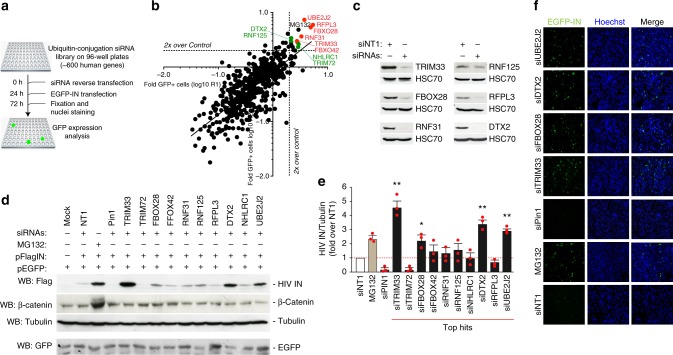
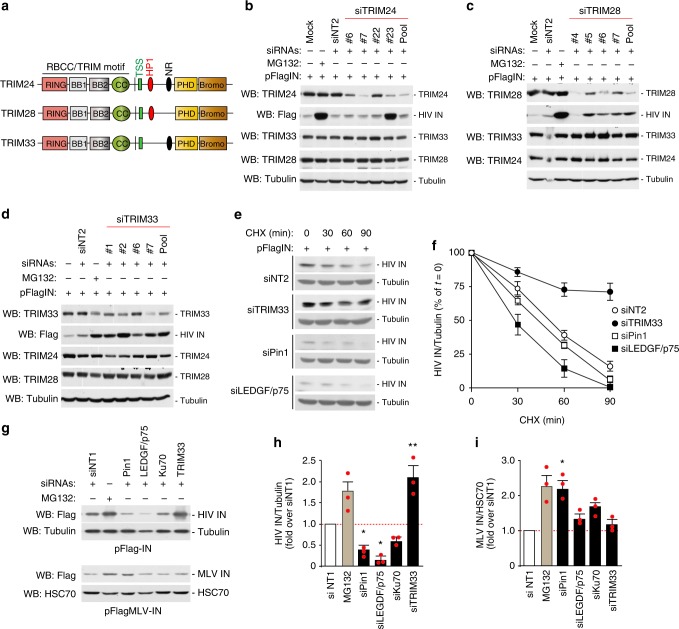
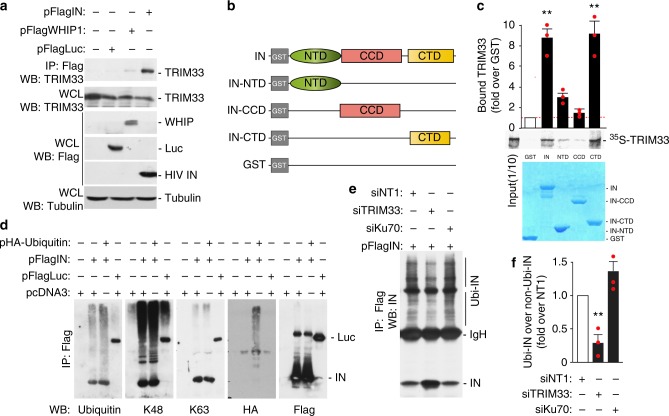
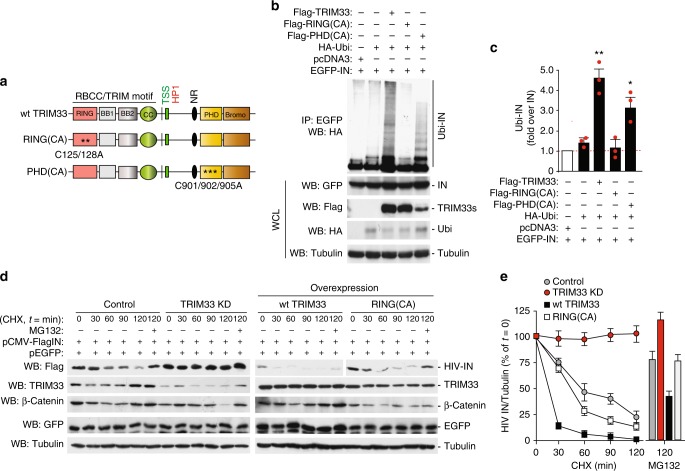
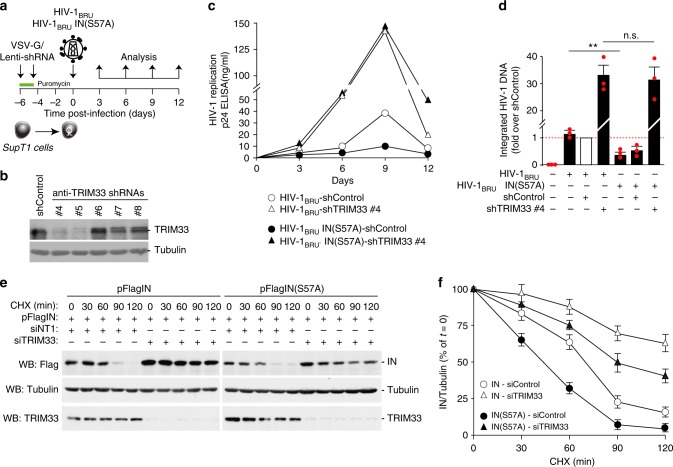
Productive HIV-1 replication requires viral integrase (IN), which catalyzes integration of the viral genome into the host cell DNA. IN, however, is short lived and is rapidly degraded by the host ubiquitin-proteasome system. To identify the cellular factors responsible for HIV-1 IN degradation, we performed a targeted RNAi screen using a library of siRNAs against all components of the ubiquitin-conjugation machinery using high-content microscopy. Here we report that the E3 RING ligase TRIM33 is a major determinant of HIV-1 IN stability. CD4-positive cells with TRIM33 knock down show increased HIV-1 replication and proviral DNA formation, while those overexpressing the factor display opposite effects. Knock down of TRIM33 reverts the phenotype of an HIV-1 molecular clone carrying substitution of IN serine 57 to alanine, a mutation known to impair viral DNA integration. Thus, TRIM33 acts as a cellular factor restricting HIV-1 infection by preventing provirus formation.
有效的 HIV-1 复制需要病毒整合酶(IN),它催化病毒基因组整合到宿主细胞 DNA 中。然而,IN 寿命短,会被宿主泛素蛋白酶体系统迅速降解。为了鉴定负责 HIV-1 IN 降解的细胞因子,我们使用针对泛素缀合机制所有成分的 siRNA 文库,通过高内涵显微镜进行了靶向 RNAi 筛选。在这里,我们报告 E3 RING 连接酶 TRIM33 是 HIV-1 IN 稳定性的主要决定因素。下调 TRIM33 的 CD4 阳性细胞显示 HIV-1 复制和前病毒 DNA 形成增加,而过度表达该因子则显示相反的效果。下调 TRIM33 可使携带 IN 丝氨酸 57 突变为丙氨酸的 HIV-1 分子克隆的表型逆转,该突变已知会损害病毒 DNA 整合。因此,TRIM33 通过防止前病毒形成来充当限制 HIV-1 感染的细胞因子。