Mari Judit, Kovacs Tamas, Pasztor Gyula, Tiszlavicz Laszlo, Bereczki Csaba, Szucs Daniel
University of Szeged, Department of Pediatrics, Szeged, Hungary,
University of Szeged, Department of Radiology, Szeged, Hungary.
Int Med Case Rep J. 2019 Feb 11;12:23-27. doi: 10.2147/IMCRJ.S192940. eCollection 2019.
Primary intestinal lymphangiectasia (PIL) is a very rare disorder usually diagnosed before the third year of life or later in adulthood, presenting with pitting edema, hypoproteinemia and low immunoglobulin levels. The location and the extent of the affected bowel greatly influence the clinical manifestation. The localized or segmental form of PIL is extremely rare with only five pediatric cases reported worldwide.
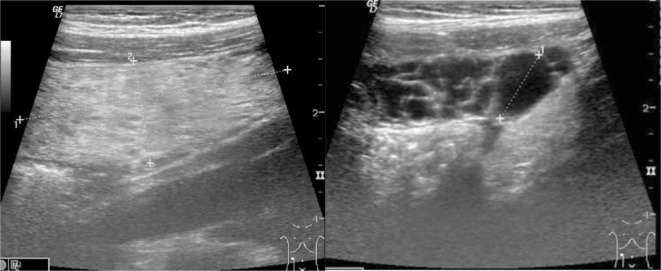
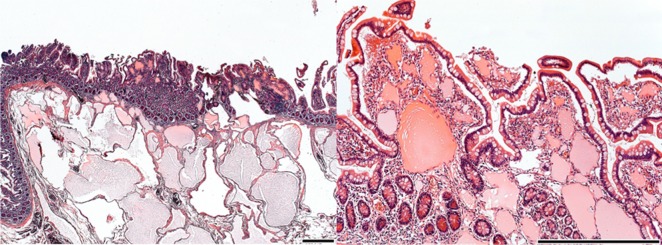
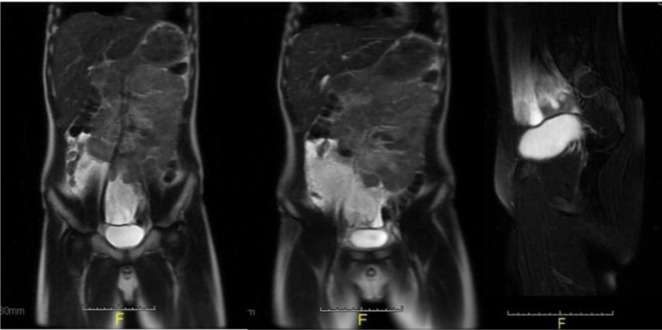
A 10 year-old Caucasian boy presented with 3 months history of recurrent abdominal pain and a 1 month history of diarrhea. An ultrasound scan was performed on two separate occasions 10 days apart, revealing a growing cystic mass on the right side of the abdomen, in front of the psoas muscle. Subsequently an MRI scan confirmed that the mass originated from the mesenteries and infiltrates a short segment of the small bowel. Surgical resection of the affected segment was performed. Histopathological examination of the removed segment of ileum was consistent with intestinal lymphangiectasia. We could not identify any associated genetic syndromes or any other conditions that could have caused secondary intestinal lymphangiectasia. The patient's recovery from surgery was uneventful and no recurrence was observed in the following 4 years.
Despite being a benign condition, mortality of PIL can be as high as 13% due to the difficulties associated with the management of the disease. PIL should be considered as a rare but potential cause for an abdominal mass, even in the older child, when cystic mesenterial involvement might be seen on ultrasound or MRI. In selected cases of PIL affecting only a short segment of the bowel or following unsuccessful conservative treatment, surgical resection of the affected bowel segment can be curative.
原发性肠淋巴管扩张症(PIL)是一种非常罕见的疾病,通常在3岁前或成年后被诊断出来,表现为凹陷性水肿、低蛋白血症和低免疫球蛋白水平。受累肠道的位置和范围对临床表现有很大影响。局限性或节段性PIL极为罕见,全球仅报道了5例儿科病例。
一名10岁的白人男孩有3个月反复腹痛病史和1个月腹泻病史。在相隔10天的两个不同时间进行了超声扫描,发现腹部右侧腰大肌前方有一个不断增大的囊性肿块。随后的MRI扫描证实该肿块起源于肠系膜并侵犯了一小段小肠。对受累节段进行了手术切除。切除的回肠段组织病理学检查与肠淋巴管扩张症一致。我们未发现任何相关的遗传综合征或任何其他可能导致继发性肠淋巴管扩张症的疾病。患者术后恢复顺利,在随后的4年中未观察到复发。
尽管PIL是一种良性疾病,但由于其治疗相关的困难,死亡率可高达13%。即使在较大儿童中,当超声或MRI显示囊性肠系膜受累时,PIL也应被视为腹部肿块的一种罕见但可能的病因。在某些PIL仅累及一小段肠道或保守治疗失败的病例中,手术切除受累肠段可治愈。