Monahan Leigh G, DeMaere Matthew Z, Cummins Max L, Djordjevic Steven P, Roy Chowdhury Piklu, Darling Aaron E
1ithree institute, University of Technology Sydney, Broadway Street, Ultimo, 2007 Australia.
NSW Department of Primary Industries, Elizabeth Macarthur Agricultural Institute, Woodbridge Road, Menangle, 2568 Australia.
Gut Pathog. 2019 Feb 13;11:3. doi: 10.1186/s13099-019-0288-7. eCollection 2019.
is an important emerging pathogen and a key member of the highly diverse complex. strains can persist and spread in nosocomial environments, and often exhibit resistance to multiple clinically important antibiotics. However, the genomic regions that harbour resistance determinants are typically highly repetitive and impossible to resolve with standard short-read sequencing technologies.
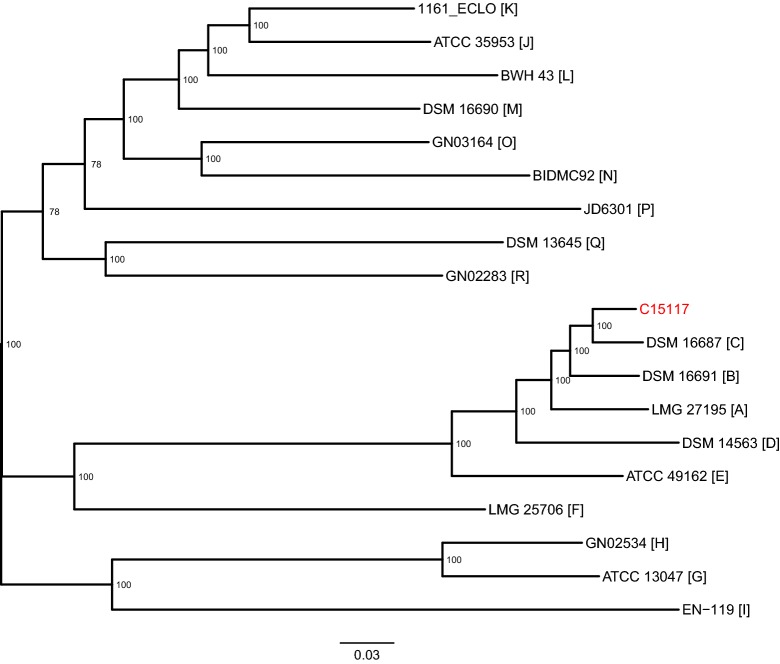
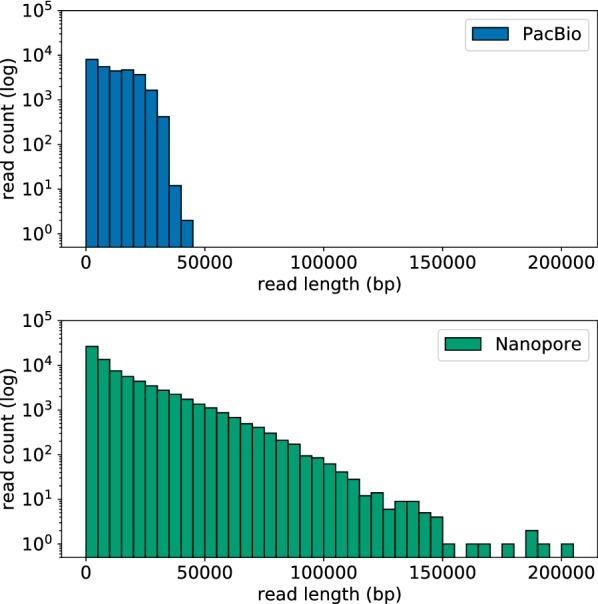
Here we used both short- and long-read methods to sequence the genome of a multidrug-resistant hospital isolate (C15117), which we identified as . Hybrid assembly generated a complete circular chromosome of 4,739,272 bp and a fully resolved plasmid of 339,920 bp containing several antibiotic resistance genes. The strain also harboured a 34,857 bp repeat encoding copper resistance, which was present in both the chromosome and plasmid. Long reads that unambiguously spanned this repeat were required to resolve the chromosome and plasmid into separate replicons.
This study provides important insights into the evolution and potential spread of antimicrobial resistance in a nosocomial strain. More broadly, it further exemplifies the power of long-read sequencing technologies, particularly the Oxford Nanopore platform, for the characterisation of bacteria with complex resistance loci and large repeat elements.
是一种重要的新兴病原体,也是高度多样化的复合体的关键成员。菌株可在医院环境中持续存在并传播,且常常对多种临床上重要的抗生素表现出耐药性。然而,携带耐药决定簇的基因组区域通常高度重复,无法用标准的短读长测序技术解析。
在此,我们使用短读长和长读长方法对一株多重耐药医院分离株(C15117)的基因组进行测序,我们将其鉴定为。混合组装产生了一条4,739,272 bp的完整环状染色体和一个339,920 bp的完全解析质粒,该质粒含有多个抗生素耐药基因。该菌株还含有一个编码铜抗性的34,857 bp重复序列,其存在于染色体和质粒中。需要明确跨越该重复序列的长读长才能将染色体和质粒解析为单独的复制子。
本研究为医院菌株中抗菌药物耐药性的进化和潜在传播提供了重要见解。更广泛地说,它进一步例证了长读长测序技术,特别是牛津纳米孔平台,在表征具有复杂耐药位点和大重复元件的细菌方面的强大作用。