Department of Public Health, Medical College, Shihezi University, 832000 Xinjiang, China.
Oxid Med Cell Longev. 2019 Jan 20;2019:8549035. doi: 10.1155/2019/8549035. eCollection 2019.
To investigate the effects of grape seed proanthocyanidin extract (GSPE) on oxidative damage and arsenic (As) methylation and to clarify the role of Nrf2 in the process.
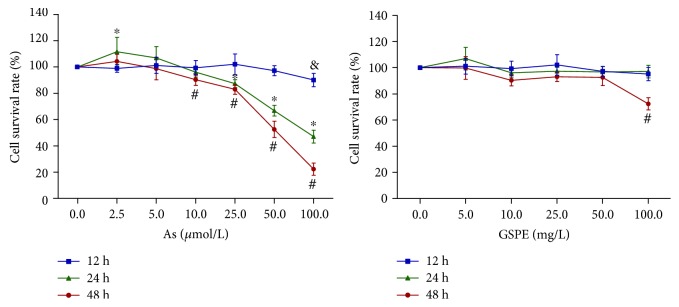
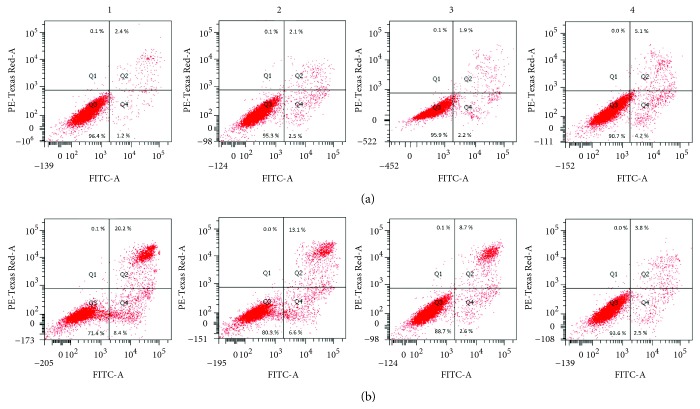
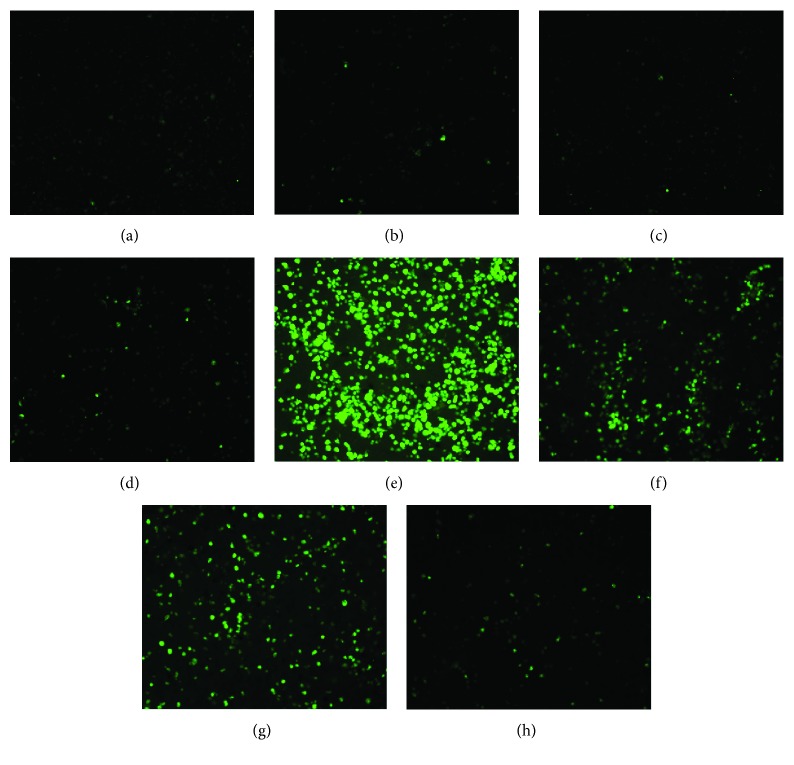
L-02 cells were treated with arsenic (25 M) and GSPE (10, 25, and 50 mg/L) for 24 h. Cell viability was analyzed by MTT assay. Cell apoptosis and ROS fluorescence were detected by flow cytometry. Oxidative stress marker levels were measured using commercial kits. mRNA and protein expression were detected by qRT-PCR and western blotting. The cellular concentrations of methylation products were measured by HPLC-HGAFS. Arsenic methylation ability of cells was determined.
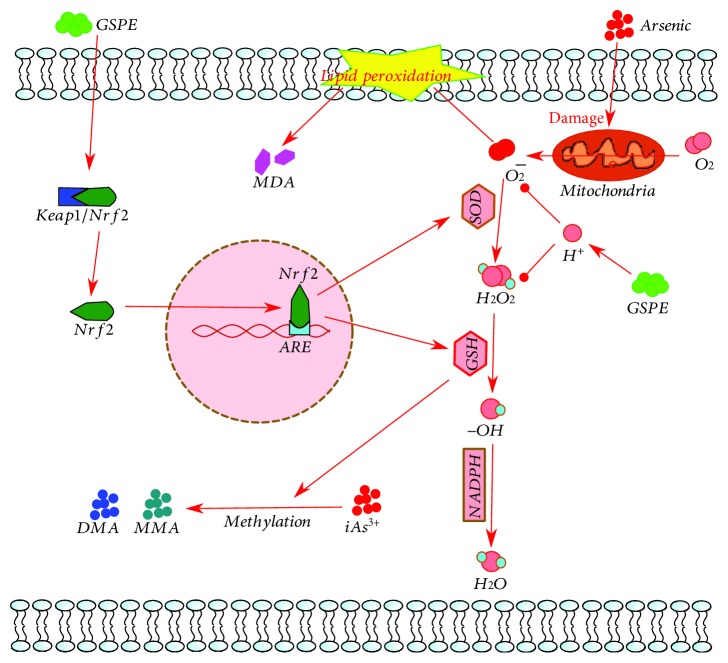
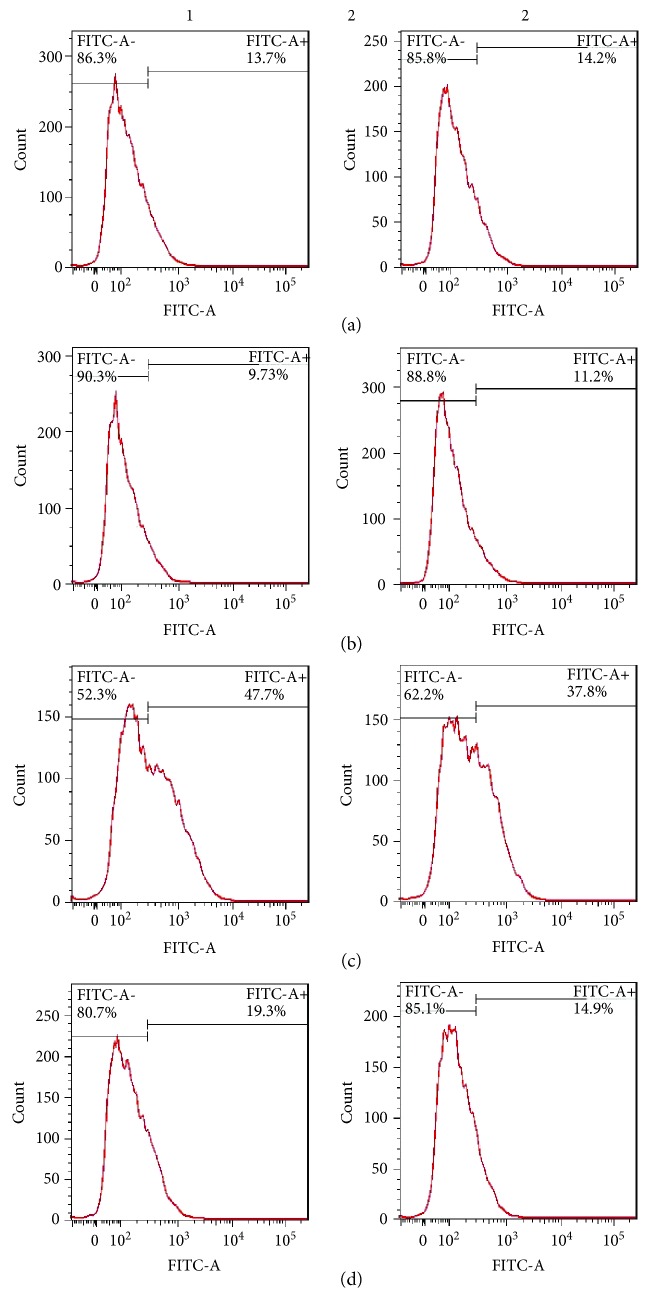
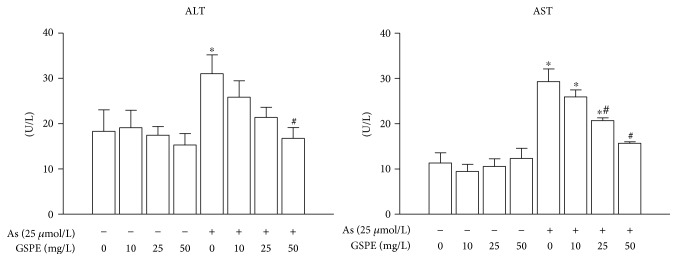
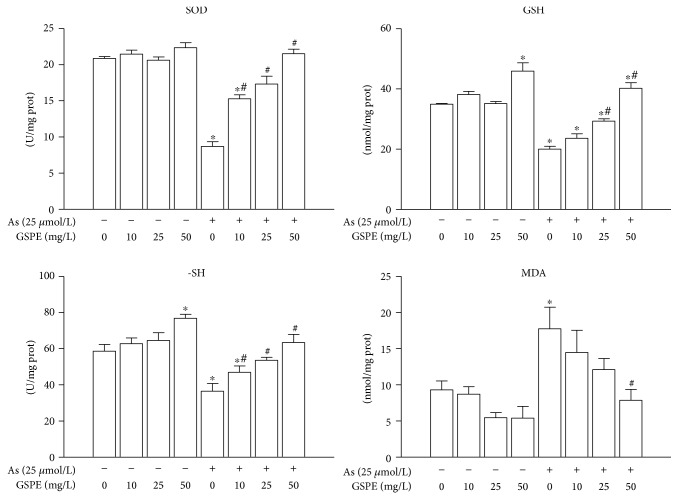
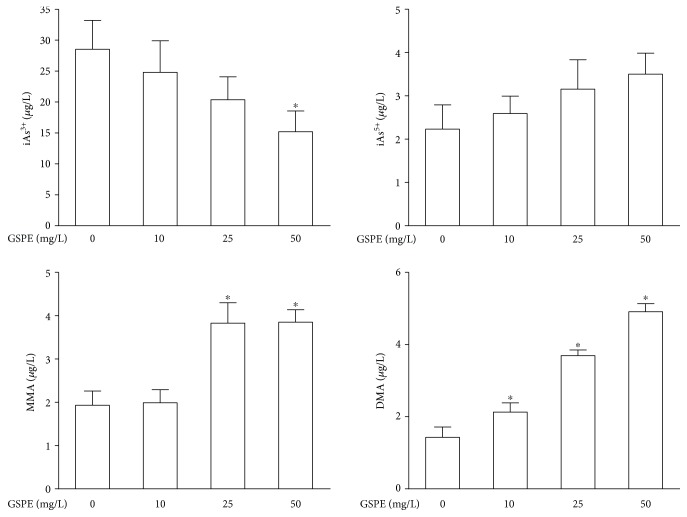
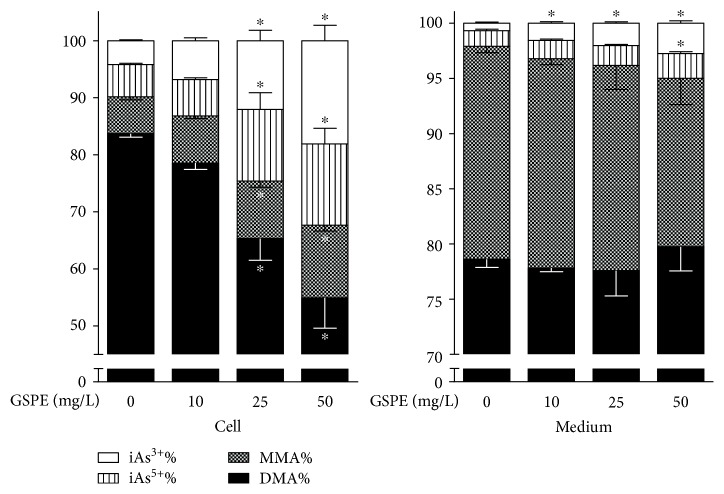
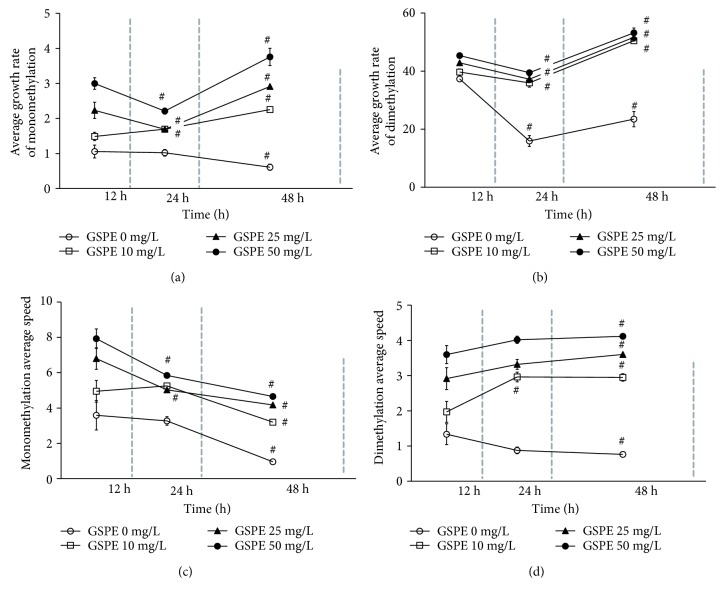
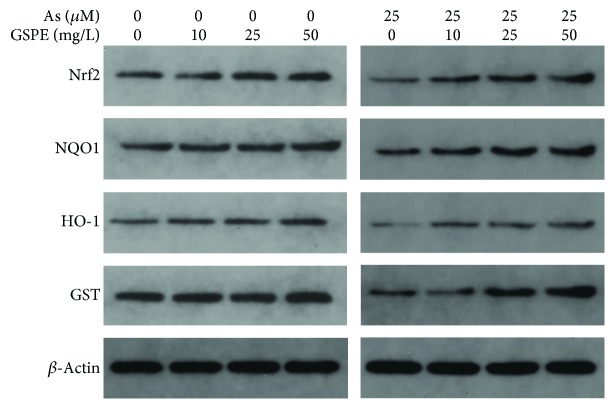
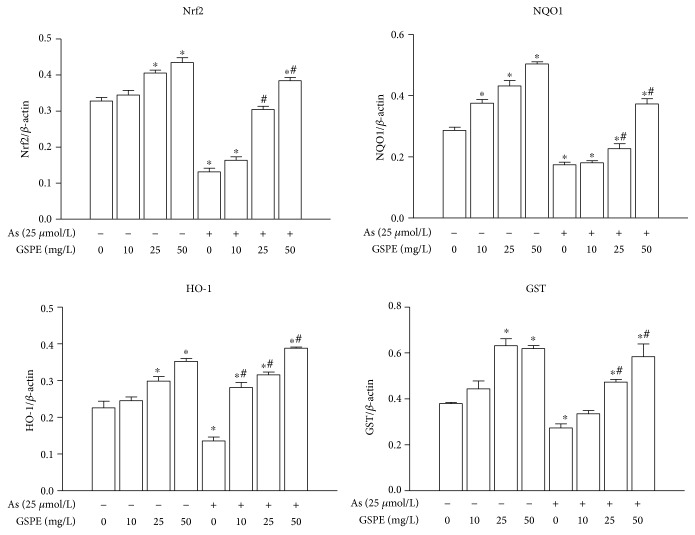
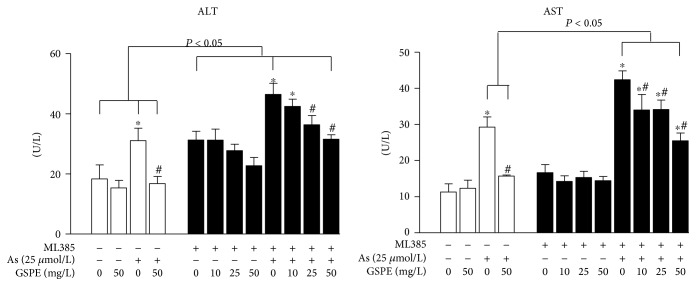
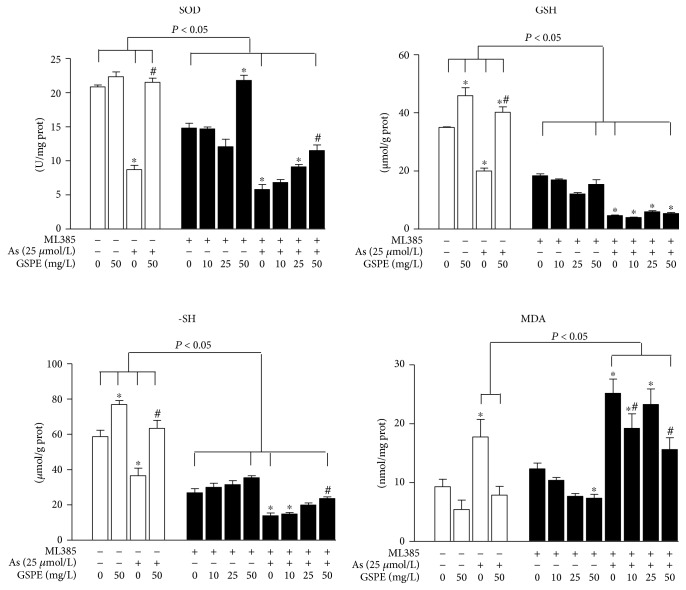
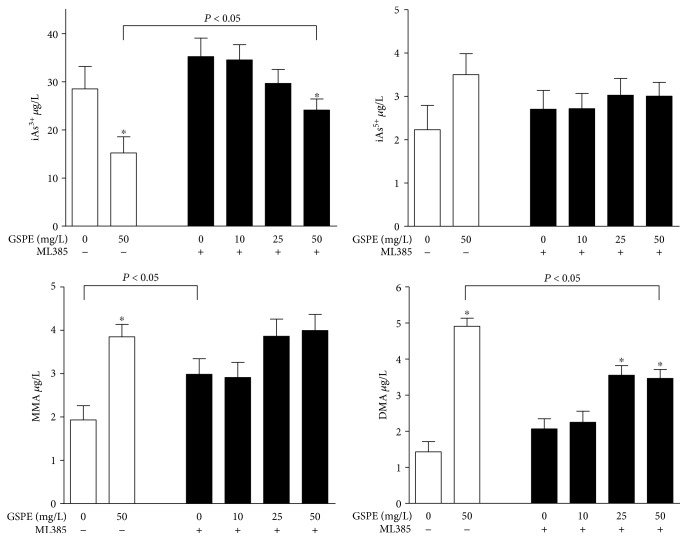
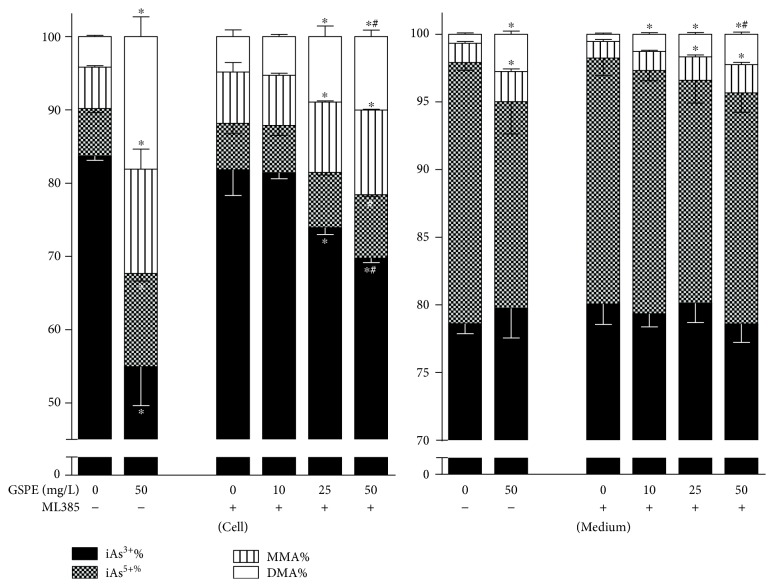
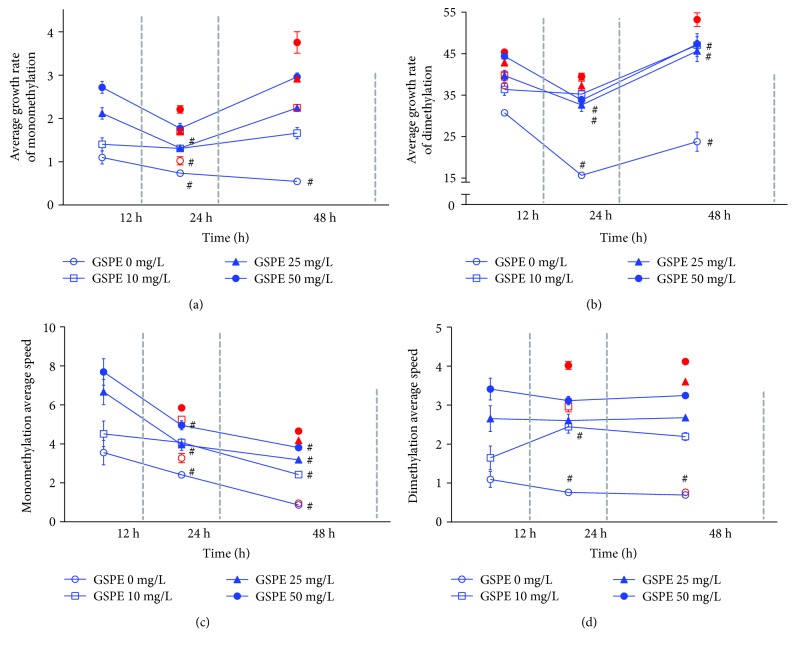
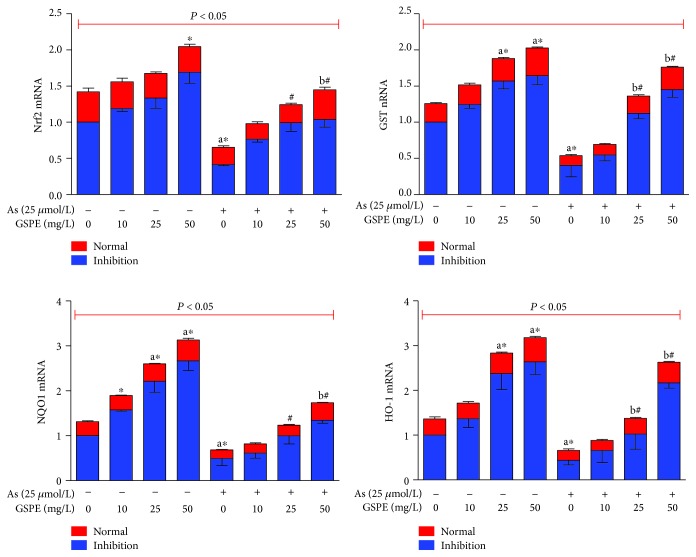
Cell survival rate was significantly lower in the As group than in the control group ( < 0.05), while cell apoptosis increased and the number of apoptotic cells decreased gradually after GSPE intervention. Superoxide dismutase, glutathione, and sulfhydryl levels in the intervention group were significantly higher ( < 0.05), while MDA and ROS levels were significantly lower ( < 0.05) than those in the As group. The mRNA and protein expression of Nrf2, HO-1, NQO1, and glutathione-S-transferase increased in the As + GSPE group compared with that in the As group ( < 0.05). GSPE significantly increased methylated As level, primary methylation index, secondary methylation index, average growth rate of methylation, and average methylation speed compared with the GSPE untreated group ( < 0.05). After Nrf2 inhibition, the effect of GSPE decreased significantly.
GSPE activates the Nrf2 signaling pathway to antagonize As-induced oxidative damage and to promote As methylation metabolism. Therefore, GSPE may be a potential agent for relieving As-induced hepatotoxicity.
研究葡萄籽原花青素提取物(GSPE)对氧化损伤和砷(As)甲基化的影响,并阐明 Nrf2 在该过程中的作用。
用砷(25μM)和 GSPE(10、25 和 50mg/L)处理 L-02 细胞 24h。用 MTT 法分析细胞活力。用流式细胞术检测细胞凋亡和 ROS 荧光。用商业试剂盒测定氧化应激标志物水平。用 qRT-PCR 和 Western blot 检测 mRNA 和蛋白表达。用 HPLC-HGAFS 测量细胞中甲基化产物的浓度。测定细胞的砷甲基化能力。
与对照组相比,As 组细胞存活率显著降低(<0.05),而 GSPE 干预后细胞凋亡增加,凋亡细胞数量逐渐减少。干预组中超氧化物歧化酶、谷胱甘肽和巯基水平明显升高(<0.05),而 MDA 和 ROS 水平明显降低(<0.05)。与 As 组相比,As+GSPE 组 Nrf2、HO-1、NQO1 和谷胱甘肽-S-转移酶的 mRNA 和蛋白表达增加(<0.05)。与未用 GSPE 处理组相比,GSPE 显著增加了甲基化 As 水平、初级甲基化指数、次级甲基化指数、甲基化平均增长率和甲基化平均速度(<0.05)。Nrf2 抑制后,GSPE 的作用明显下降。
GSPE 通过激活 Nrf2 信号通路拮抗 As 诱导的氧化损伤,促进 As 甲基化代谢。因此,GSPE 可能是一种缓解 As 诱导肝毒性的潜在药物。