Tobacco Control Research Group, Department for Health, University of Bath, Bath, United Kingdom.
AMBS, University of Manchester, Manchester, United Kingdom.
PLoS One. 2019 Feb 26;14(2):e0211758. doi: 10.1371/journal.pone.0211758. eCollection 2019.
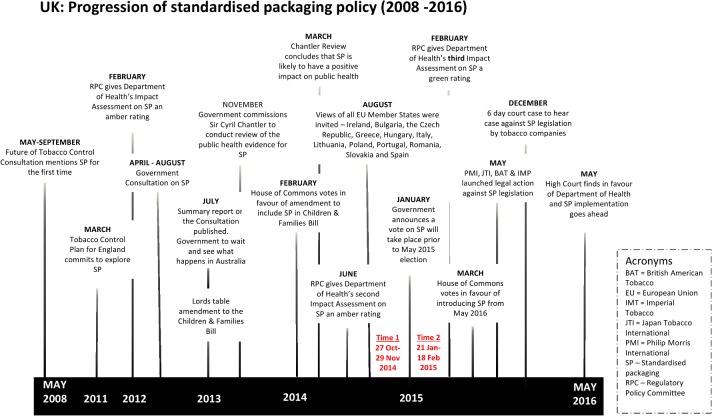
Standardised tobacco packaging has been, and remains, a contentious policy globally, attracting corporate, public health, political, media and popular attention. In January 2015, the UK Government announced it would vote on draft regulations for the policy before the May 2015 General Election. We explored reactions to the announcement on Twitter, in comparison with an earlier period of little UK Government activity on standardised packaging.
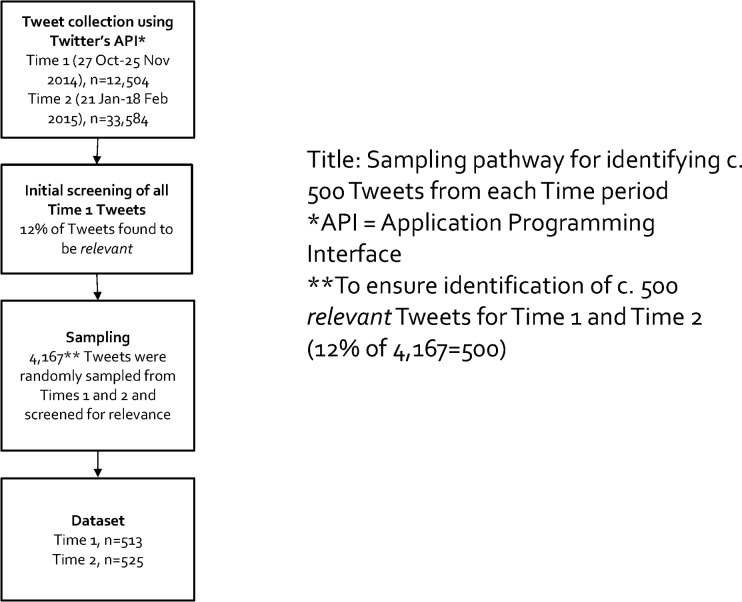
We obtained a random sample of 1038 tweets in two 4-week periods, before and after the UK Government's announcement. Content analysis was used to examine the following Tweet characteristics: support for the policy, purpose, Twitter-user's geographical location and affiliation, and evidence citation and quality. Chi-squared analyses were used to compare Tweet characteristics between the two periods.
Overall, significantly more sampled Tweets were in favour of the policy (49%) in comparison to those opposed (19%). Yet, at Time 2, following the announcement, a greater proportion of sampled tweets opposed standardised packaging compared to the period sampled at Time 1, prior to the announcement (p<0.001). The quality of evidence and research cited in URLs linked at Time 2 was significantly lower than at Time 1 (p<0.001), with peer-reviewed research more likely to be shared in positive Tweets (p<0.001) and in Tweets linking to URLs originating from the health sector (p<0.001). The decline in the proportion of positive Tweets was mirrored by a reduction in Tweets by health sector Twitter-users at Time 2 (p<0.001).
Microblogging sites can reflect offline policy debates and are used differently by policy proponents and opponents dependent on the policy context. Twitter-users opposed to standardised packaging increased their activity following the Government's announcement, while those in support broadly maintained their rate of Twitter engagement. The findings offer insight into the public health community's options for using Twitter to influence policy and disseminate research. In particular, proliferation of Twitter activity following pro-public health policy announcements could be considered to ensure pro-health messages are not overshadowed by anti-regulation voices.
标准化包装在全球范围内一直是一个有争议的政策,引起了企业、公共卫生、政治、媒体和公众的关注。2015 年 1 月,英国政府宣布将在 2015 年 5 月大选前就该政策的法规草案进行投票。我们在 Twitter 上探讨了该公告发布前后公众对此事的反应,并与英国政府在标准化包装方面活动较少的早期时期进行了比较。
我们在两个四周的时间内分别从 Twitter 上获取了 1038 条随机推文,时间分别在英国政府发布公告之前和之后。我们使用内容分析法来研究以下推文特征:对该政策的支持、目的、Twitter 用户的地理位置和隶属关系、证据引用和质量。我们使用卡方检验比较了这两个时期的推文特征。
总体而言,与反对者(19%)相比,支持该政策的样本推文(49%)比例明显更高。然而,在公告发布后的时间 2 点,与时间 1 点(公告前)相比,样本中反对标准化包装的推文比例更高(p<0.001)。在时间 2 点链接的 URL 中引用的证据和研究的质量明显低于时间 1 点(p<0.001),在正面推文中更有可能分享同行评审研究(p<0.001),以及链接到来自卫生部门的 URL 的推文(p<0.001)。在正面推文比例下降的同时,时间 2 点时来自卫生部门的 Twitter 用户的推文数量也减少了(p<0.001)。
微博客网站可以反映线下政策辩论,并根据政策背景由政策支持者和反对者以不同的方式使用。在政府宣布后,反对标准化包装的 Twitter 用户增加了他们的活动,而支持该政策的用户则基本保持了他们的推文参与度。研究结果为公共卫生界利用 Twitter 影响政策和传播研究提供了一些启示。特别是,在发布有利于公众健康的政策公告后,Twitter 活动的激增可能会被考虑在内,以确保有利于健康的信息不会被反监管声音所掩盖。