Nucleus of Molecular Ecology and Plant Micropropagation, Universidade Federal do Pampa, Campus São Gabriel, Av. Antonio Trilha 1847, 97300-162, São Gabriel, RS, Brazil.
Graduate Program on Plant Genetic Resources, Universidade Federal de Santa Catarina, 88040-900, Florianópolis, SC, Brazil.
Sci Rep. 2019 Feb 26;9(1):2752. doi: 10.1038/s41598-019-39308-w.
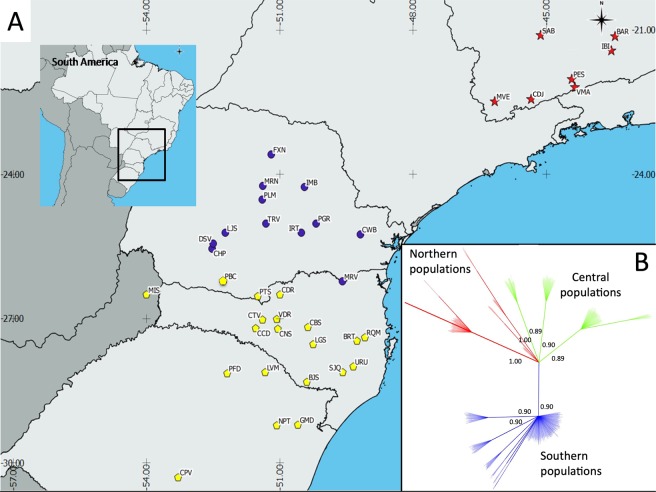
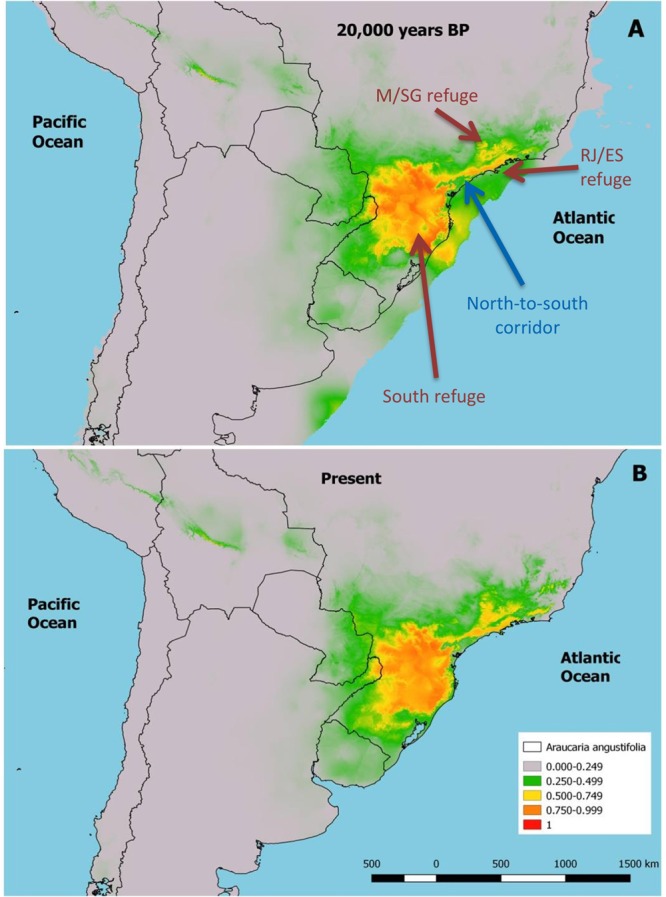
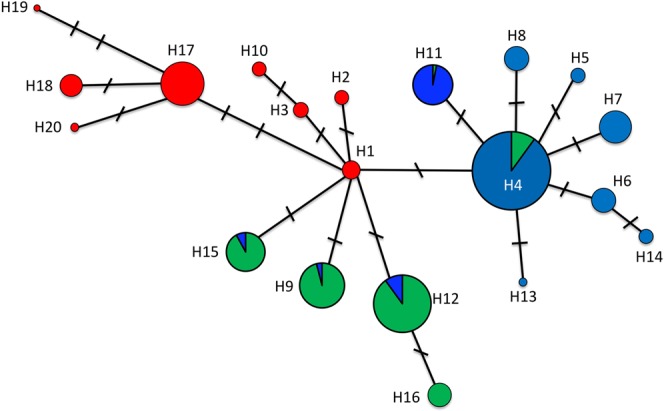
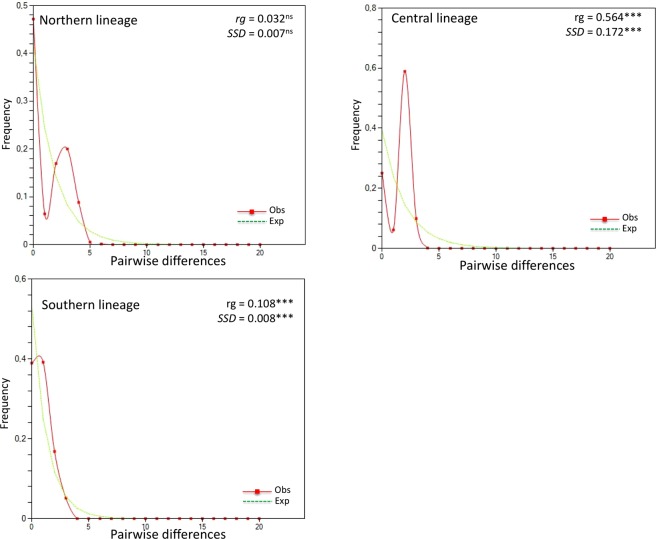
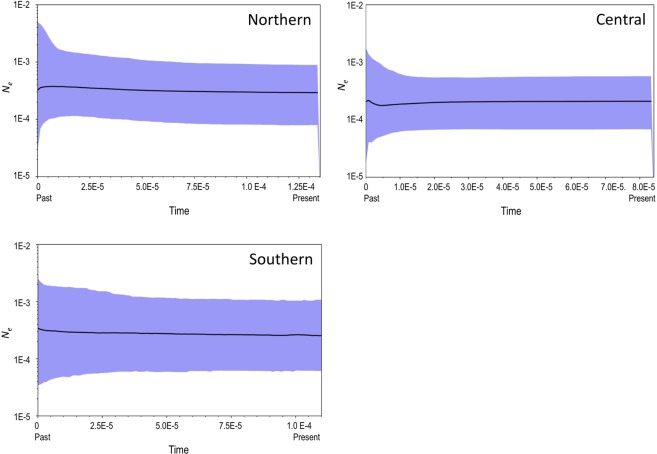
Despite the high diversity of the Southern South American environments, the patterns and processes driving both their species diversity and demographic history are still poorly known and are a challenging task. In this study, we evaluate plastid DNA sequences of the conifer species Araucaria angustifolia aiming to (i) assess the species genetic structure within its main range of occurrence, (ii) infer its population demographic history, looking for evidence of southward expansion, (iii) search for evidence of glacial refugia within the species distribution area and (iv) discuss some conservation and management strategies for this species. Twenty haplotypes were identified, revealing the presence of three distinct genetic groups across the geographic range of the species and structuring the populations into Northern, Central and Southern groups. Our results suggest the occurrence of post-glacial expansion of A. angustifolia towards the south, as well as the existence of at least three refugia within the species occurrence area. Testing the occurrence of historical demographic expansion, we suggest that genetic groups experienced fluctuations in effective size, associated to a structured distribution of populations. The identification of three genetic groups in this study corroborates the proposition of using the geographic distribution of A. angustifolia for selecting in situ conservation areas, for planning seed collection for ex situ conservation, as well as for the delineation of seed zones.
尽管南美洲南部的环境具有高度多样性,但驱动物种多样性和种群历史的模式和过程仍知之甚少,这是一项具有挑战性的任务。在这项研究中,我们评估了南洋杉物种的质体 DNA 序列,旨在:(i) 评估其主要分布范围内的物种遗传结构,(ii) 推断其种群的历史人口动态,寻找向南扩张的证据,(iii) 在物种分布区内寻找冰川避难所的证据,以及 (iv) 讨论该物种的一些保护和管理策略。共鉴定出 20 种单倍型,揭示了在该物种的地理分布范围内存在三个不同的遗传群体,并将种群分为北部、中部和南部群体。我们的研究结果表明,南洋杉在冰期后向南扩张,以及在物种分布区至少存在三个避难所。通过检验历史人口扩张的发生,我们认为遗传群体的有效大小经历了波动,与种群的结构分布有关。本研究中三个遗传群体的鉴定证实了利用南洋杉的地理分布来选择就地保护区域、规划就地保护的种子收集以及划定种子区的建议。