School of Biosciences, Cardiff University, Sir Martin Evans Building, Museum Avenue, Cardiff, CF10 3AX, United Kingdom.
Markes International Ltd, Gwaun Elai Medi-Science Campus, Llantrisant, RCT, CF72 8XL, United Kingdom.
Sci Rep. 2019 Feb 26;9(1):2745. doi: 10.1038/s41598-019-39196-0.
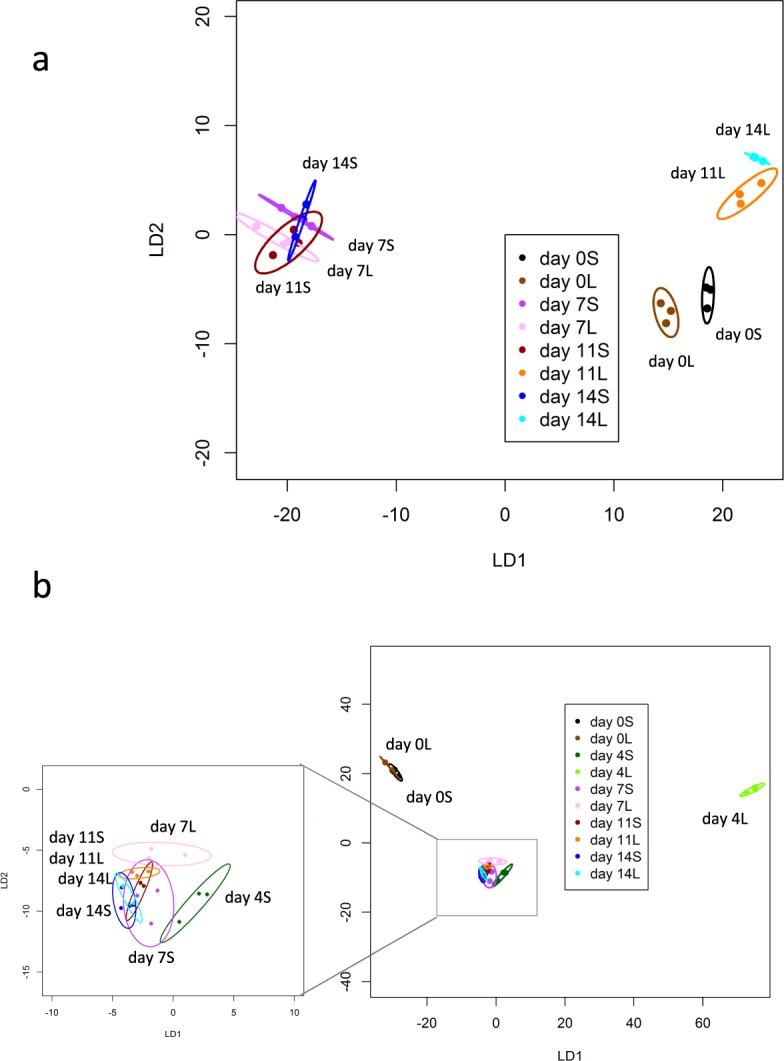
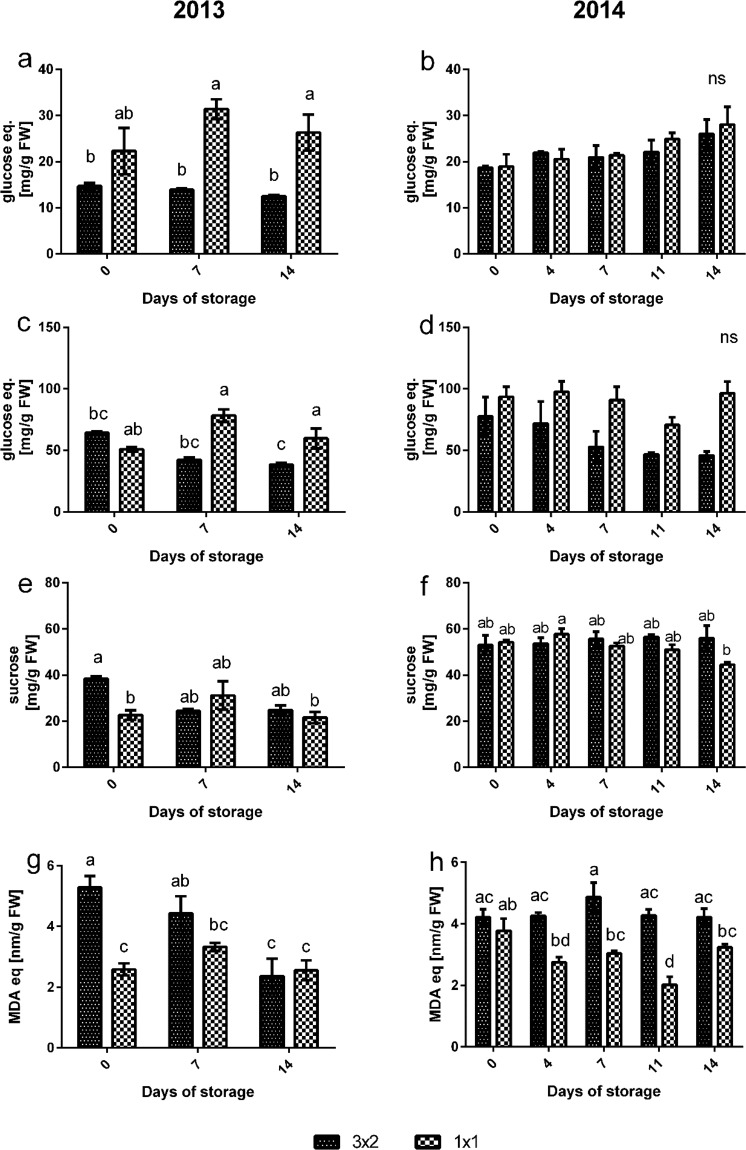
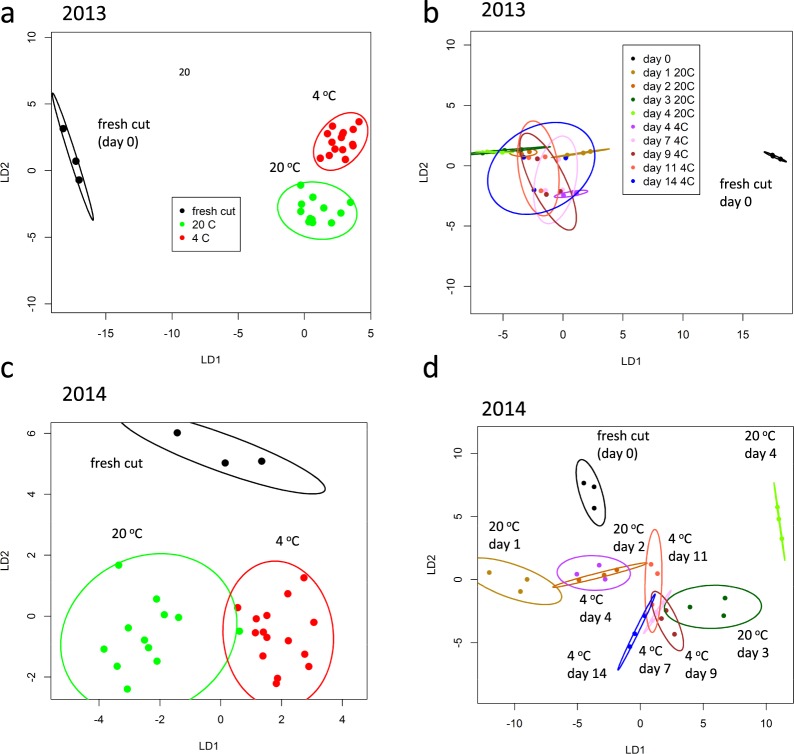
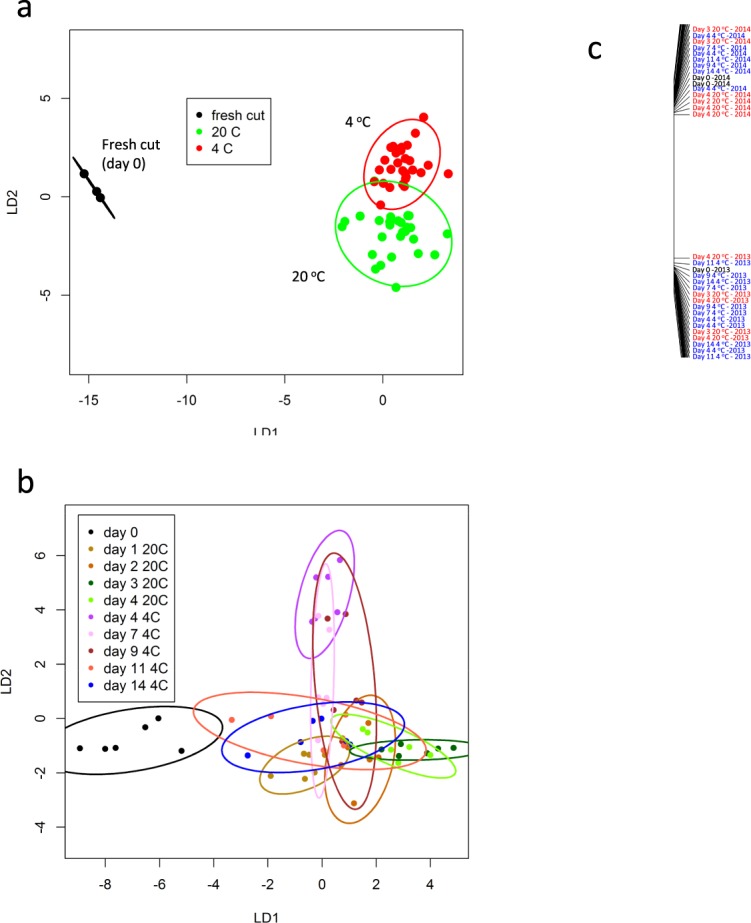
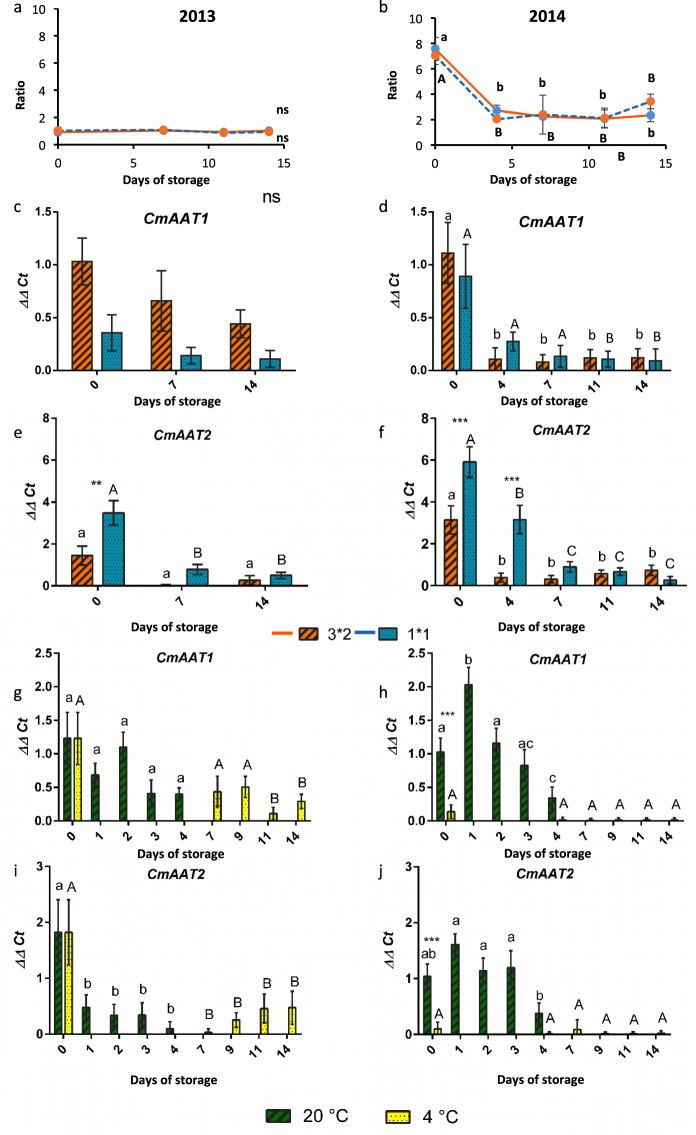
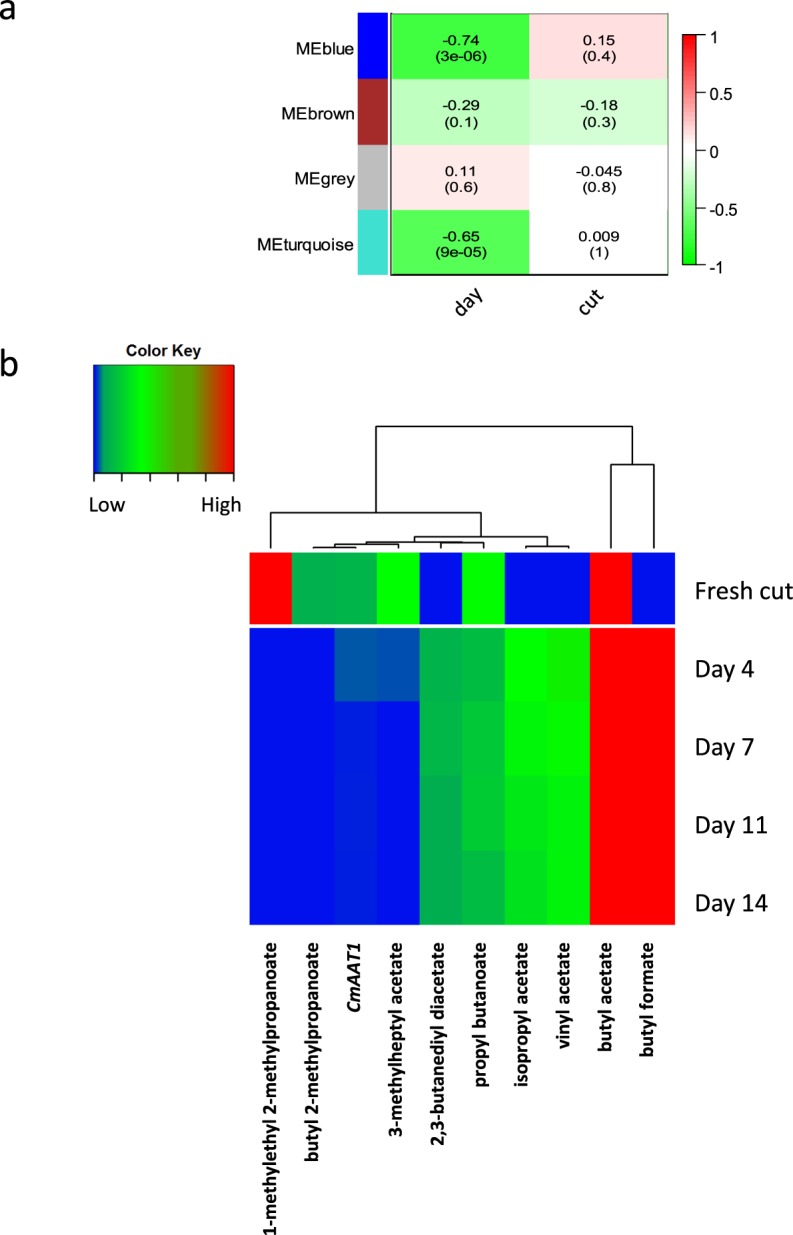
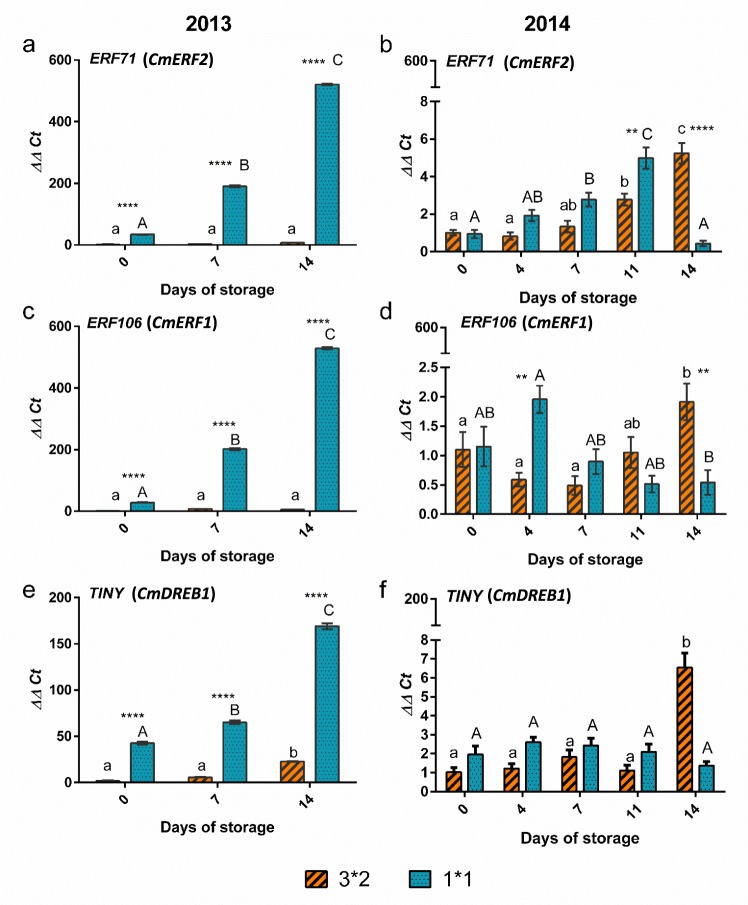
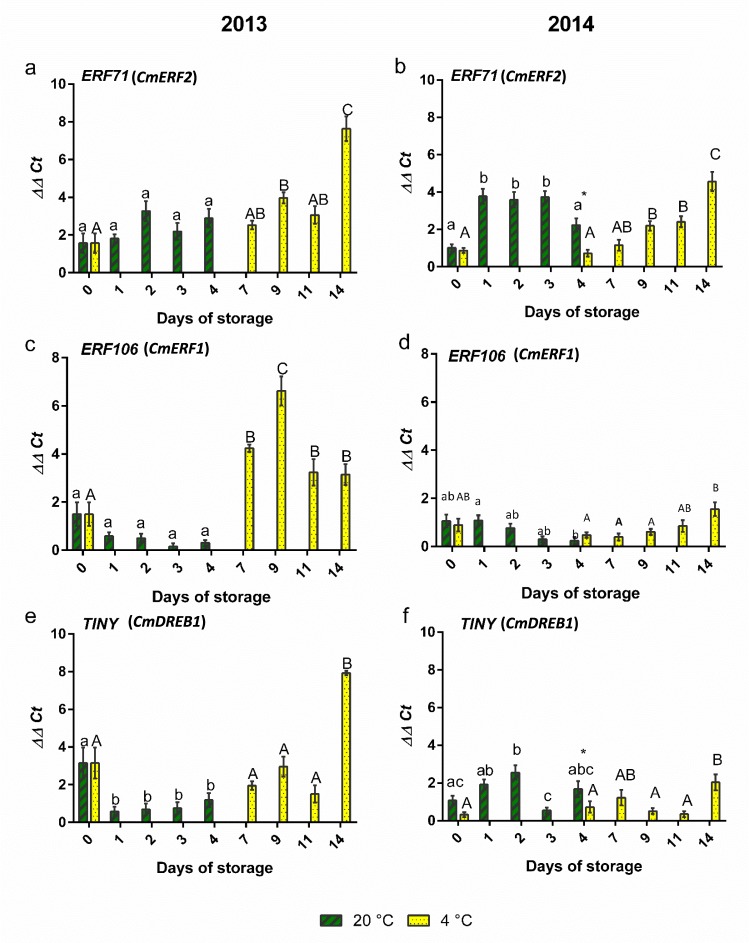
Melons are prized for their characteristic aroma, however, pre-harvest growth, stage of ripening at harvest, post-harvest processing and storage conditions lead to quality changes in fresh-cut fruit. We considered changes in metabolites and gene expression over 14 days storage to assess underlying mechanisms and identify potential quality markers. Overall, 99 volatile organic compounds (VOCs) were detected and VOC profiles discriminated between two melon seasons, cut-size, storage temperatures and storage time, although season affected their discriminatory power. Abundance of two VOCs fell rapidly and was not associated with cut size, indicating their use as markers for early changes post-processing. Non-acetate to acetate ester ratio differed between the seasons and correlated with changes in alcohol acyl-transferase (CmAAT1) gene expression. Furthermore, CmAAT1 expression clustered with two ester VOCs that may be potential new products of this enzyme. Season also strongly affected post-harvest sugar content, most likely attributable to meteorological differences during growth. Storage temperature and cut size affected expression of transcription factors ERF71, ERF106, and TINY, whose expression generally rose during storage, probably related to increased stress. Thus, although time × temperature of storage are key factors, pre-harvest conditions and fruit processing impact significantly gene expression and aroma loss post-harvest.
瓜类因其特有的香气而备受推崇,然而,在收获前的生长、成熟阶段、收获后的加工和储存条件都会导致鲜切果实的质量发生变化。我们考虑了在 14 天储存过程中代谢物和基因表达的变化,以评估潜在的机制并确定潜在的质量标志物。总的来说,检测到了 99 种挥发性有机化合物(VOCs),VOC 谱图可以区分两个瓜类季节、切分大小、储存温度和储存时间,尽管季节会影响它们的区分能力。两种 VOC 的丰度迅速下降,与切分大小无关,表明它们可作为加工后早期变化的标志物。非醋酸酯与醋酸酯的比例在季节之间存在差异,并与醇酰基转移酶(CmAAT1)基因表达的变化相关。此外,CmAAT1 的表达与两种酯类 VOC 聚类,这两种 VOC 可能是该酶的潜在新产物。季节也强烈影响收获后的糖含量,这很可能归因于生长期间的气象差异。储存温度和切分大小影响转录因子 ERF71、ERF106 和 TINY 的表达,它们的表达通常在储存过程中上升,可能与压力增加有关。因此,尽管储存的时间和温度是关键因素,但收获前的条件和水果加工对收获后基因表达和香气损失有显著影响。