Laboratory for Cellular Biomechanics and Regenerative Medicine, Department of Biomechanical Engineering, College of Life Science and Technology, Huazhong University of Science and Technology, Wuhan, Hubei 430074, China.
National Engineering Research Center for Nanomedicine, College of Life Science and Technology, Huazhong University of Science and Technology, Wuhan 430074, China.
Theranostics. 2019 Jan 1;9(2):424-435. doi: 10.7150/thno.29698. eCollection 2019.
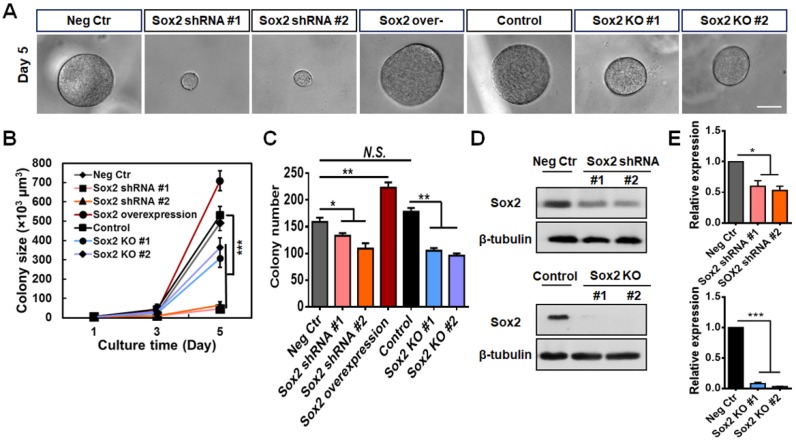
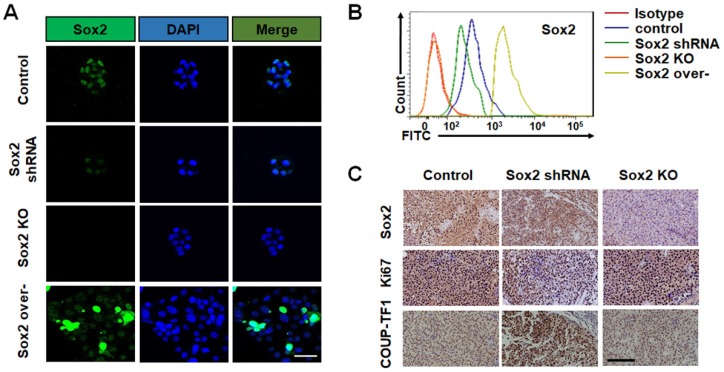
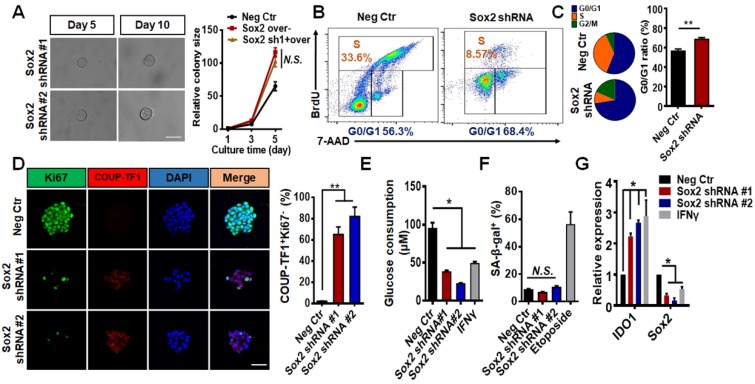
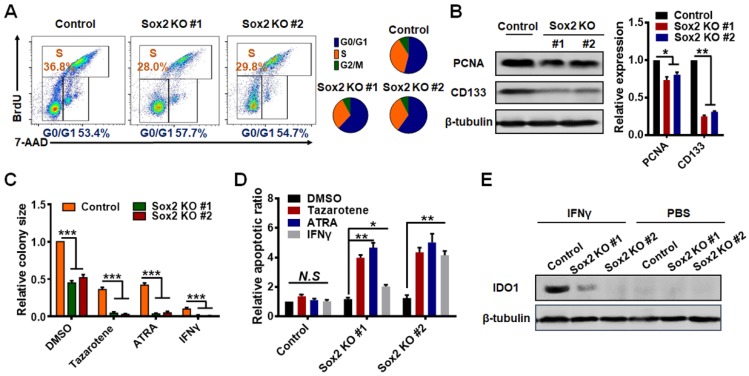
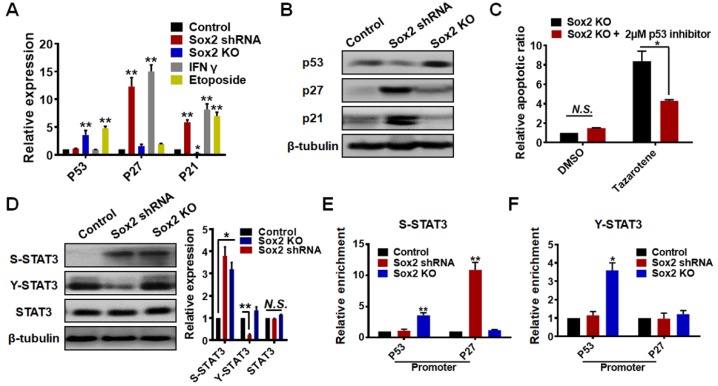
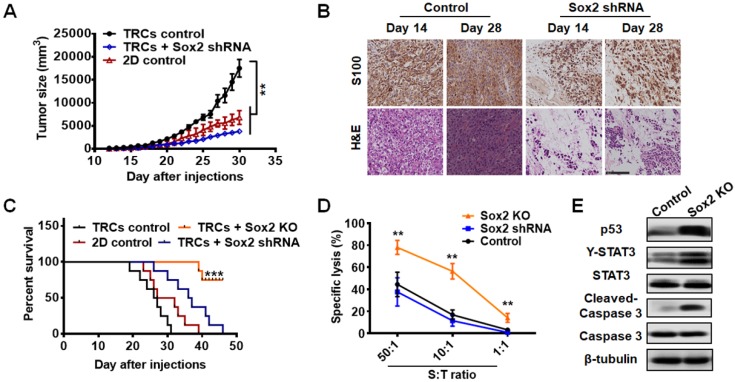
Tumorigenic cells, when facing a hostile environment, may enter a dormant state, leading to long-term tumor survival, relapse, and metastasis. To date, the molecular mechanism of tumor cell dormancy remains poorly understood. A soft, 3-dimentional (3D) fibrin gel culture system was used to mechanically select and grow highly malignant and tumorigenic melanoma tumor-repopulating cells (TRCs). We cultured control melanoma TRCs, TRCs with Sox2 knockdown, TRCs with Sox2 knockout, and a 2D control for and experiments. Western blotting, immunofluorescence, and flow cytometry analysis were performed to examine TRC dormancy and exit from dormancy. Under a low-expression condition, we show that Sox2, a stemness molecule participates in dormancy regulation of highly tumorigenic cells that can repopulate a tumor (TRCs). Intriguingly, complete depletion of Sox2 via knockout results in dormancy exit and growth resumption of melanoma TRCs in culture and elevation of melanoma TRC apoptosis. Mice that are injected subcutaneously with Sox2-depleted melanoma TRCs do not form tumors and survive much longer than those injected with melanoma TRCs. We found that complete depletion of Sox2 promotes nuclear translocation of phosphorylated STAT3, where it binds to the gene promoter, thus activating the p53-caspase3 cascade. These findings provide a novel insight into the role of the gene in tumor cell stemness, tumor dormancy, and apoptosis.
致瘤细胞在面临恶劣环境时,可能会进入休眠状态,从而导致肿瘤长期存活、复发和转移。迄今为止,肿瘤细胞休眠的分子机制仍知之甚少。本研究使用柔软的三维(3D)纤维蛋白凝胶培养系统,通过机械选择和培养高恶性和致瘤性黑素瘤肿瘤再殖细胞(TRCs)。我们培养了对照黑素瘤 TRC、Sox2 敲低的 TRC、Sox2 敲除的 TRC 和 2D 对照,用于 和 实验。通过 Western blot、免疫荧光和流式细胞术分析来检测 TRC 的休眠和从休眠中苏醒。在低表达条件下,我们表明 Sox2,一种干性分子,参与高度致瘤细胞的休眠调节,这些细胞可以重新形成肿瘤(TRCs)。有趣的是,通过敲除完全耗尽 Sox2 会导致黑素瘤 TRC 在培养中休眠的结束和生长的恢复,并增加黑素瘤 TRC 的凋亡。将 Sox2 耗尽的黑素瘤 TRC 皮下注射到小鼠中不会形成肿瘤,并且比注射黑素瘤 TRC 的小鼠存活时间长得多。我们发现,Sox2 的完全耗尽促进了磷酸化 STAT3 的核转位,其与 基因启动子结合,从而激活 p53-caspase3 级联。这些发现为 基因在肿瘤细胞干性、肿瘤休眠和凋亡中的作用提供了新的见解。