Mulchandani Ranya, Massebo Fekadu, Bocho Fekadu, Jeffries Claire L, Walker Thomas, Messenger Louisa A
Department of Disease Control, London School of Hygiene & Tropical Medicine, University of London, London, UK.
Department of Biology, Arba Minch University, Arba Minch, Ethiopia.
PeerJ. 2019 Feb 20;7:e6466. doi: 10.7717/peerj.6466. eCollection 2019.
Despite the availability of a highly effective vaccine, yellow fever virus (YFV) remains an important public health problem across Africa and South America due to its high case-fatality rate. This study investigated the historical epidemiology and contemporary entomological and social determinants of a YFV outbreak in South Omo Zone (SOZ), Ethiopia.
A YFV outbreak occurred in SOZ, Ethiopia in 2012-2014. Historical epidemiological data were retrieved from the SOZ Health Department and analyzed. Entomological sampling was undertaken in 2017, including mosquito species identification and molecular screening for arboviruses to understand mosquito habitat distribution, and finally current knowledge, attitudes and preventative practices within the affected communities were assessed.
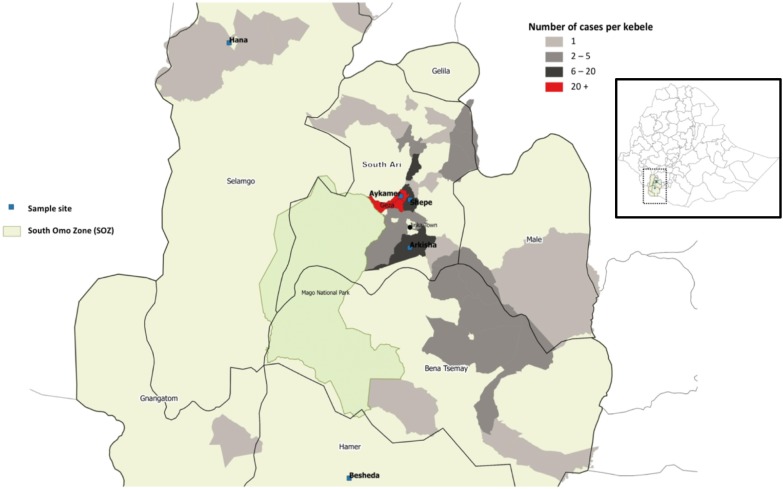
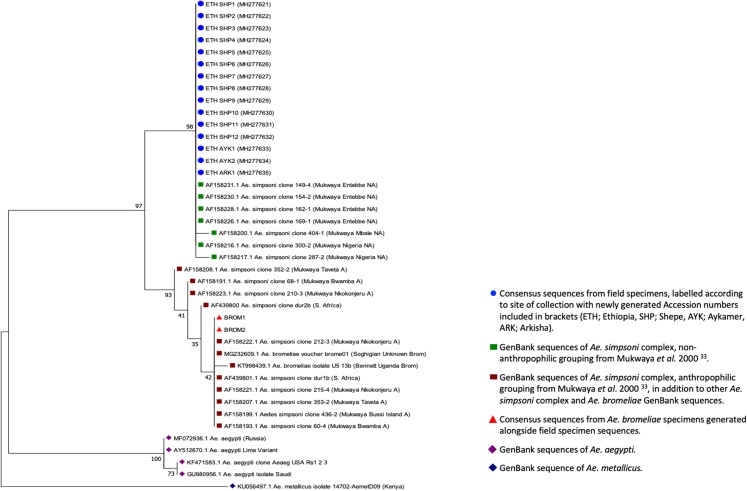
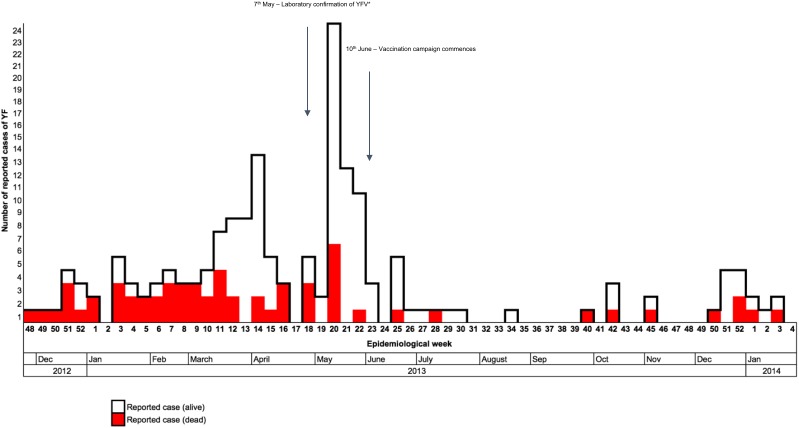
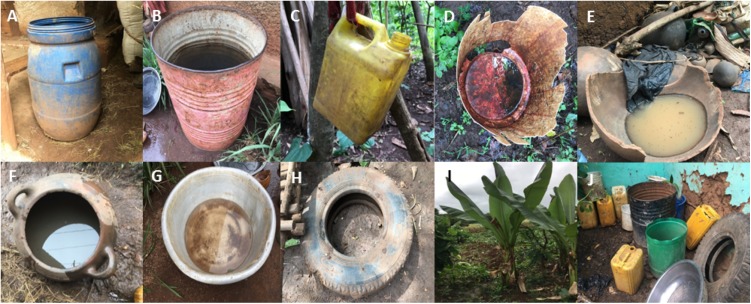
From October 2012 to March 2014, 165 suspected cases and 62 deaths were reported, principally in rural areas of South Ari region (83.6%). The majority of patients were 15-44 years old (75.8%) and most case deaths were males (76%). Between June and August 2017, 688 containers were sampled across 180 households to identify key breeding sites for mosquitoes. ("false banana") and clay pots outside the home were the most productive natural and artificial breeding sites, respectively. Entomological risk indices classified most sites as "high risk" for future outbreaks under current World Health Organization criteria. Adult mosquitoes in houses were identified as members of the complex but no YFV or other arboviruses were detected by PCR. The majority of community members had heard of YFV, however few activities were undertaken to actively reduce mosquito breeding sites.
Study results highlight the potential role vector control could play in mitigating local disease transmission and emphasize the urgent need to strengthen disease surveillance systems and in-country laboratory capacity to facilitate more rapid responses to future YFV outbreaks.
尽管有高效疫苗,但黄热病病毒(YFV)因其高病死率,在非洲和南美洲仍是一个重要的公共卫生问题。本研究调查了埃塞俄比亚南奥莫地区(SOZ)YFV 疫情的历史流行病学以及当代昆虫学和社会决定因素。
2012 - 2014 年埃塞俄比亚 SOZ 发生了 YFV 疫情。从 SOZ 卫生部门检索并分析了历史流行病学数据。2017 年进行了昆虫学采样,包括蚊种鉴定和虫媒病毒分子筛查,以了解蚊虫栖息地分布,最后评估了受影响社区内的当前知识、态度和预防措施。
2012 年 10 月至 2014 年 3 月,报告了 165 例疑似病例和 62 例死亡病例,主要发生在南阿里地区的农村(83.6%)。大多数患者年龄在 15 - 44 岁之间(75.8%),大多数病例死亡为男性(76%)。2017 年 6 月至 8 月,在 180 户家庭中对 688 个容器进行了采样,以确定蚊子的主要繁殖地。家中的“假香蕉”和屋外的陶罐分别是最主要的自然和人工繁殖地。根据世界卫生组织当前标准,昆虫学风险指数将大多数地点归类为未来疫情的“高风险”地区。屋内成年蚊子被鉴定为该复合体的成员,但 PCR 检测未发现 YFV 或其他虫媒病毒。大多数社区成员听说过 YFV,但很少有人采取行动积极减少蚊子繁殖地。
研究结果突出了病媒控制在减轻当地疾病传播方面可能发挥的潜在作用,并强调迫切需要加强疾病监测系统和国内实验室能力,以便对未来的 YFV 疫情做出更快速的反应。