Poluha Rodrigo Lorenzi, Canales Giancarlo De la Torre, Costa Yuri Martins, Grossmann Eduardo, Bonjardim Leonardo Rigoldi, Conti Paulo César Rodrigues
Universidade de São Paulo, Faculdade de Odontologia de Bauru, Departamento de Prótese, Grupo de Dor Orofacial de Bauru, Bauru, São Paulo, Brasil.
Universidade de Campinas, Faculdade de Odontologia de Piracicaba, Departamento de Ciências Fisiológicas, Piracicaba, São Paulo, Brasil.
J Appl Oral Sci. 2019 Feb 21;27:e20180433. doi: 10.1590/1678-7757-2018-0433.
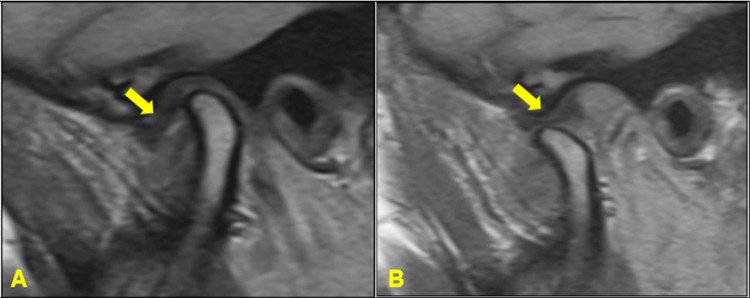
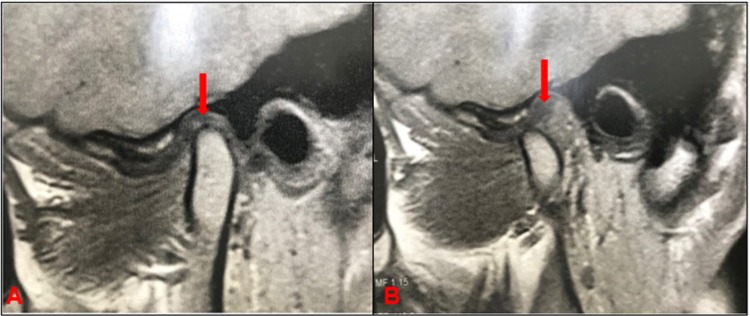
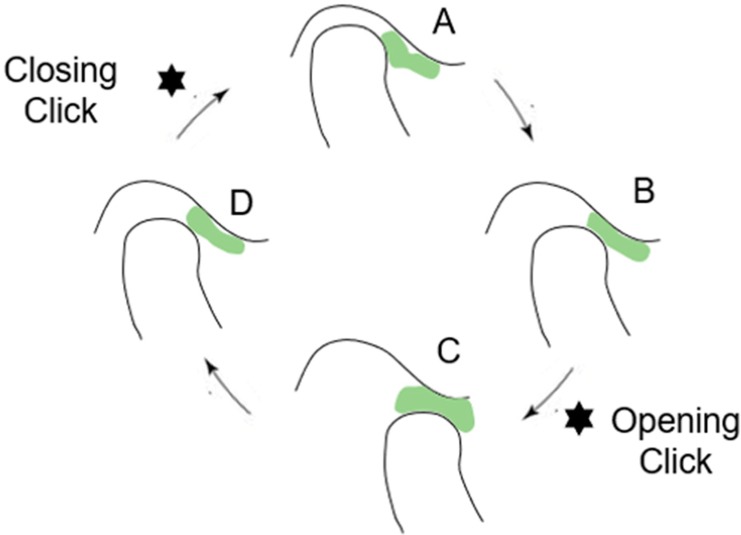
Disc displacement with reduction (DDWR) is one of the most common intra-articular disorders of the temporomandibular joint (TMJ). Factors related to the etiology, progression and treatment of such condition is still a subject of discussion. This literature review aimed to address etiology, development, related factors, diagnosis, natural course, and treatment of DDWR. A non-systematic search was conducted within PubMed, Scopus, SciELO, Medline, LILACS and Science Direct using the Medical Subjective Headings (MeSH) terms "temporomandibular disorders", "temporomandibular joint", "disc displacement" and "disc displacement with reduction". No time restriction was applied. Literature reviews, systematic reviews, meta-analysis and clinical trials were included. DDWR is usually asymptomatic and requires no treatment, since the TMJ structures adapt very well and painlessly to different disc positions. Yet, long-term studies have shown the favorable progression of this condition, with no pain and/or jaw locking occurring in most of the patients.
可复性盘移位(DDWR)是颞下颌关节(TMJ)最常见的关节内疾病之一。与该病症的病因、进展及治疗相关的因素仍是讨论的主题。本综述旨在探讨可复性盘移位的病因、发展、相关因素、诊断、自然病程及治疗。使用医学主题词(MeSH)“颞下颌关节紊乱病”“颞下颌关节”“盘移位”及“可复性盘移位”在PubMed、Scopus、SciELO、Medline、LILACS和Science Direct数据库中进行了非系统检索。未设时间限制。纳入文献综述、系统评价、荟萃分析及临床试验。可复性盘移位通常无症状,无需治疗,因为颞下颌关节结构能很好地且无痛地适应不同的盘位置。然而,长期研究表明该病症进展良好,大多数患者未出现疼痛和/或下颌锁定。