Laboratorio de Microbiología Molecular, Facultad de Ciencias Médicas, Universidad Nacional de Rosario, Rosario, Argentina.
PLoS One. 2019 Feb 27;14(2):e0212365. doi: 10.1371/journal.pone.0212365. eCollection 2019.
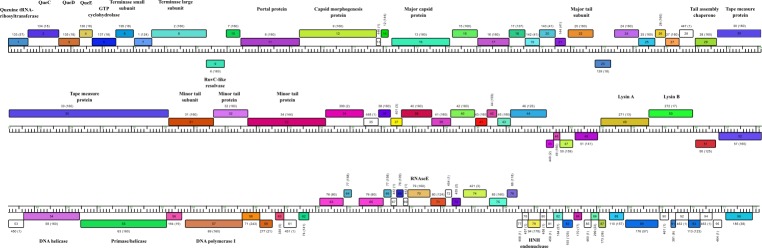
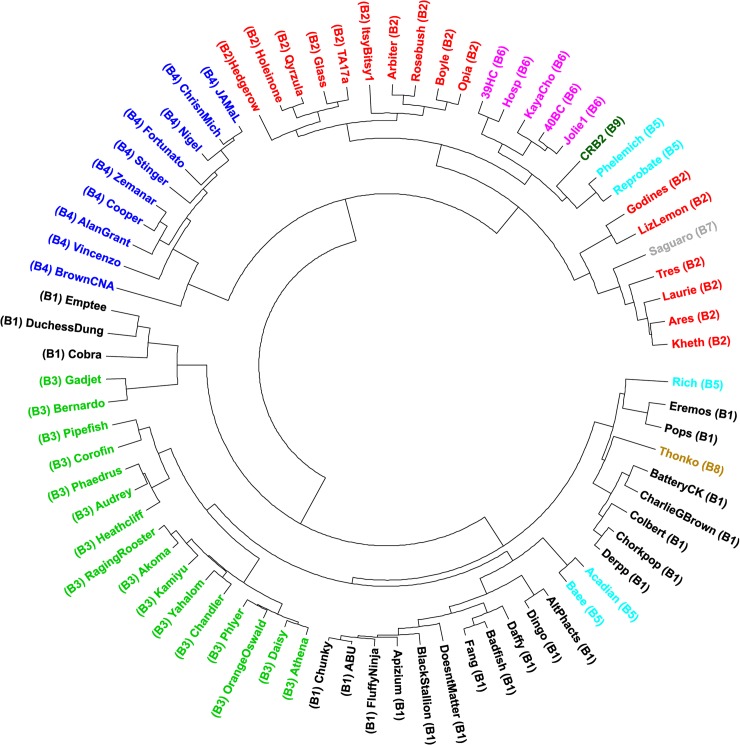
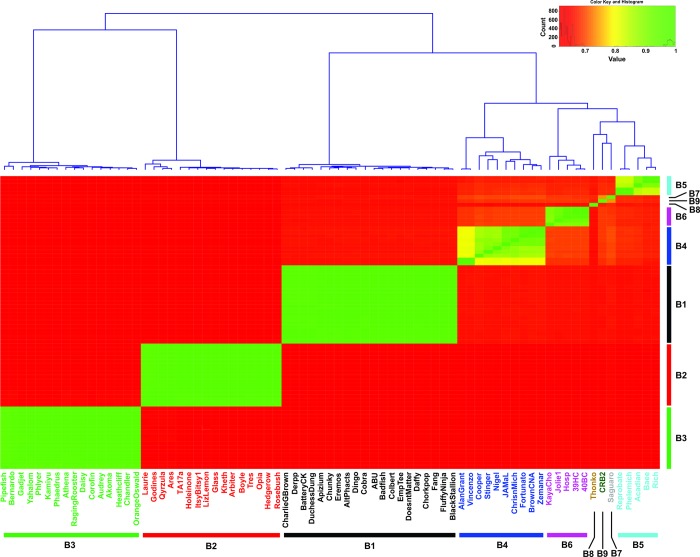
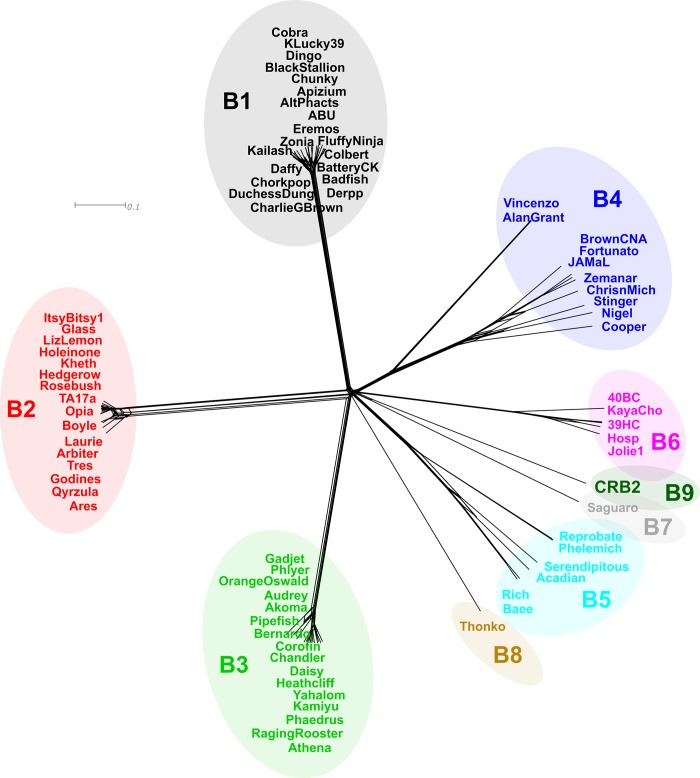
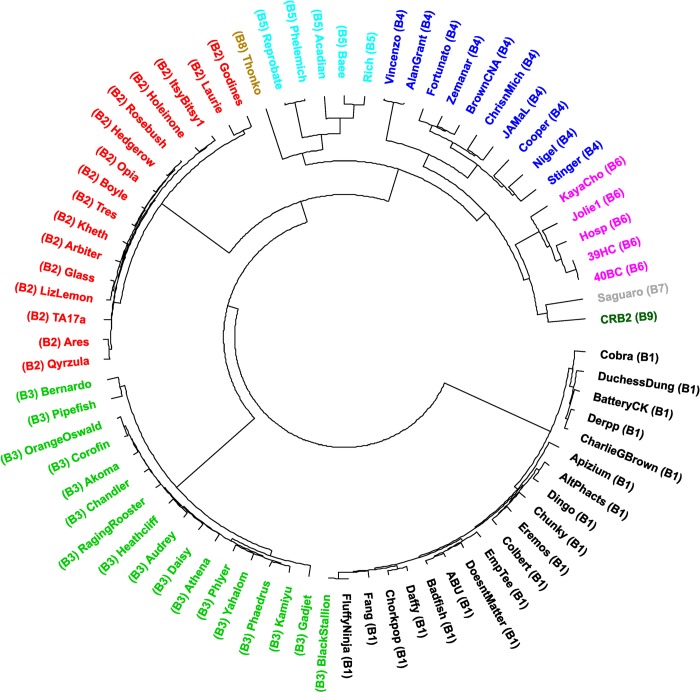
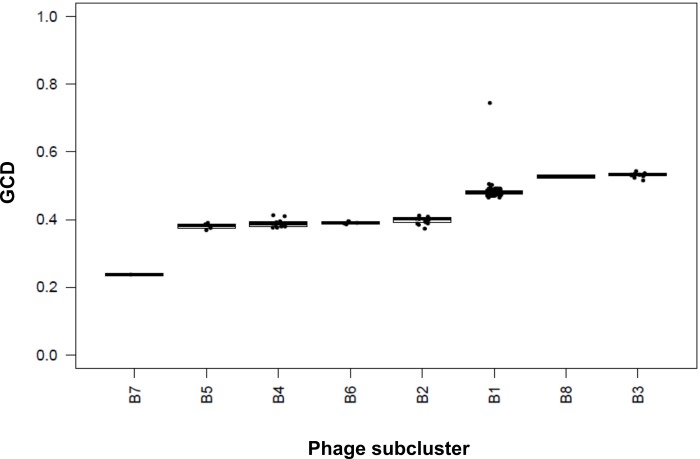
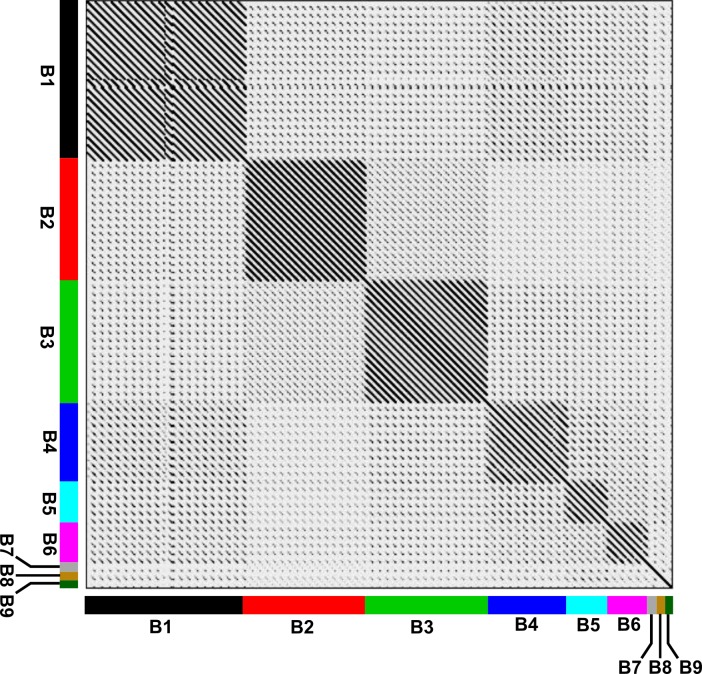
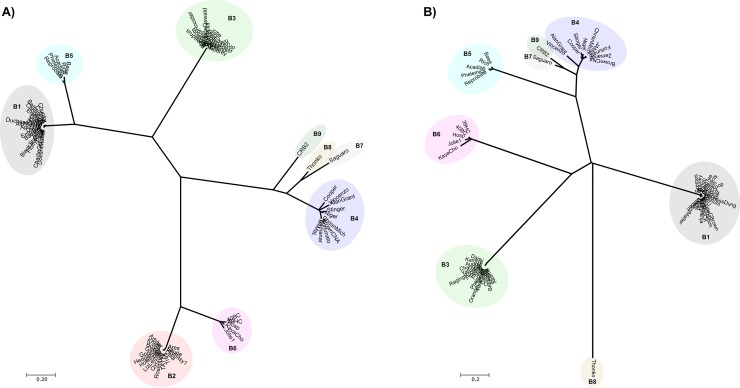
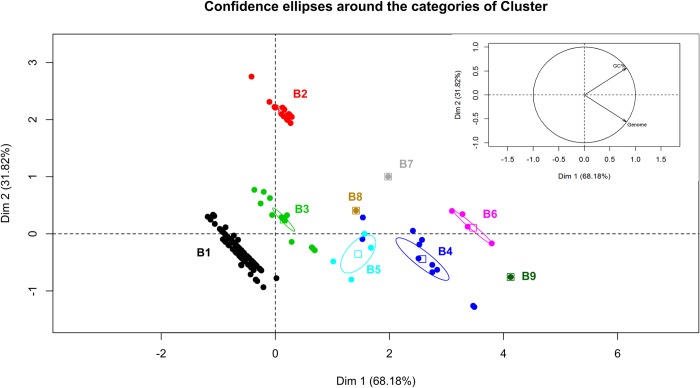
Mycobacteriophages are viruses -mostly temperates- that infect Mycobacterium smegmatis and sometimes Mycobacterium tuberculosis. Mycobacteriophages are grouped in clusters on the basis of the overall nucleotide sequence homology, being further divided in subclusters as more mycobacteriophage genomes are sequenced and annotated. As part of our on-going screening for novel isolates, we herein report the bioinformatics analysis of CRB2, a mycobacteriophage belonging into the Siphoviridae family that propagates at 30°C. CRB2 has a 72,217 bp genome with a 69.78% GC content that belongs to Cluster B; nucleotide comparison with other B cluster members positions CRB2 as the sole member of a new subcluster, B9, being mycobacteriophage Saguaro (belonging into subcluster B7) its closest relative. Sequencing and annotation of 14 mycobacteriophages isolated by our group has yielded six cluster A members, a singleton, four of the five members of subcluster B6, one of the three reported members of subcluster G4, and CRB2 which defines subcluster B9. Considering the massive mycobacteriophage search performed in USA and the relatively rarity of our phages, we propose that factors other than size of the sampling determine the variability of mycobacteriophage distribution, and thus a world-wide concerted mining would most likely bring extremely rare and yet undiscovered mycobacteriophages.
分枝杆菌噬菌体是一类病毒,主要是温和噬菌体,可感染耻垢分枝杆菌和结核分枝杆菌。分枝杆菌噬菌体基于其总体核苷酸序列同源性分组,随着更多分枝杆菌噬菌体基因组被测序和注释,进一步划分为亚群。作为我们正在进行的新型分离物筛选的一部分,我们在此报告了属于肌尾噬菌体科的分枝杆菌噬菌体 CRB2 的生物信息学分析,该噬菌体在 30°C 下繁殖。CRB2 的基因组为 72,217 bp,GC 含量为 69.78%,属于 B 簇;与其他 B 簇成员的核苷酸比较将 CRB2 定位为新亚群 B9 的唯一成员,而其最接近的亲缘关系是 Saguaro 分枝杆菌噬菌体(属于亚群 B7)。我们小组分离的 14 种分枝杆菌噬菌体的测序和注释产生了 6 个 A 簇成员、一个单倍体、5 个 B6 亚群的成员中的 4 个、3 个报告的 G4 亚群成员中的 1 个,以及定义 B9 亚群的 CRB2。考虑到在美国进行的大规模分枝杆菌噬菌体搜索以及我们的噬菌体相对较少,我们提出,除了采样大小之外的其他因素决定了分枝杆菌噬菌体分布的可变性,因此,全球范围内的协同挖掘很可能会带来极其罕见且尚未发现的分枝杆菌噬菌体。