Beyreis Marlena, Gaisberger Martin, Jakab Martin, Neureiter Daniel, Helm Katharina, Ritter Markus, Kiesslich Tobias, Mayr Christian
Institute of Physiology and Pathophysiology, Paracelsus Medical University, 5020 Salzburg, Austria.
Ludwig Boltzmann Institute for Arthritis and Rehabilitation, Paracelsus Medical University, 5020 Salzburg, Austria.
Cancers (Basel). 2019 Feb 26;11(3):276. doi: 10.3390/cancers11030276.
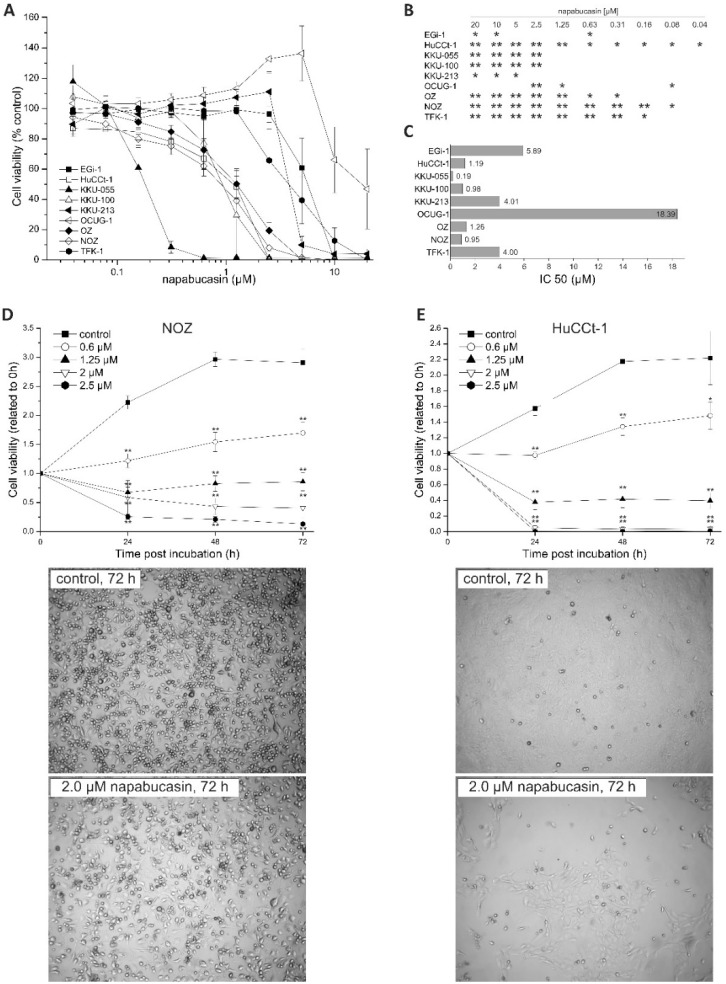
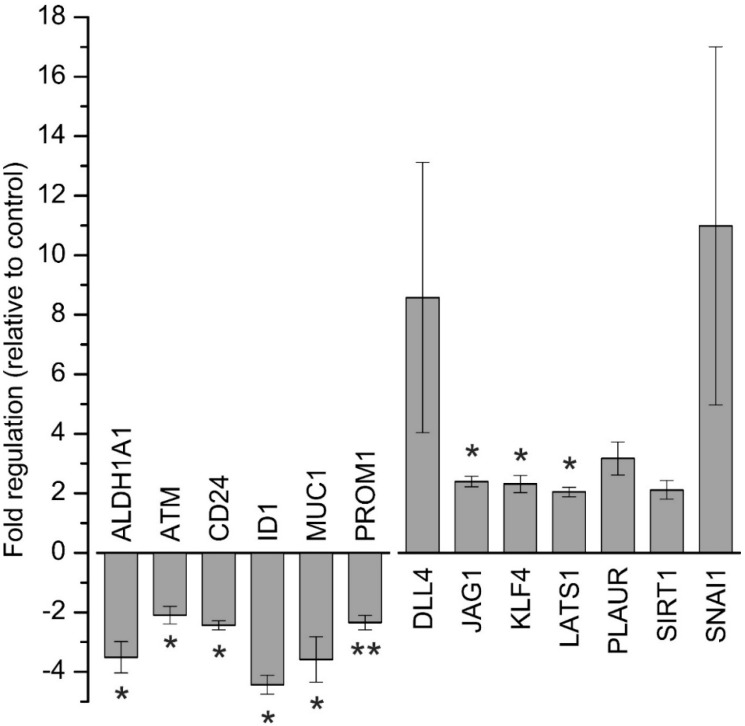
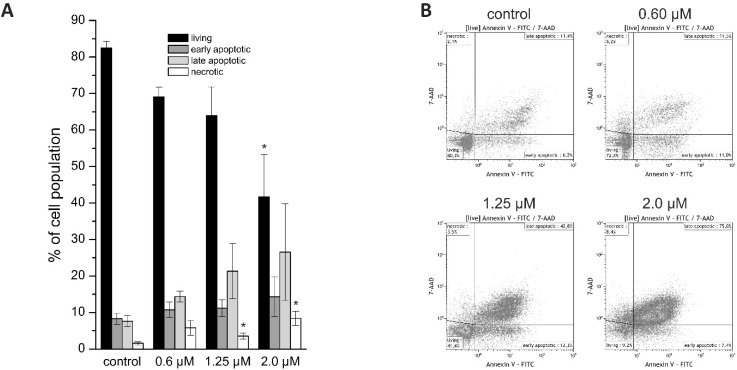
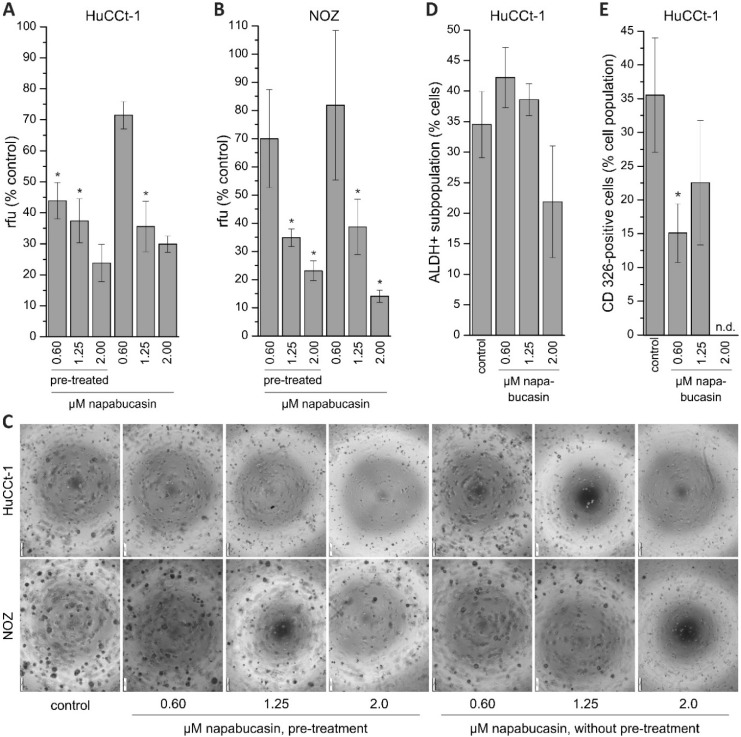
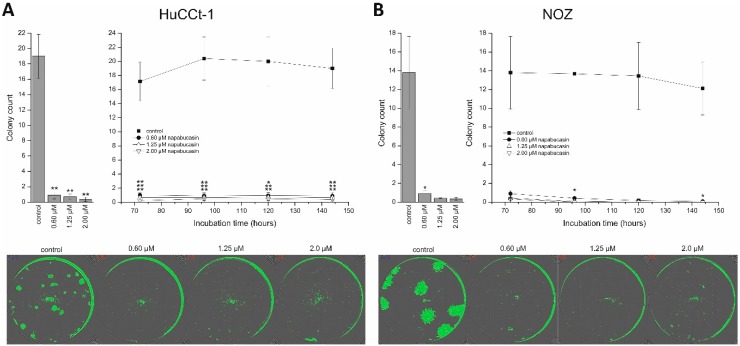
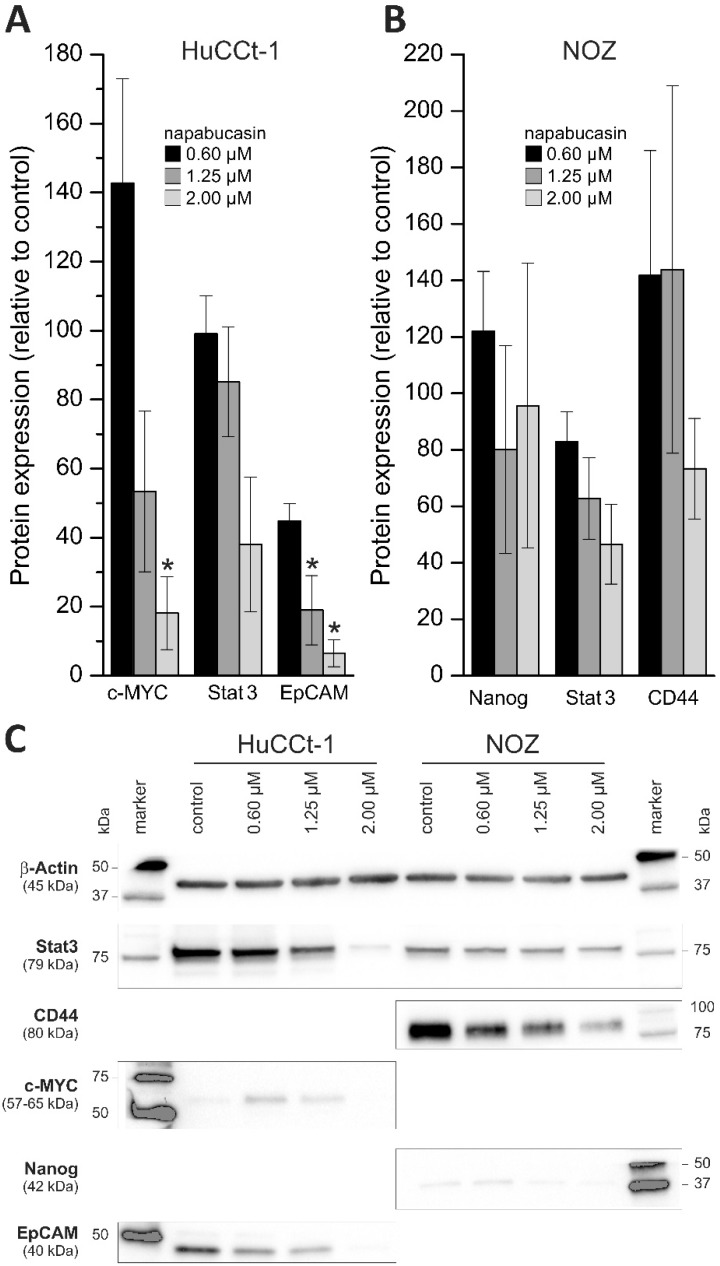
Biliary tract cancer is a devastating disease with limited therapeutic options. The involvement of cancer stem cells in biliary tract cancer is likely. Napabucasin is a previously described cancer stem cell inhibitor that is currently being used in clinical trials. However, data regarding napabucasin and biliary tract cancer are not available yet. We tested the general cytotoxic effect of napabucasin on a comprehensive biliary tract cancer in vitro model, using resazurin assay and Annexin V/7-AAD staining. The effect of napabucasin on functional cancer stem cell characteristics was analyzed via soft agar assay, aldehyde-dehydrogenase-1 assay, measurement of surface CD326 expression, and measurement of clonogenic growth. The evaluation of the effect of napabucasin on cancer stem cell protein and gene expression was performed using Western blot and reverse transcription-PCR-based human cancer stem cell array. Napabucasin showed a concentration- and cell line-dependent cytotoxic effect, and increased the apoptotic and necrotic cell fractions. Treatment with napabucasin significantly reduced the formation of tumor spheres and clonogenic growth, as well as CD326 surface expression. Expression of cancer stem cell markers were reduced following napabucasin treatment on the protein and mRNA levels. Our study provides first data regarding napabucasin as a promising substance for the treatment of biliary tract cancer.
胆管癌是一种治疗选择有限的毁灭性疾病。癌症干细胞很可能参与了胆管癌的发生发展。萘布卡生是一种先前已被描述的癌症干细胞抑制剂,目前正在进行临床试验。然而,关于萘布卡生和胆管癌的数据尚未可得。我们使用刃天青试验和膜联蛋白V/7-氨基放线菌素D染色,在一个全面的胆管癌体外模型中测试了萘布卡生的一般细胞毒性作用。通过软琼脂试验、醛脱氢酶-1试验、表面CD326表达的测定以及克隆形成生长的测定,分析了萘布卡生对功能性癌症干细胞特征的影响。使用蛋白质印迹法和基于逆转录-聚合酶链反应的人类癌症干细胞阵列,对萘布卡生对癌症干细胞蛋白和基因表达的影响进行了评估。萘布卡生表现出浓度和细胞系依赖性的细胞毒性作用,并增加了凋亡和坏死细胞比例。用萘布卡生处理显著减少了肿瘤球的形成和克隆形成生长,以及CD326表面表达。在蛋白质和mRNA水平上,萘布卡生处理后癌症干细胞标志物的表达降低。我们的研究提供了关于萘布卡生作为一种有前景的胆管癌治疗药物的首批数据。