Jiménez-Sousa Maria Ángeles, Fadrique Alejandra, Liu Pilar, Fernández-Rodríguez Amanda, Lorenzo-López Mario, Gómez-Sánchez Esther, Gómez-Sanz Alicia, Heredia-Rodríguez María, Gómez-Pesquera Estefanía, Martínez Isidoro, Tamayo Eduardo, Resino Salvador
Unidad de Infección Viral e Inmunidad, Centro Nacional de Microbiología, Instituto de Salud Carlos III, 28220 Majadahonda, Spain.
Departamento de Anestesiología y Reanimación, Hospital Clínico Universitario, 47005 Valladolid, Spain.
J Clin Med. 2019 Feb 26;8(3):283. doi: 10.3390/jcm8030283.
In many immune-related diseases, inflammatory responses and several clinical outcomes are related to increased NF-κB activity. We aimed to evaluate whether SNPs related to the NF-κB signaling pathway are associated with higher susceptibility to infection, septic shock, and septic-shock-related death in European patients who underwent major surgery.
We performed a case-control study on 184 patients with septic shock and 212 with systemic inflammatory response syndrome, and a longitudinal substudy on septic shock patients. Thirty-three SNPs within genes belonging to or regulating the NF-κB signaling pathway were genotyped by Agena Bioscience's MassARRAY platform.
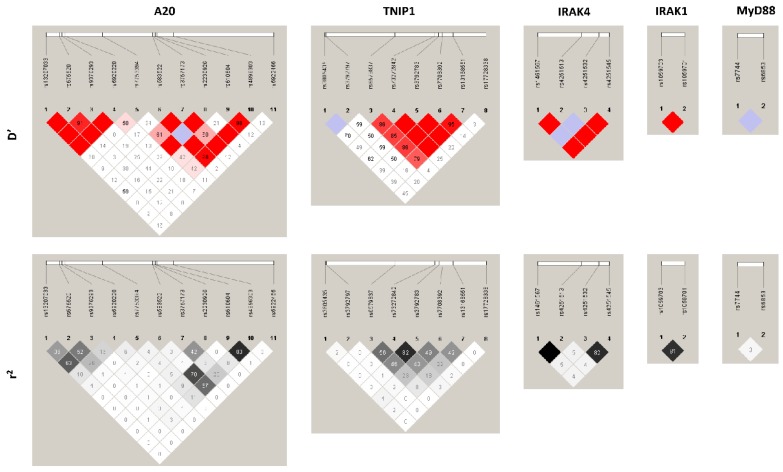
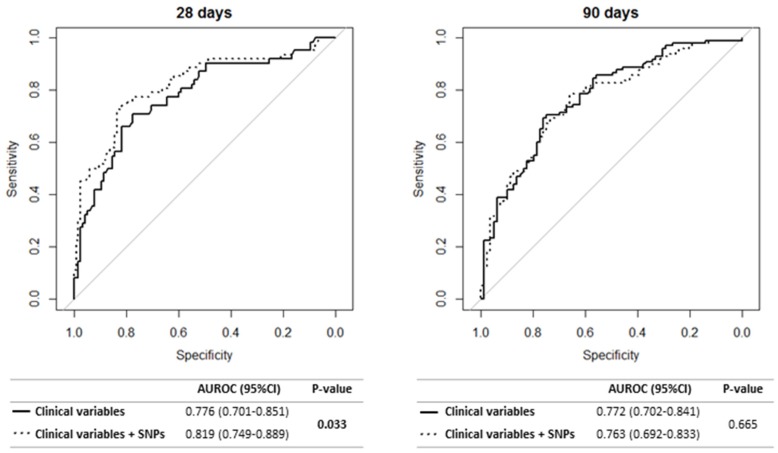
No significant results were found for susceptibility to infection and septic shock in the multivariate analysis after adjusting for multiple comparisons. Regarding septic-shock-related death, patients with rs6920220 AA, rs73272842 AA, rs3792783 GG, and rs7708392 CC genotypes had the highest risk of septic-shock-related death in the first 28 and 90 days. Also, the rs7744 GG genotype was associated with a higher risk of death during the first 90 days. Haplotype analysis shows us that patients with the GAG haplotype (composed of rs73272842, rs3792783, and rs7708392) had a lower risk of death in the first 28 days and the AGC haplotype was associated with a higher risk of death in the first 90 days.
The SNPs in the genes , and were linked to the risk of septic-shock-related death in patients who underwent major surgery.
在许多免疫相关疾病中,炎症反应和一些临床结局与核因子κB(NF-κB)活性增加有关。我们旨在评估与NF-κB信号通路相关的单核苷酸多态性(SNP)是否与接受大手术的欧洲患者发生感染、感染性休克及感染性休克相关死亡的易感性增加有关。
我们对184例感染性休克患者和212例全身炎症反应综合征患者进行了病例对照研究,并对感染性休克患者进行了纵向子研究。通过Agena Bioscience公司的MassARRAY平台对属于或调节NF-κB信号通路的基因中的33个SNP进行基因分型。
在对多重比较进行校正后的多变量分析中,未发现感染和感染性休克易感性的显著结果。关于感染性休克相关死亡,rs6920220 AA、rs73272842 AA、rs3792783 GG和rs7708392 CC基因型的患者在最初28天和90天内发生感染性休克相关死亡的风险最高。此外,rs7744 GG基因型与最初90天内较高的死亡风险相关。单倍型分析表明,具有GAG单倍型(由rs73272842、rs3792783和rs7708392组成)的患者在最初28天内死亡风险较低,而AGC单倍型与最初90天内较高的死亡风险相关。
基因中的SNP与接受大手术患者的感染性休克相关死亡风险有关。