Lin Mei-Fang, Takahashi Shunichi, Forêt Sylvain, Davy Simon K, Miller David J
Molecular and Cell Biology, James Cook University, Townsville, QLD 4811, Australia.
ARC Centre of Excellence for Coral Reef Studies, James Cook University, Townsville, QLD 4811, Australia.
Biol Open. 2019 Mar 27;8(3):bio038281. doi: 10.1242/bio.038281.
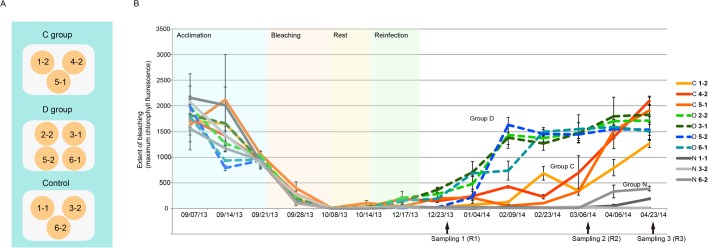
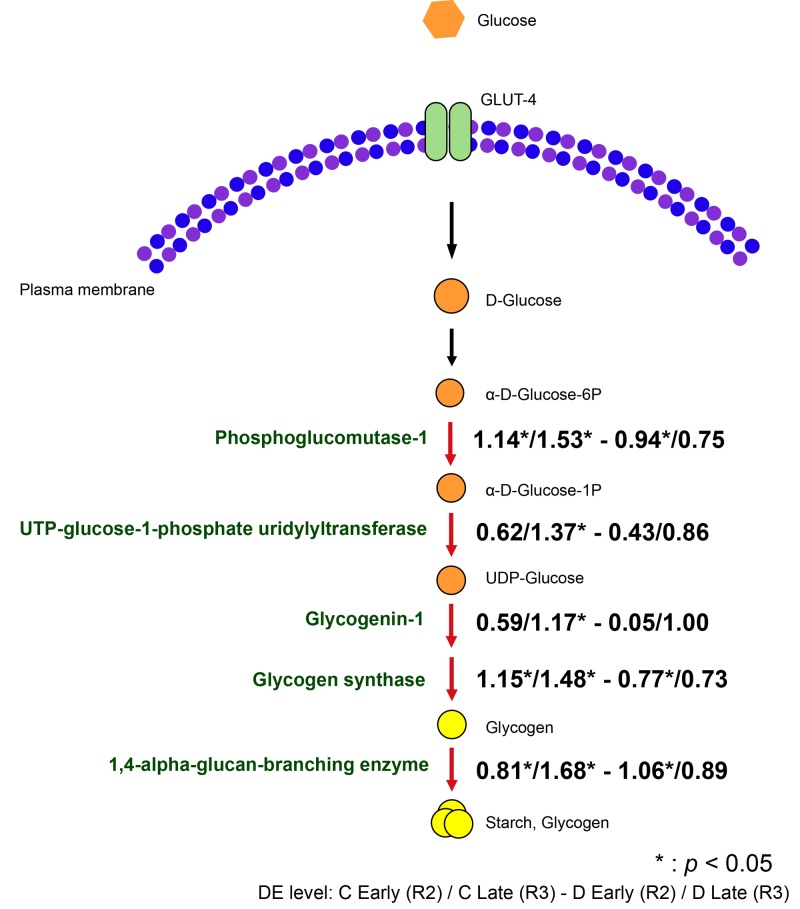
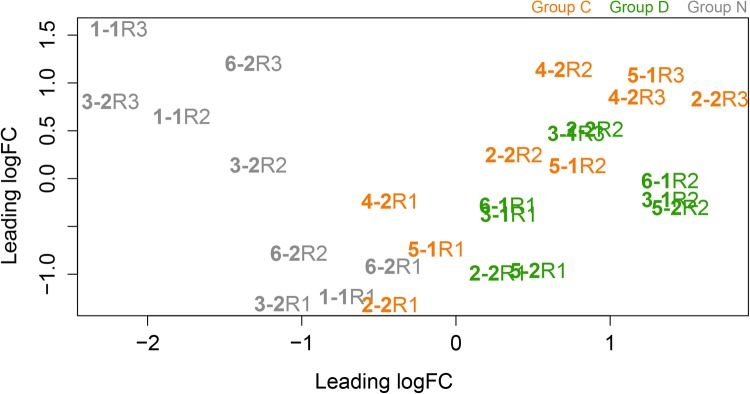
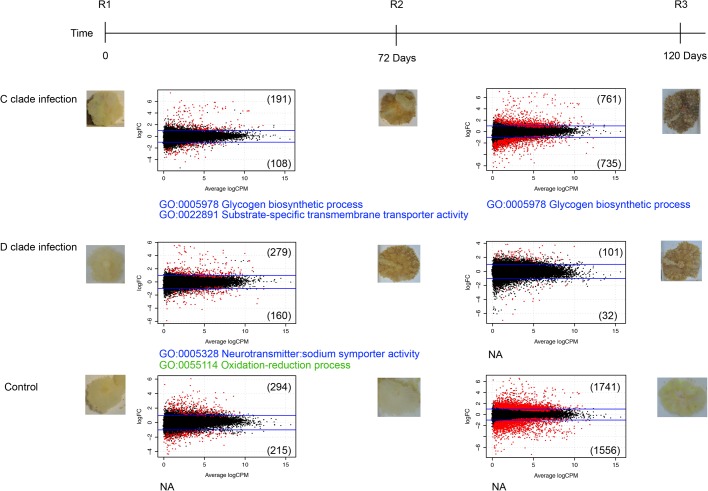
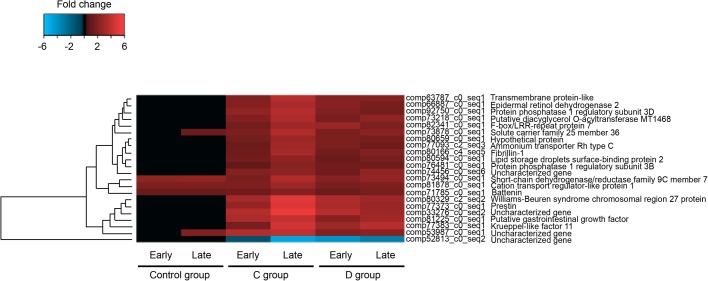
Reef-building corals and some other cnidarians form symbiotic relationships with members of the dinoflagellate family As is a highly diverse taxon, the physiological interactions between its members and their hosts are assumed to differ between associations. The presence of different symbiont types is known to affect expression levels of specific host genes, but knowledge of the effects on the transcriptome more broadly remains limited. In the present study, transcriptome profiling was conducted on the tropical corallimorpharian, following the establishment of symbiosis with either the 'homologous' symbiont (also known as ; ITS2 type C1) or 'heterologous' symbionts (predominantly , which is also known as ; ITS2 type D1a) isolated from a different corallimorpharian host (). Transcriptomic analyses showed that genes encoding host glycogen biosynthesis pathway components are more highly induced during colonization by the homologous symbiont than by the heterologous symbiont. Similar patterns were also observed for several other genes thought to facilitate symbiotic nutrient exchange, including those involved in lipid translocation/storage and metabolite transport. The gene expression results presented here imply that colonization by homologous or heterologous types may have very different metabolic consequences for the host, supporting the notion that even though some cnidarians may be able to form novel symbioses after bleaching, the metabolic performance of these may be compromised.This article has an associated First Person interview with the first author of the paper.
造礁珊瑚和其他一些刺胞动物与甲藻科的成员形成共生关系。由于甲藻是一个高度多样化的分类群,其成员与其宿主之间的生理相互作用在不同的共生关系中被认为是不同的。已知不同共生体类型的存在会影响特定宿主基因的表达水平,但对转录组更广泛影响的了解仍然有限。在本研究中,对热带珊瑚藻进行了转录组分析,该珊瑚藻与从不同珊瑚藻宿主分离出的“同源”共生体(也称为;ITS2 C1型)或“异源”共生体(主要是,也称为;ITS2 D1a型)建立了共生关系。转录组分析表明,与异源共生体相比,编码宿主糖原生物合成途径成分的基因在同源共生体定殖期间的诱导程度更高。在其他一些被认为促进共生营养交换的基因中也观察到了类似的模式,包括那些参与脂质转运/储存和代谢物运输的基因。此处呈现的基因表达结果表明,同源或异源共生体类型的定殖可能会给宿主带来非常不同的代谢后果,这支持了这样一种观点,即尽管一些刺胞动物在白化后可能能够形成新的共生关系,但其代谢性能可能会受到损害。本文配有对该论文第一作者的第一人称访谈。