Department of Immunology and Infectious Disease, Harvard T. H. Chan School of Public Health, Harvard University, Boston, MA, USA.
Department of Mathematics, Virginia Tech, Blacksburg, VA, USA.
Nature. 2019 Mar;567(7747):239-243. doi: 10.1038/s41586-019-0973-1. Epub 2019 Feb 27.
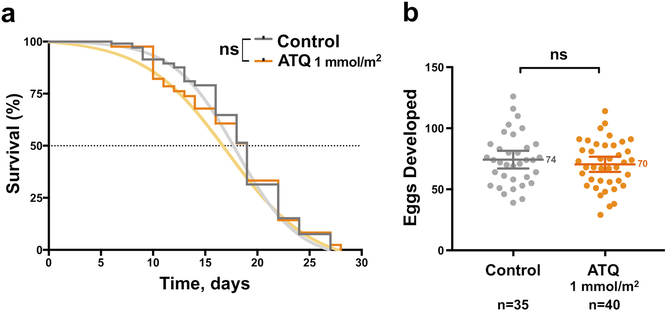
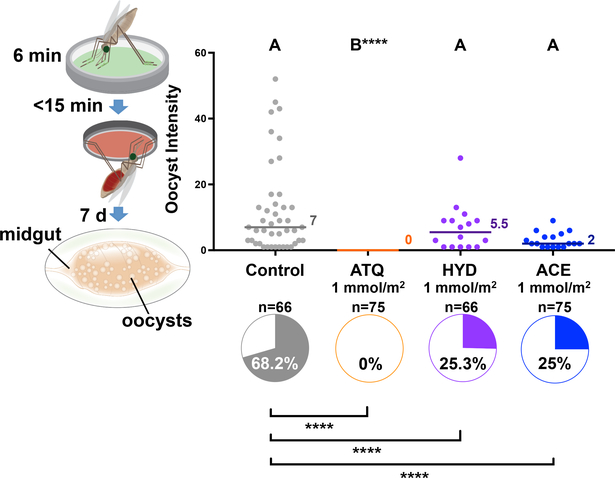
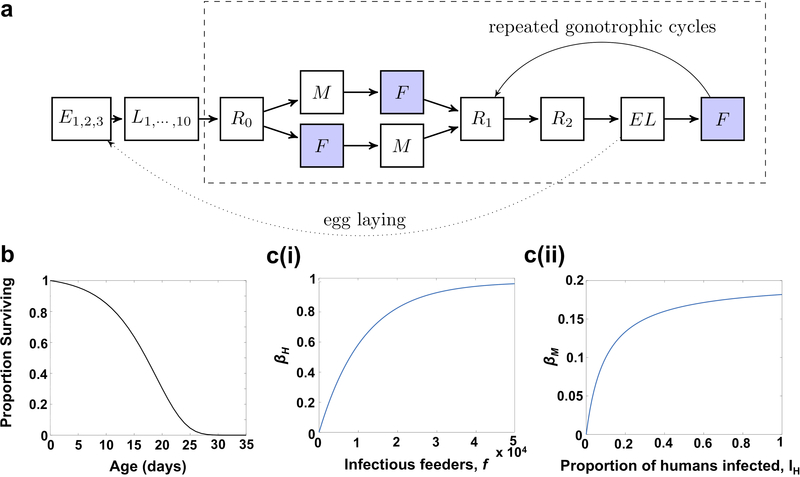
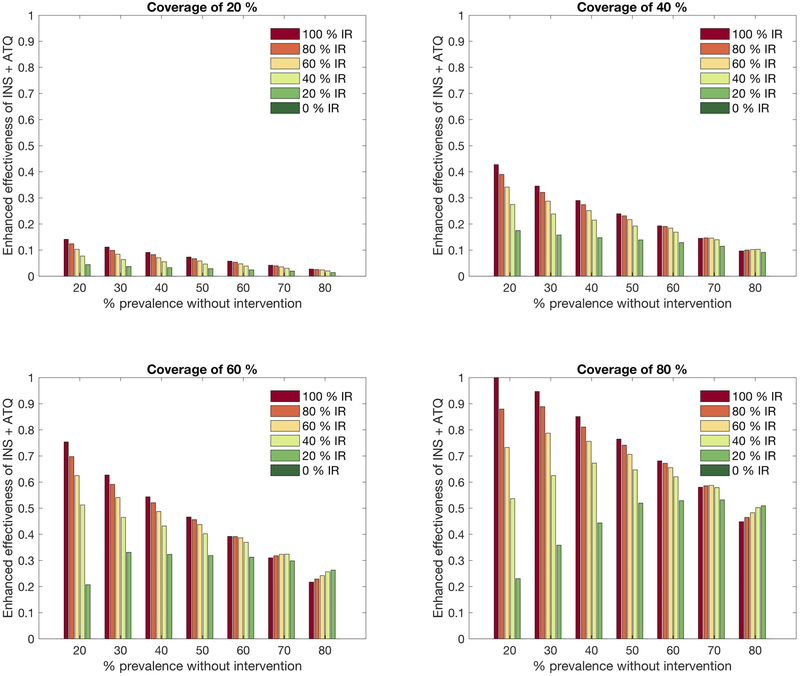
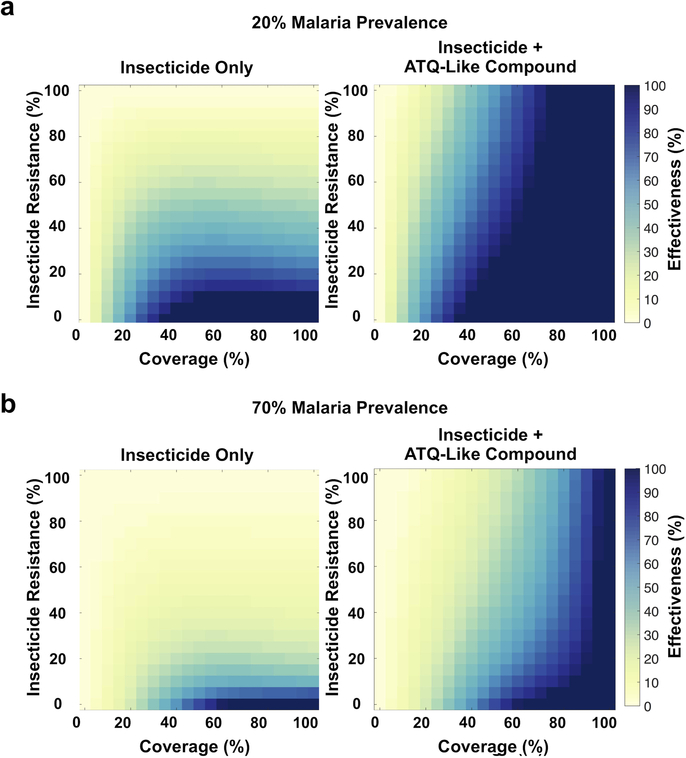
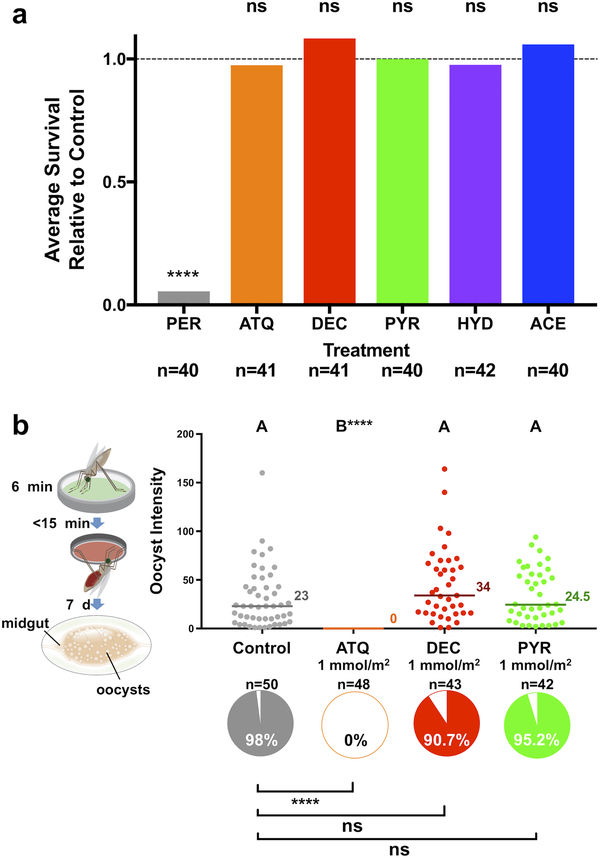
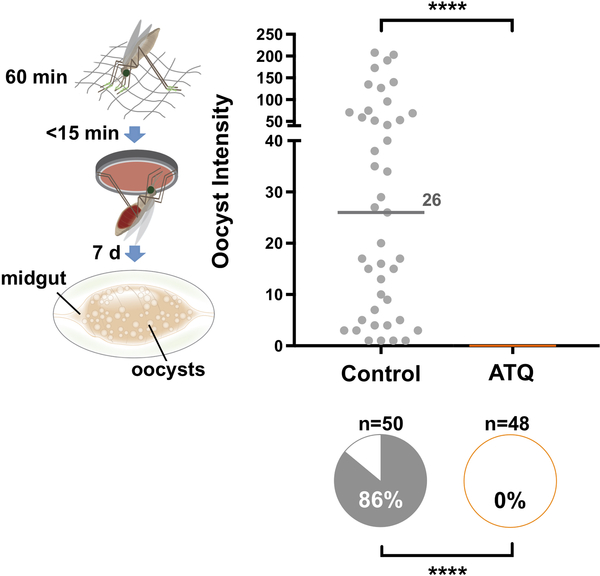
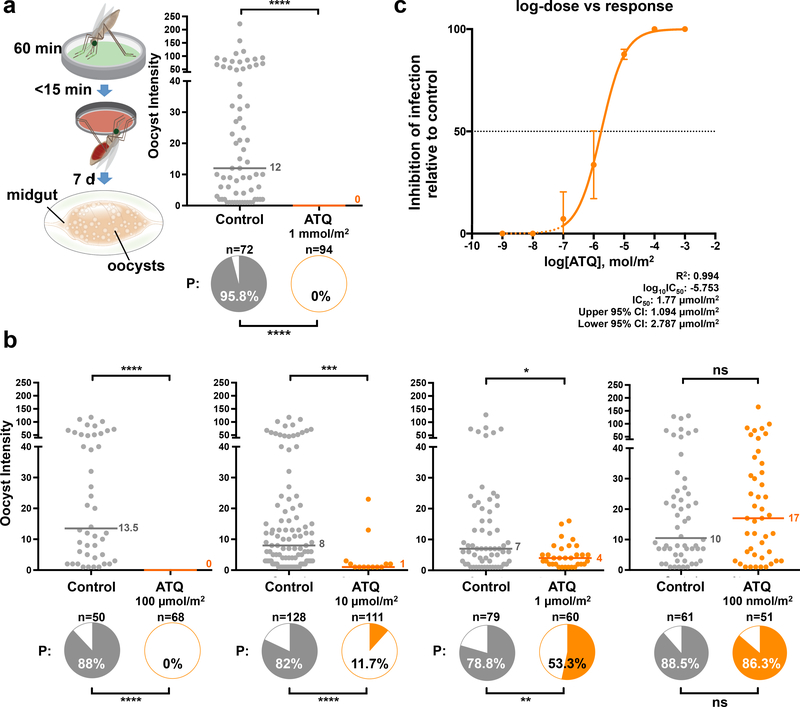
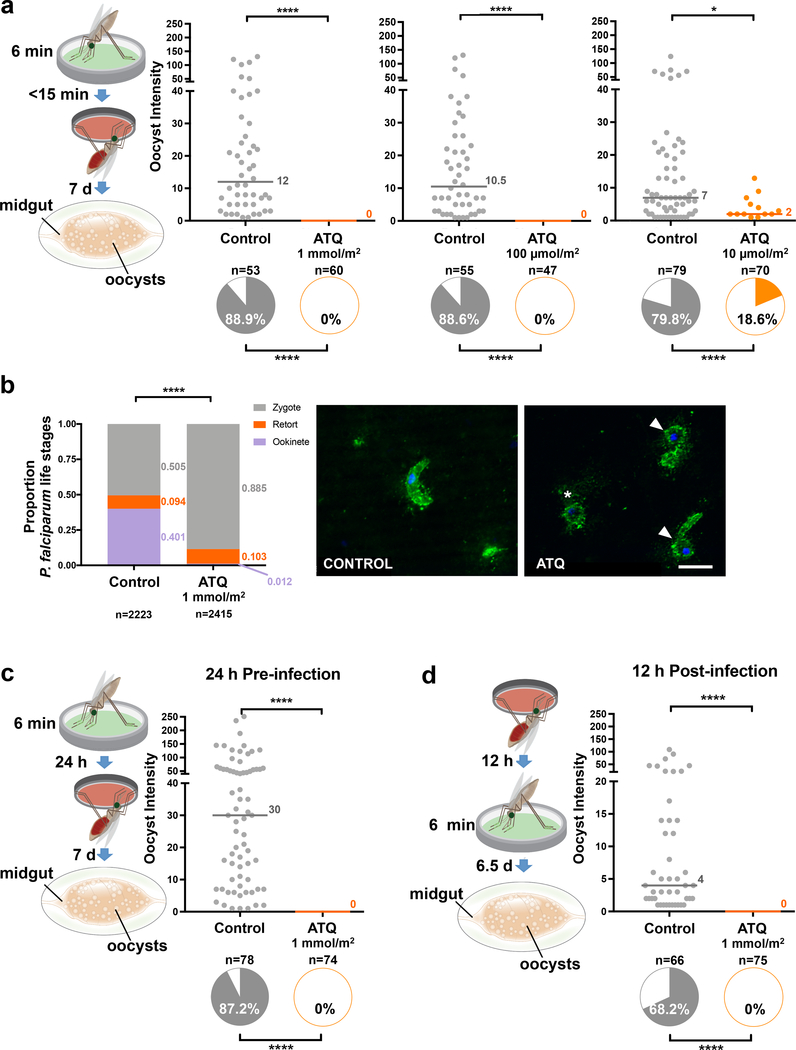
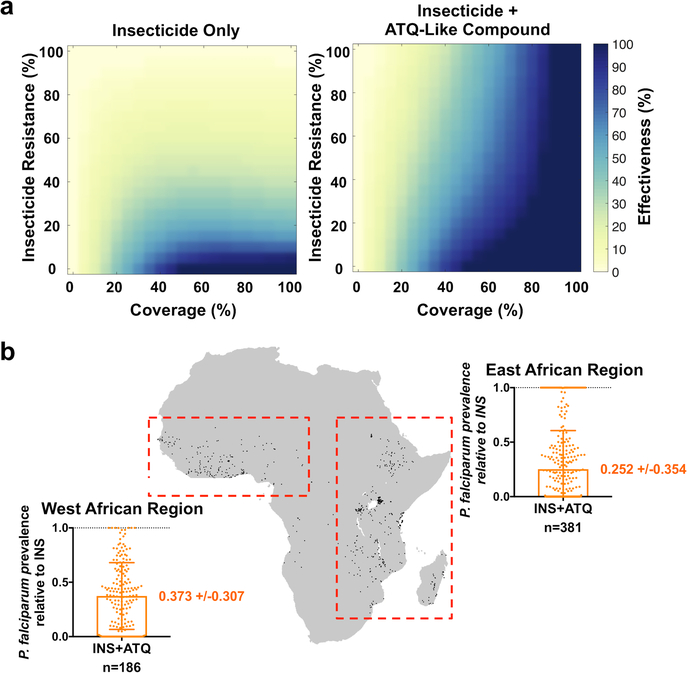
Bites of Anopheles mosquitoes transmit Plasmodium falciparum parasites that cause malaria, which kills hundreds of thousands of people every year. Since the turn of this century, efforts to prevent the transmission of these parasites via the mass distribution of insecticide-treated bed nets have been extremely successful, and have led to an unprecedented reduction in deaths from malaria. However, resistance to insecticides has become widespread in Anopheles populations, which has led to the threat of a global resurgence of malaria and makes the generation of effective tools for controlling this disease an urgent public health priority. Here we show that the development of P. falciparum can be rapidly and completely blocked when female Anopheles gambiae mosquitoes take up low concentrations of specific antimalarials from treated surfaces-conditions that simulate contact with a bed net. Mosquito exposure to atovaquone before, or shortly after, P. falciparum infection causes full parasite arrest in the midgut, and prevents transmission of infection. Similar transmission-blocking effects are achieved using other cytochrome b inhibitors, which demonstrates that parasite mitochondrial function is a suitable target for killing parasites. Incorporating these effects into a model of malaria transmission dynamics predicts that impregnating mosquito nets with Plasmodium inhibitors would substantially mitigate the global health effects of insecticide resistance. This study identifies a powerful strategy for blocking Plasmodium transmission by female Anopheles mosquitoes, which has promising implications for efforts to eradicate malaria.
按蚊的叮咬会传播疟原虫寄生虫,导致疟疾,每年导致数十万人死亡。自本世纪初以来,通过大规模分发经杀虫剂处理的蚊帐来防止这些寄生虫传播的努力取得了巨大成功,导致疟疾死亡人数空前减少。然而,抗药性在按蚊种群中已经广泛出现,这导致了疟疾在全球范围内再次爆发的威胁,并使生成控制这种疾病的有效工具成为当务之急。在这里,我们表明,当雌性冈比亚按蚊从处理过的表面吸收低浓度的特定抗疟药物时,疟原虫的发育可以迅速而完全地被阻断-这种情况模拟了与蚊帐的接触。在感染疟原虫之前或之后,疟原虫对阿托伐醌的暴露会导致中肠中的寄生虫完全停止发育,并阻止感染的传播。使用其他细胞色素 b 抑制剂也可以达到类似的阻断传播效果,这表明寄生虫的线粒体功能是杀死寄生虫的合适目标。将这些效果纳入疟疾传播动力学模型预测,用疟原虫抑制剂浸渍蚊帐将大大减轻抗药性对全球健康的影响。本研究确定了一种通过雌性按蚊阻断疟原虫传播的有效策略,这对消除疟疾的努力具有广阔的前景。