Institut de Neurociències, Universitat Autònoma de Barcelona, 08193, Cerdanyola del Vallès, Spain.
Animal Physiology Unit (School of Biosciences), Universitat Autònoma de Barcelona, 08193, Cerdanyola del Vallès, Spain.
Sci Rep. 2019 Feb 28;9(1):3180. doi: 10.1038/s41598-019-40061-3.
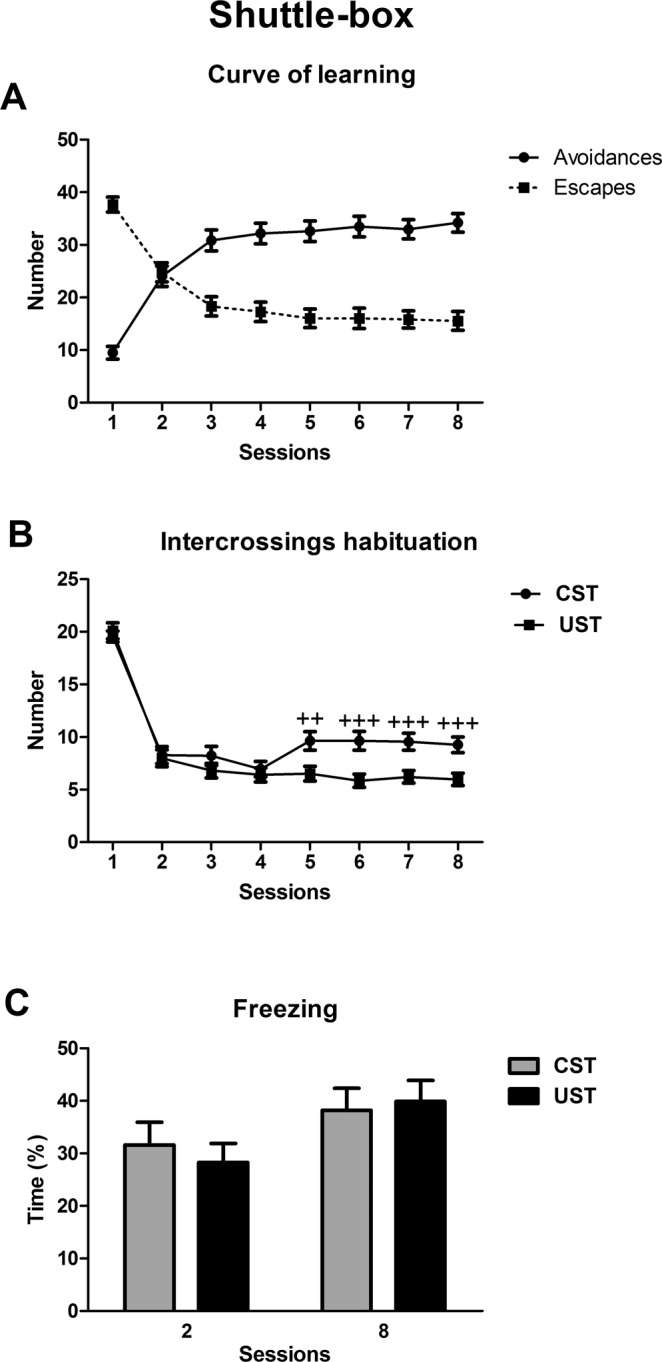
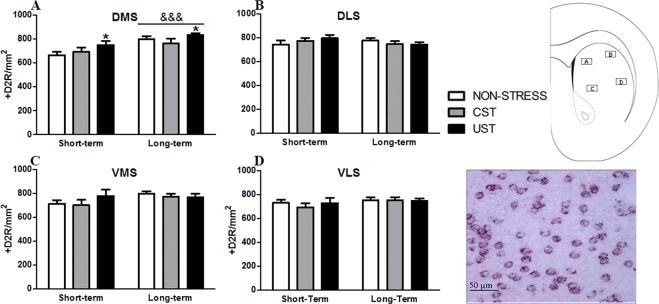
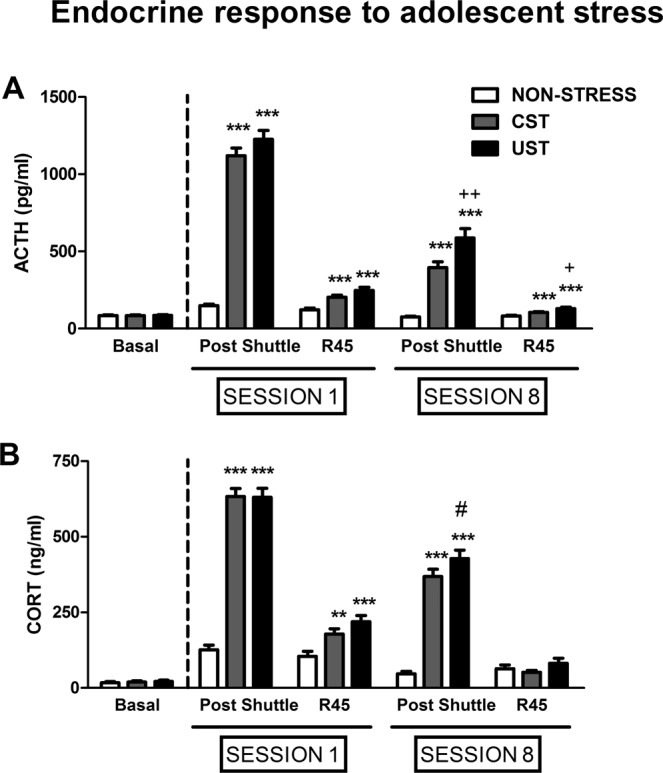
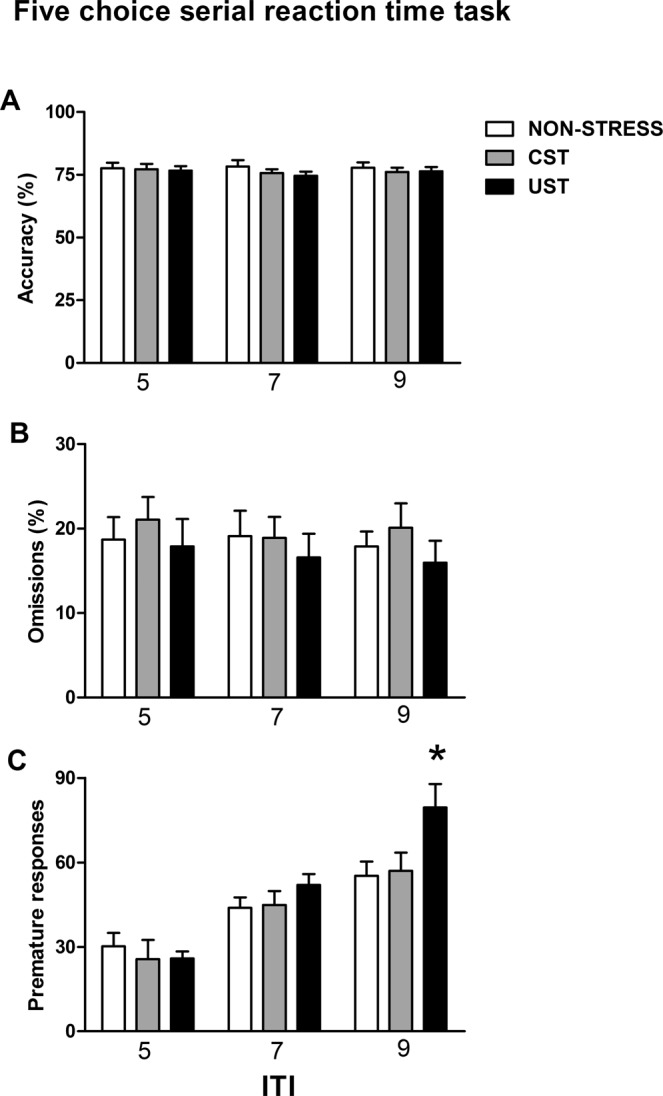
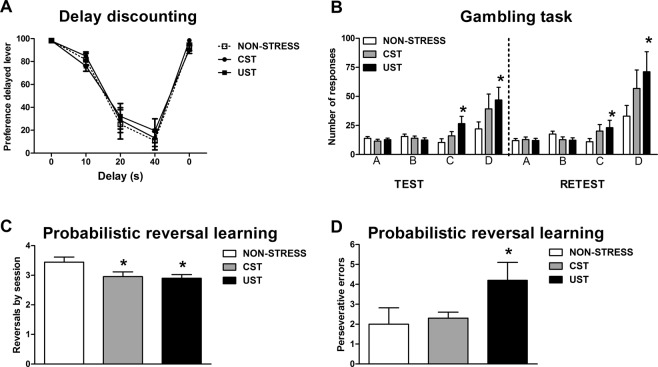
Exposure to stress during adolescence exerts a long-term impact on behavior and might contribute to the development of several neuropsychiatric disorders. In adults, control over stress has been found to protect from the negative consequences of stress, but the influence of controllability at early ages has not been extensively studied. Here, we evaluated in a rodent model the effects of repeated exposure in adolescent male rats to controllable versus uncontrollable foot-shock stress (CST or UST, respectively). Rats were assigned to three groups: non-stress (stress-naïve), CST (exposed to 8 sessions of a two-way shuttle active avoidance task over a period of 22 days) and UST (receiving the same amount of shocks as CST, regardless of their actual behavior). During adulthood, different cohorts were tested in several tasks evaluating inhibitory control and cognitive flexibility: 5-choice serial reaction time, delay-discounting, gambling test and probabilistic reversal learning. Results showed that the hypothalamic-pituitary-adrenal response to the first shock session was similar in CST and UST animals, but the response to the 8 session was lower in CST animals. In adulthood, the UST animals presented impaired motor (but not cognitive) impulsivity and more perseverative behavior. The behavioral effects of UST were associated with increased number of D2 dopamine receptors in dorsomedial striatum, but not in other striatal regions. In summary, UST exposure during adolescence induced long-term impairments in impulsivity and compulsivity, whereas CST had only minor effects. These data support a critical role of stress uncontrollability on the long-lasting consequences of stress, as a risk factor for mental illnesses.
青春期暴露于应激之下会对行为产生长期影响,并可能导致多种神经精神疾病的发生。在成年人中,控制应激被发现可以防止应激的负面后果,但早年可控性的影响尚未得到广泛研究。在这里,我们在一种啮齿动物模型中评估了雄性幼年大鼠反复暴露于可控性和不可控性足底电击应激(分别为 CST 或 UST)对行为的影响。大鼠被分为三组:非应激组(应激-naive)、CST 组(接受为期 22 天的双向穿梭主动回避任务 8 个疗程)和 UST 组(接受与 CST 相同数量的电击,但不考虑其实际行为)。在成年期,不同批次的大鼠在多个评估抑制控制和认知灵活性的任务中进行了测试:5 选择序列反应时间、延迟折扣、赌博测试和概率反转学习。结果表明,CST 和 UST 动物的第一次电击应激反应的下丘脑-垂体-肾上腺反应相似,但 CST 动物的第 8 次应激反应较低。在成年期,UST 动物表现出运动(但不是认知)冲动性受损和更多的坚持行为。UST 的行为效应与背内侧纹状体中 D2 多巴胺受体数量的增加有关,但与其他纹状体区域无关。总之,青春期暴露于 UST 会导致冲动性和强迫性长期受损,而 CST 仅有轻微影响。这些数据支持应激不可控性作为精神疾病的风险因素对应激的长期后果具有关键作用。