Centro de Ciências Do Mar (CCMAR), Universidade Do Algarve, 8005-139, Faro, Portugal.
Fish Welfare Initiative, Normal, IL, 61761, USA.
BMC Neurosci. 2021 Aug 4;22(1):48. doi: 10.1186/s12868-021-00653-0.
In humans the stress response is known to be modulated to a great extent by psychological factors, particularly by the predictability and the perceived control that the subject has of the stressor. This psychological dimension of the stress response has also been demonstrated in animals phylogenetically closer to humans (i.e. mammals). However, its occurrence in fish, which represent a divergent vertebrate evolutionary lineage from that of mammals, has not been established yet, and, if present, would indicate a deep evolutionary origin of these mechanisms across vertebrates. Moreover, the fact that psychological modulation of stress is implemented in mammals by a brain cortical top-down inhibitory control over subcortical stress-responsive structures, and the absence of a brain cortex in fish, has been used as an argument against the possibility of psychological stress in fish, with implications for the assessment of fish sentience and welfare. Here, we have investigated the occurrence of psychological stress in fish by assessing how stressor controllability modulates the stress response in European seabass (Dicentrarchus labrax).
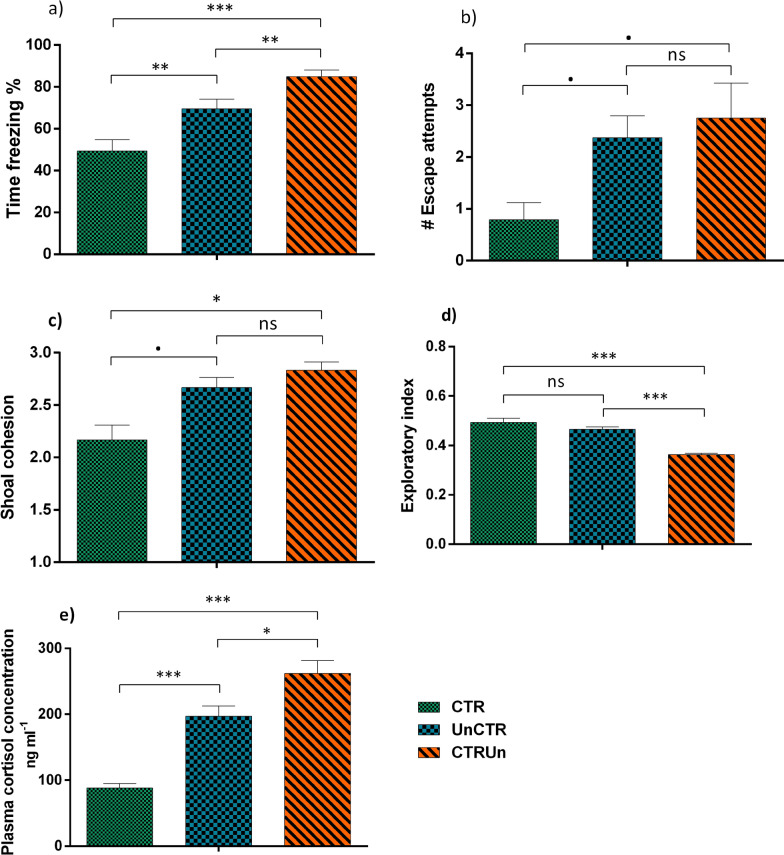
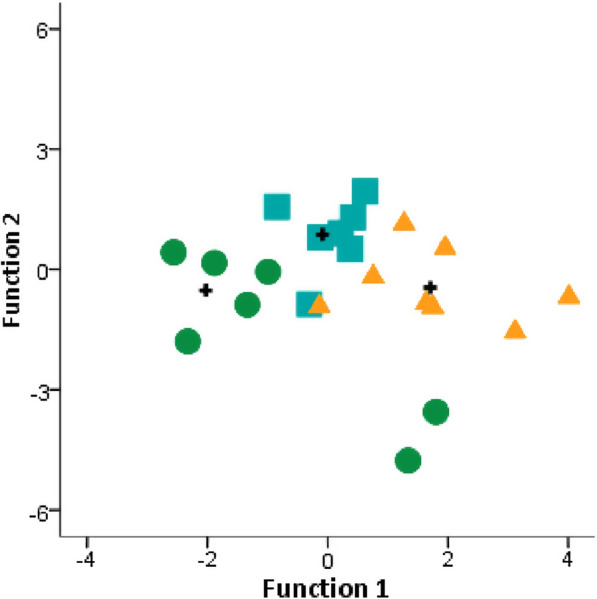
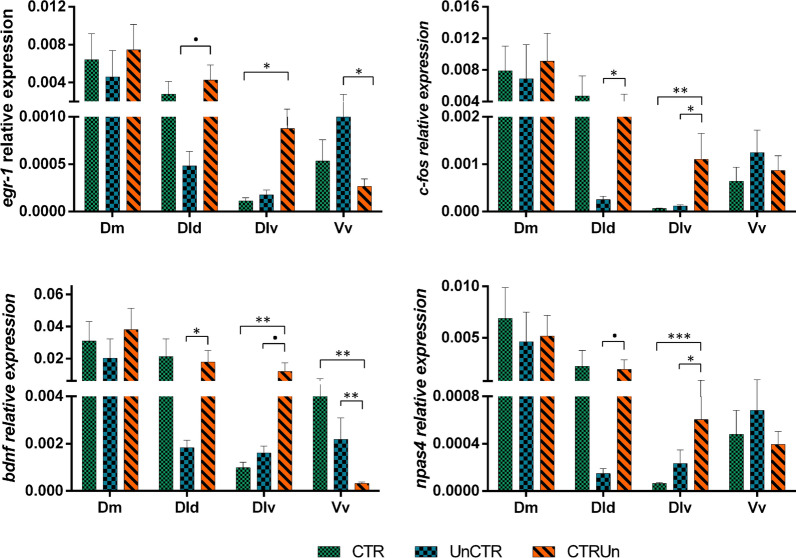
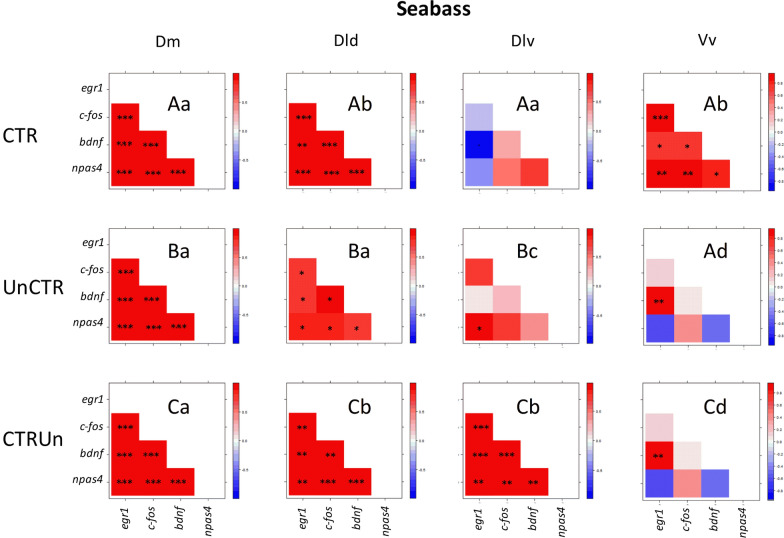
Fish were exposed to either a controllable or an uncontrollable stressor (i.e. possibility or impossibility to escape a signaled stressor). The effect of loss of control (possibility to escape followed by impossibility to escape) was also assessed. Both behavioral and circulating cortisol data indicates that the perception of control reduces the response to the stressor, when compared to the uncontrollable situation. Losing control had the most detrimental effect. The brain activity of the teleost homologues to the sensory cortex (Dld) and hippocampus (Dlv) parallels the uncontrolled and loss of control stressors, respectively, whereas the activity of the lateral septum (Vv) homologue responds in different ways depending on the gene marker of brain activity used.
These results suggest the psychological modulation of the stress response to be evolutionary conserved across vertebrates, despite being implemented by different brain circuits in mammals (pre-frontal cortex) and fish (Dld-Dlv).
在人类中,应激反应在很大程度上受到心理因素的调节,特别是受到主体对应激源的可预测性和感知控制的调节。这种应激反应的心理维度在与人类亲缘关系更近的动物(即哺乳动物)中也得到了证明。然而,它在鱼类中的出现尚未得到证实,鱼类是与哺乳动物的脊椎动物进化谱系截然不同的鱼类,而如果存在,这将表明这些机制在脊椎动物中具有深远的进化起源。此外,心理调节应激是通过大脑皮质对皮质下应激反应结构的自上而下的抑制控制在哺乳动物中实现的,而鱼类没有大脑皮质,这被用作反对鱼类存在心理应激的可能性的论据,这对鱼类的感知能力和福利评估有影响。在这里,我们通过评估应激源可控性如何调节欧洲鲈鱼(Dicentrarchus labrax)的应激反应来研究鱼类中是否存在心理应激。
鱼被暴露于可控或不可控的应激源(即逃避信号应激源的可能性或不可能)。还评估了失去控制的影响(可能性逃避后变为不可能逃避)。行为和循环皮质醇数据表明,与不可控情况相比,控制感降低了对应激源的反应。失去控制的影响最为不利。硬骨鱼同源物(Dld)和海马(Dlv)的感觉皮质和脑活动分别与不可控和失去控制的应激源相对应,而侧脑室(Vv)同源物的活动则根据使用的脑活动基因标记以不同的方式响应。
这些结果表明,尽管在哺乳动物(前额叶皮层)和鱼类(Dld-Dlv)中通过不同的大脑回路实现,但应激反应的心理调节在脊椎动物中是进化保守的。