Wang Feng, Planas Oriol, Cornella Josep
Max-Planck-Institut für Kohlenforschung , Kaiser-Wilhelm-Platz 1 , Mülheim an der Ruhr , 45470 , Germany.
J Am Chem Soc. 2019 Mar 13;141(10):4235-4240. doi: 10.1021/jacs.9b00594. Epub 2019 Mar 5.
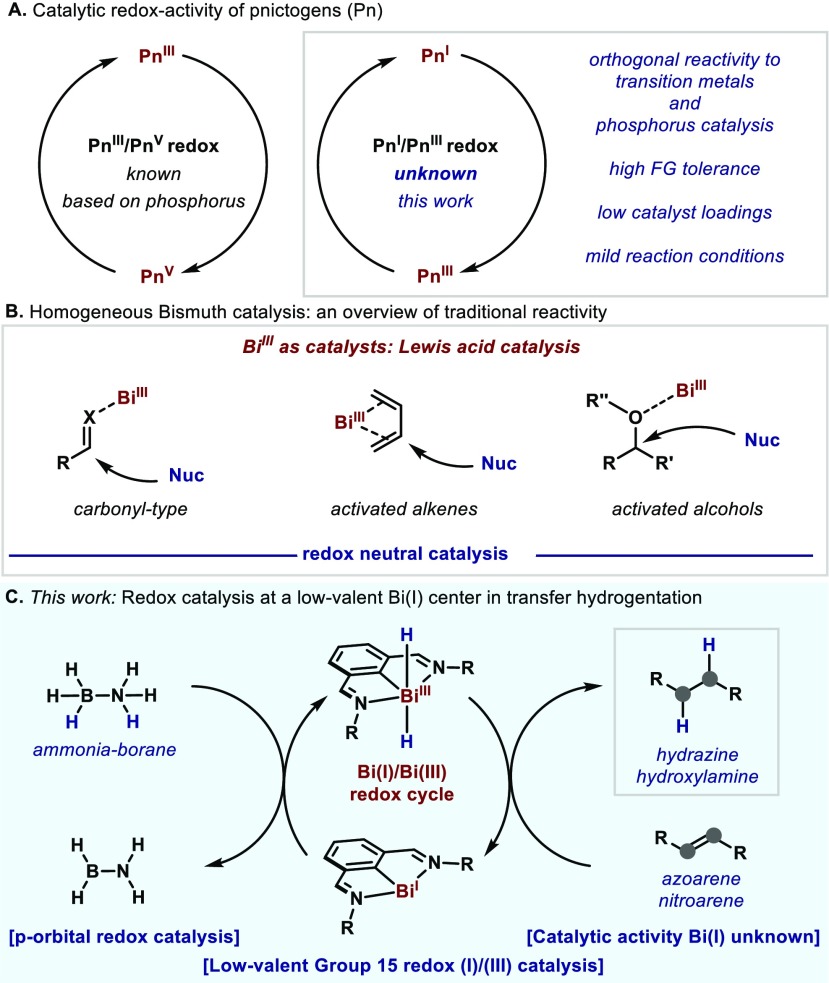
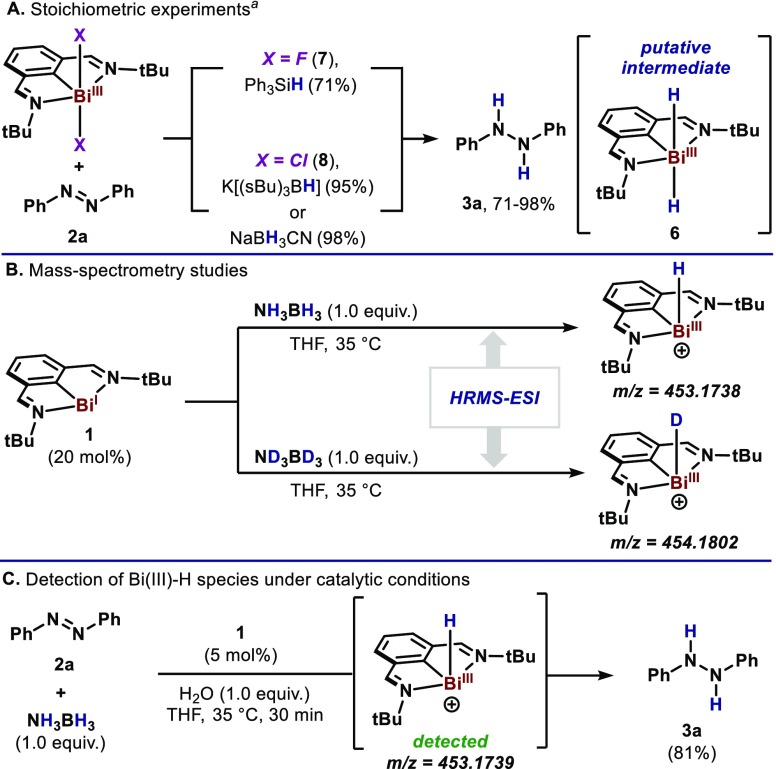
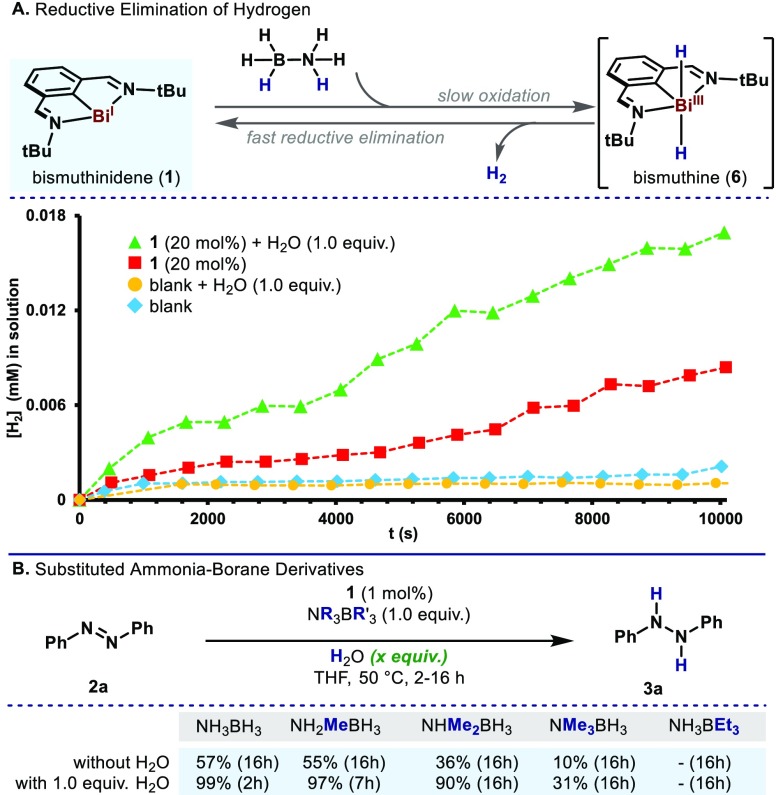
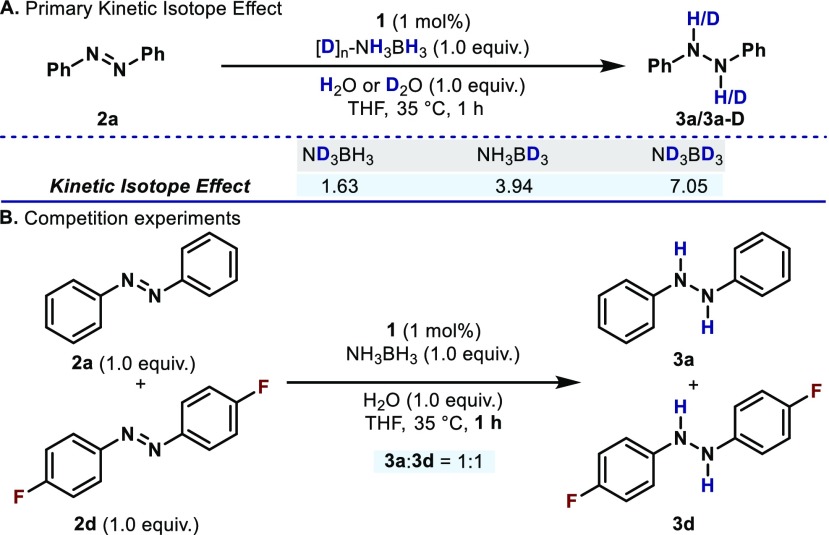
A catalytic transfer-hydrogenation utilizing a well-defined Bi(I) complex as catalyst and ammonia-borane as transfer agent has been developed. This transformation represents a unique example of low-valent pnictogen catalysis cycling between oxidation states I and III, and proved useful for the hydrogenation of azoarenes and the partial reduction of nitroarenes. Interestingly, the bismuthinidene catalyst performs well in the presence of low-valent transition-metal sensitive functional groups and presents orthogonal reactivity compared to analogous phosphorus-based catalysis. Mechanistic investigations suggest the intermediacy of an elusive bismuthine species, which is proposed to be responsible for the hydrogenation and the formation of hydrogen.
已经开发出一种催化转移氢化反应,该反应使用一种定义明确的Bi(I)配合物作为催化剂,氨硼烷作为转移剂。这种转化代表了低价主族元素催化在氧化态I和III之间循环的独特例子,并被证明可用于偶氮芳烃的氢化和硝基芳烃的部分还原。有趣的是,亚铋催化剂在对低价过渡金属敏感的官能团存在下表现良好,并且与类似的基于磷的催化相比具有正交反应性。机理研究表明存在一种难以捉摸的铋物种中间体,该中间体被认为是氢化反应和氢气形成的原因。