Neuroendocrine Unit, Massachusetts General Hospital, Boston, Massachusetts.
Harvard Medical School, Boston, Massachusetts.
Clin Endocrinol (Oxf). 2019 Jun;90(6):789-797. doi: 10.1111/cen.13960. Epub 2019 Apr 1.
Few bone mineral density (BMD) data are available in men with anorexia nervosa (AN), and none in those with atypical AN (ATYP) (AN psychological symptoms without low weight) or avoidant/restrictive food intake disorder (ARFID) (restrictive eating without AN psychological symptoms). We investigated the prevalence and determinants of low BMD and estimated hip strength in men with these disorders.
Cross-sectional: two centres.
A total of 103 men, 18-63 years: AN (n = 26), ARFID (n = 11), ATYP (n = 18), healthy controls (HC) (n = 48).
Body composition, BMD and estimated hip strength (section modulus and buckling ratio) by DXA (Hologic). Serum 25OH vitamin D was quantified, as was daily calcium intake in a subset of subjects.
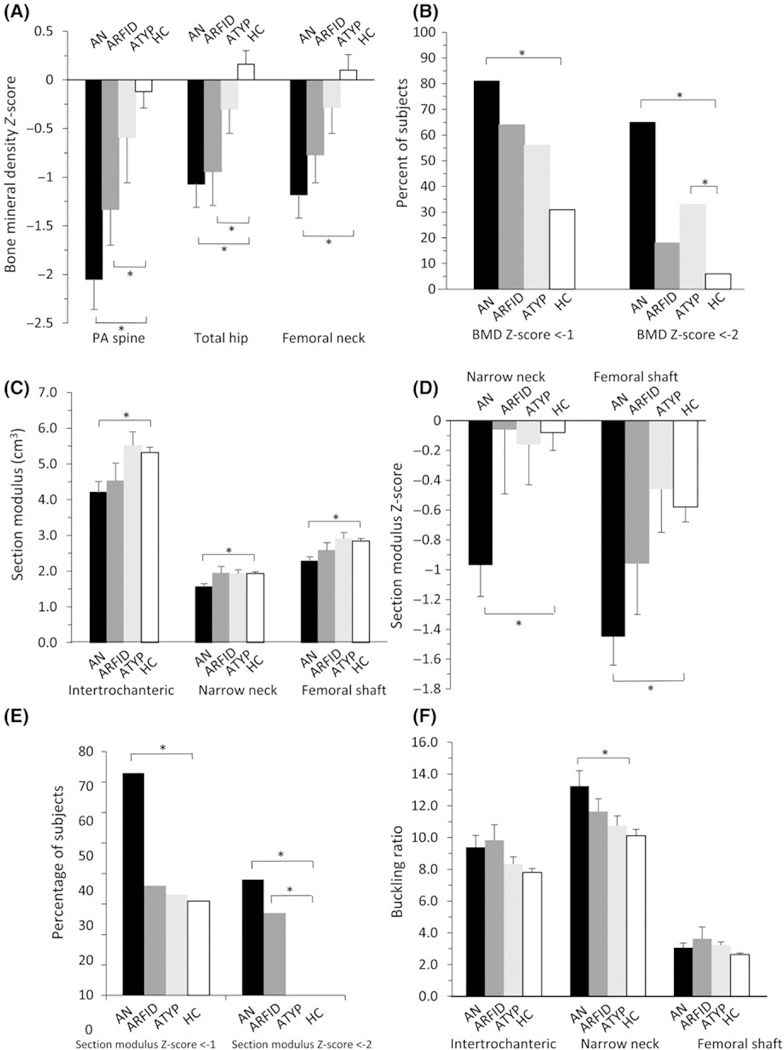
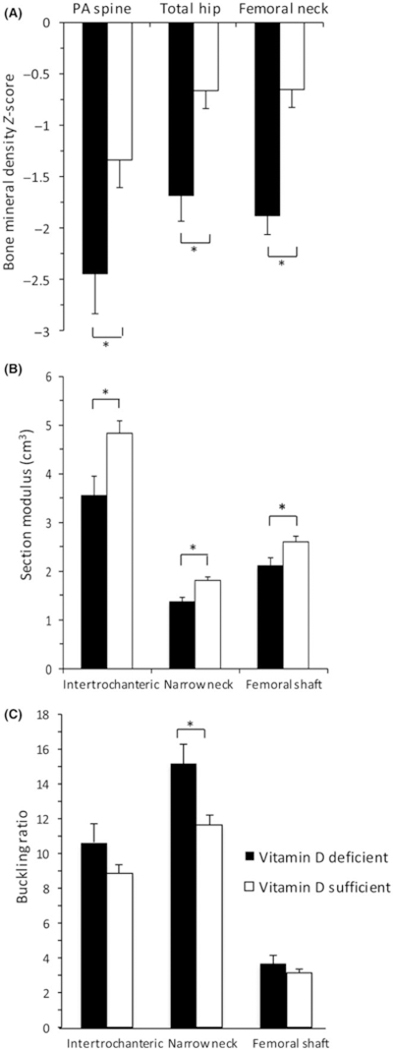
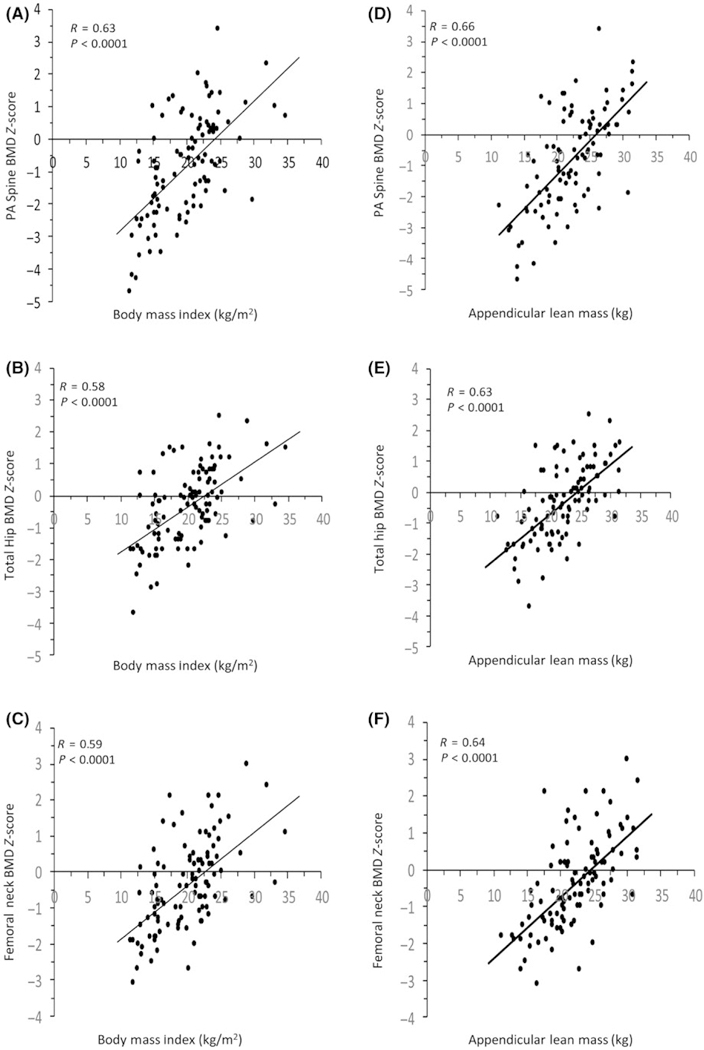
Mean BMI was lowest in AN and ARFID, higher in ATYP and highest in HC (AN 14.7 ± 1.8, ARFID 15.3 ± 1.5, ATYP 20.6 ± 2.0, HC 23.7 ± 3.3 kg/m ) (P < 0.0005). Mean BMD Z-scores at spine and hip were lower in AN and ARFID, but not ATYP, than HC (postero-anterior (PA) spine AN -2.05 ± 1.58, ARFID -1.33 ± 1.21, ATYP -0.59 ± 1.77, HC -0.12 ± 1.17) (P < 0.05). 65% AN, 18% ARFID, 33% ATYP and 6% HC had BMD Z-scores <-2 at ≥1 site (AN and ATYP vs HC, P < 0.01). Mean section modulus Z-scores were lower in AN than HC (P < 0.01). Lower BMI, muscle mass and vitamin D levels (R = 0.33-0.64), as well as longer disease duration (R = -0.51 to -0.58), were associated with lower BMD (P < 0.05).
Men with AN, ARFID and ATYP are at risk for low BMD. Men with these eating disorders who are low weight, or who have low muscle mass, long illness duration and/or vitamin D deficiency, may be at particularly high risk.
关于厌食症(AN)男性患者的骨密度(BMD)数据很少,而对于非典型 AN(ATYP)(无低体重的 AN 心理症状)或回避/限制型进食障碍(ARFID)(无 AN 心理症状的限制型进食)患者则更少。我们调查了这些疾病男性患者低 BMD 的患病率和决定因素,并评估了髋部强度。
横断面研究:两个中心。
共纳入 103 名 18-63 岁男性,包括 AN(n=26)、ARFID(n=11)、ATYP(n=18)和健康对照组(HC)(n=48)。
使用 Hologic 双能 X 线吸收仪(DXA)测量身体成分、BMD 和估计的髋部强度(节段模量和屈曲比)。定量检测血清 25-羟维生素 D 水平,并在部分受试者中检测每日钙摄入量。
AN 和 ARFID 患者的平均 BMI 最低,ATYP 患者的 BMI 较高,HC 患者的 BMI 最高(AN 为 14.7±1.8kg/m²,ARFID 为 15.3±1.5kg/m²,ATYP 为 20.6±2.0kg/m²,HC 为 23.7±3.3kg/m²)(P<0.0005)。AN 和 ARFID 患者的脊柱和髋部的平均 BMD Z 评分均低于 HC(前后位(PA)脊柱 AN -2.05±1.58,ARFID -1.33±1.21,ATYP -0.59±1.77,HC -0.12±1.17)(P<0.05)。65%的 AN、18%的 ARFID、33%的 ATYP 和 6%的 HC 在至少 1 个部位出现 BMD Z 评分<-2(AN 和 ATYP 与 HC 相比,P<0.01)。与 HC 相比,AN 患者的平均节段模量 Z 评分较低(P<0.01)。较低的 BMI、肌肉量和维生素 D 水平(R=0.33-0.64),以及较长的疾病病程(R=-0.51 至-0.58)与较低的 BMD 相关(P<0.05)。
AN、ARFID 和 ATYP 男性患者存在低 BMD 风险。这些饮食失调症男性患者体重较低,或肌肉量较低,疾病病程较长,以及/或存在维生素 D 缺乏,可能存在更高的风险。