Department of Preventive Medicine, Keck School of Medicine, University of Southern California, 2001 N. Soto Street, Los Angeles, CA, 90032, USA.
Department of Health Sciences, California State University, Northridge, 18111 Nordhoff Street, Northridge, CA, 91330, USA.
BMC Public Health. 2019 Feb 28;19(1):253. doi: 10.1186/s12889-019-6583-x.
Disproportionately high rates of maternal overweight and obesity among the Hispanic population before, during, and after pregnancy pose serious health concerns for both mothers (e.g., preeclampsia, gestational diabetes, weight retention) and children (e.g., elevated lifelong obesity risk). A growing body of evidence implicates environmental exposures (e.g., air pollution, metals) and social stressors (e.g., poverty, violence) in contributing to obesity-related biobehavioral processes, such as physical activity, dietary intake, perceived stress, and cortisol regulation. However, current understanding of the role of environmental exposures and social stressors on obesity-related biobehavioral processes is limited by infrequent, inter-individual measurement, and lack of personal exposure monitoring.
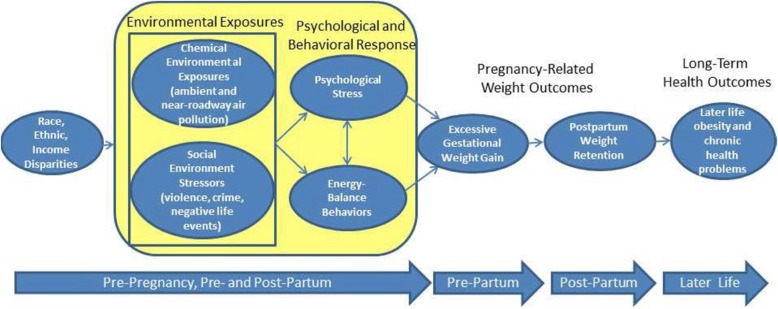
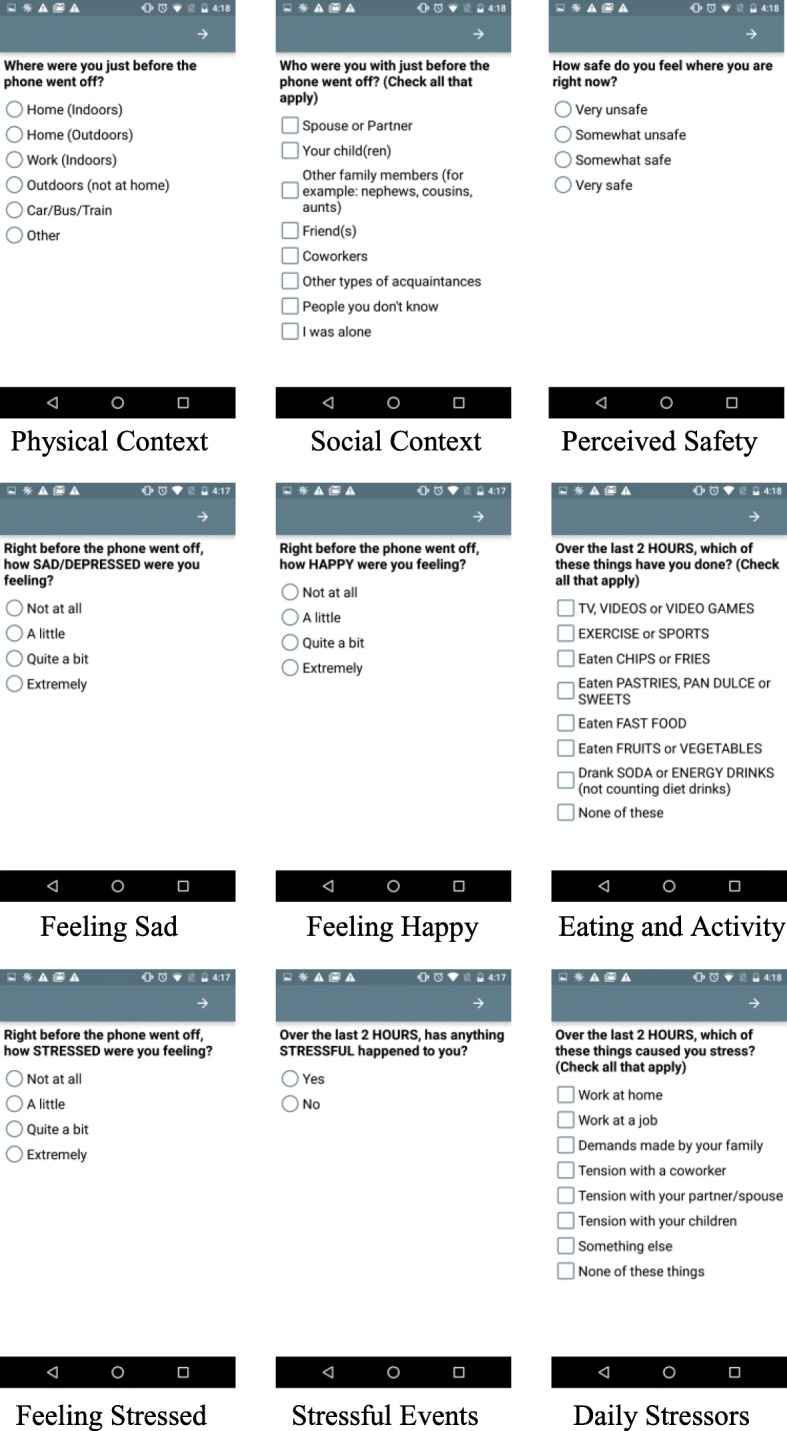
The "Maternal and Developmental Risks from Environmental and Social Stressors" (MADRES) real-time and personal sampling study examines the within-subject day-level effects of environmental and social stressors on maternal pre- and post-partum obesity-related biobehavioral responses. Among a cohort of 65 low-income, Hispanic women in urban Los Angeles, this study uses innovative personal, real-time data capture strategies (e.g., ecological momentary assessment [EMA], personal exposure monitoring, geolocation monitoring, accelerometry) to repeatedly assess obesity-related processes during the 1st and 3rd trimester, and at 4-6 months postpartum. Day-level effects of environmental exposures and social stressors on women's physical activity, diet, perceived stress and salivary cortisol measured across repeated days will be tested using multilevel modeling.
Hispanic women of childbearing age bear a disproportionately high burden of obesity, and this population is also unduly exposed to numerous obesogenic settings. By using innovative real-time data capture strategies, the current study will uncover the daily impacts of environmental and social stressor exposures on women's obesity-related biobehavioral responses, which over time can lead to excessive gestational weight gain, postpartum weight retention and can pose serious consequences for both mother and child. Findings from the real-time and personal sampling study will identify key mechanistic targets for policy, clinical, and programmatic interventions, with the potential for broad-reaching public health impacts.
西班牙裔人群在怀孕前、怀孕期间和怀孕后超重和肥胖的比例过高,这对母亲(例如先兆子痫、妊娠糖尿病、体重滞留)和儿童(例如终身肥胖风险增加)的健康构成严重威胁。越来越多的证据表明,环境暴露(例如空气污染、金属)和社会压力源(例如贫困、暴力)会影响与肥胖相关的生物行为过程,例如体力活动、饮食摄入、感知压力和皮质醇调节。然而,目前对环境暴露和社会压力源对与肥胖相关的生物行为过程的作用的理解受到个体间测量频率低、缺乏个人暴露监测的限制。
“环境和社会压力源对母婴的风险”(MADRES)实时和个人采样研究考察了环境和社会压力源对产妇产前和产后肥胖相关生物行为反应的个体日内效应。在洛杉矶市区的一个 65 名低收入西班牙裔女性队列中,本研究使用创新的个人实时数据采集策略(例如,生态瞬时评估 [EMA]、个人暴露监测、地理定位监测、加速度计)在第 1 至 3 孕期和产后 4-6 个月内反复评估肥胖相关过程。将使用多层建模测试环境暴露和社会压力源对女性在重复日子里的体力活动、饮食、感知压力和唾液皮质醇的日内影响。
处于生育年龄的西班牙裔女性承受着不成比例的肥胖负担,而这一人群也过度暴露于许多肥胖环境中。通过使用创新的实时数据采集策略,本研究将揭示环境和社会压力源暴露对女性肥胖相关生物行为反应的日常影响,这些影响会随着时间的推移导致孕妇体重过度增加、产后体重滞留,并对母婴造成严重后果。实时和个人采样研究的结果将确定政策、临床和项目干预的关键机制目标,具有广泛的公共卫生影响潜力。