Department of Family Medicine and Community Health, University of Minnesota, Minneapolis, MN 55455, USA.
Humphrey School of Public Affairs, University of Minnesota, Minneapolis, MN 55455, USA.
Int J Environ Res Public Health. 2019 Mar 1;16(5):742. doi: 10.3390/ijerph16050742.
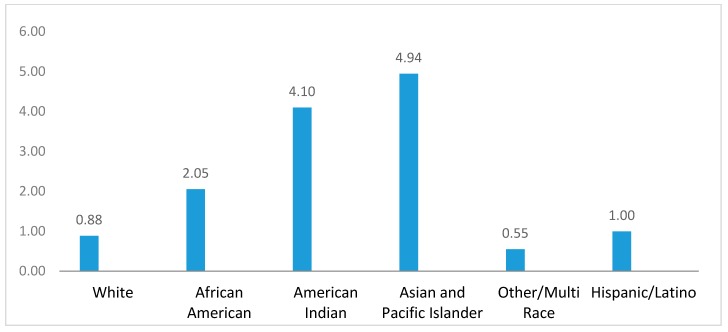
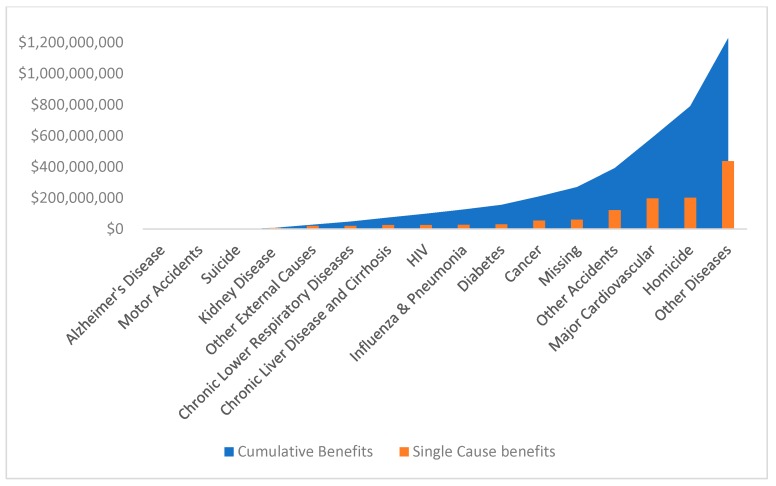
This paper estimates the benefits of eliminating racial disparities in mortality rates and work weeks lost due to illness. Using data from the American Community Survey (2005⁻2007) and Minnesota vital statistics (2011⁻2015), we explore economic methodologies for estimating the costs of health disparities. The data reveal large racial disparities in both mortality and labor market non-participation arising from preventable diseases and illnesses. Estimates show that if racial disparities in preventable deaths were eliminated, the annualized number of lives saved ranges from 475 to 812, which translates into $1.2 billion to $2.9 billion per year in economic savings (in 2017 medical care inflation-adjusted dollars). After eliminating the unexplained racial disparities in labor market participation, an additional 4,217 to 9185 Minnesota residents would have worked each year, which equals $247.43 million to $538.85 million in yearly net benefits to Minnesota.
本文旨在评估消除因疾病导致的死亡率和工作周数方面的种族差异所带来的收益。本研究使用了美国社区调查(2005-2007 年)和明尼苏达州生命统计数据(2011-2015 年),探索了用于估算健康差异成本的经济方法。数据显示,因可预防疾病和疾病导致的死亡率和劳动力市场参与率方面存在巨大的种族差异。研究结果表明,如果消除可预防死亡方面的种族差异,每年可挽救的生命数量在 475 至 812 人之间,这相当于每年(2017 年医疗通胀调整后的美元)节省 12 亿至 29 亿美元。在消除劳动力市场参与方面无法解释的种族差异后,每年明尼苏达州将额外增加 4217 至 9185 名劳动力,为明尼苏达州带来 2.4743 亿至 5.3885 亿美元的净收益。