Martier Raygene, Liefhebber Jolanda M, García-Osta Ana, Miniarikova Jana, Cuadrado-Tejedor Mar, Espelosin Maria, Ursua Susana, Petry Harald, van Deventer Sander J, Evers Melvin M, Konstantinova Pavlina
Department of Research & Development, uniQure Biopharma B.V., Amsterdam, the Netherlands; Department of Gastroenterology and Hepatology, Leiden University Medical Center, Leiden, the Netherlands.
Department of Research & Development, uniQure Biopharma B.V., Amsterdam, the Netherlands.
Mol Ther Nucleic Acids. 2019 Jun 7;16:26-37. doi: 10.1016/j.omtn.2019.02.001. Epub 2019 Feb 11.
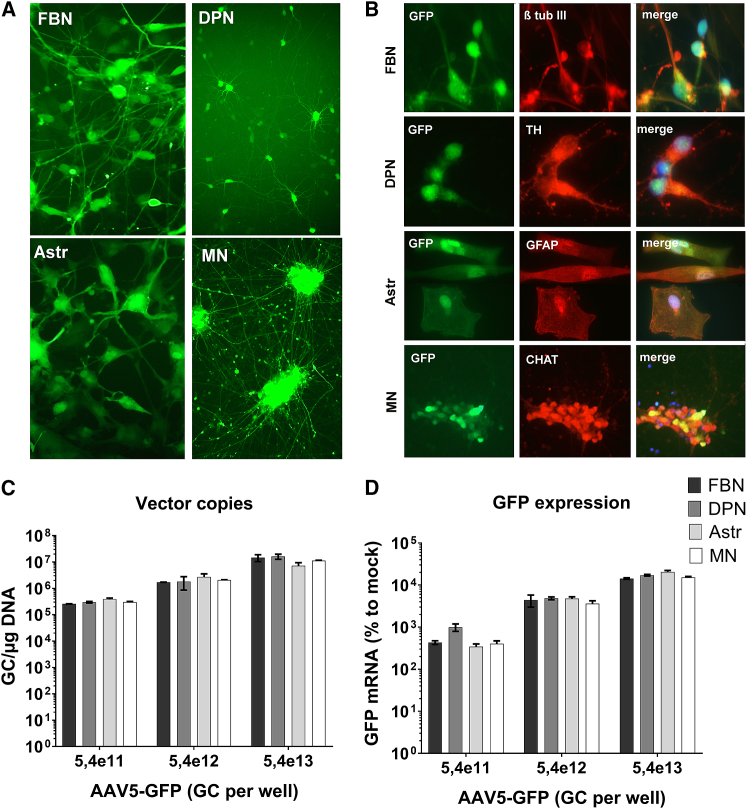
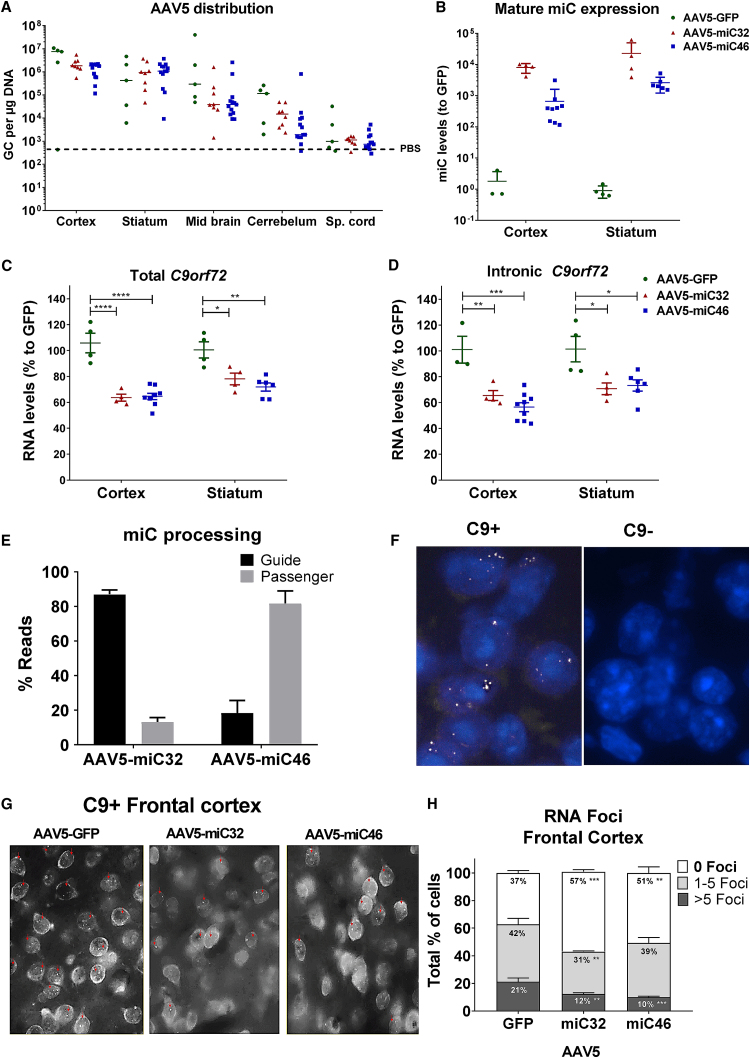
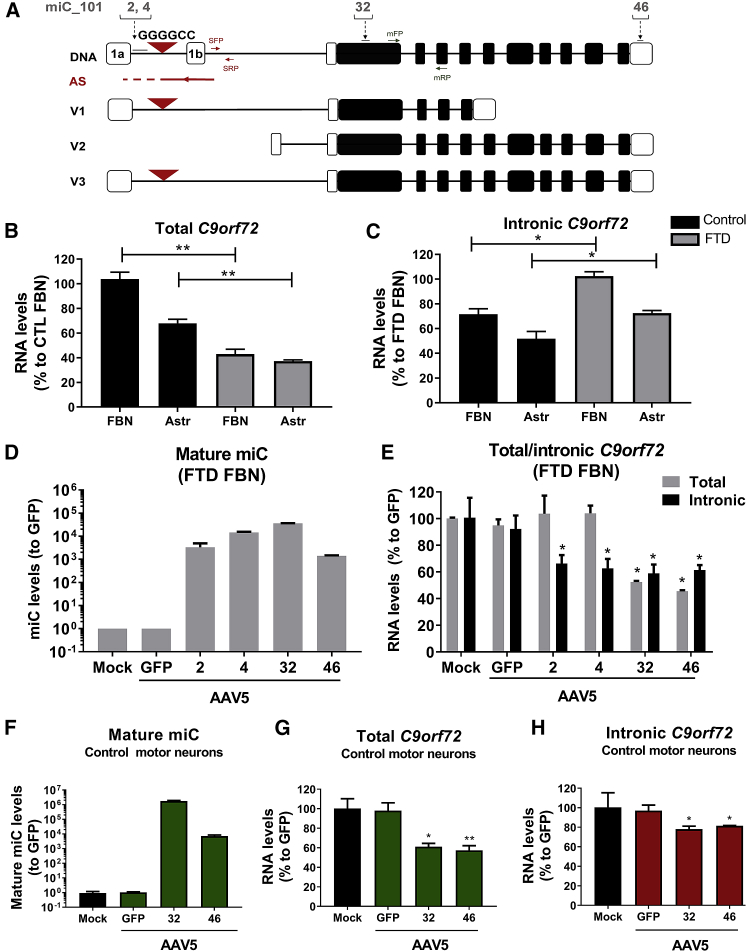
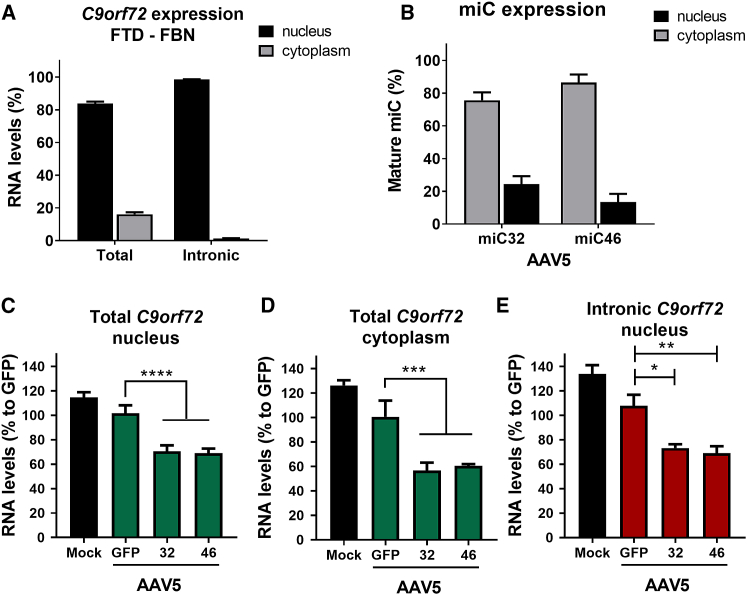
A hexanucleotide GGGGCC expansion in intron 1 of chromosome 9 open reading frame 72 (C9orf72) gene is the most frequent cause of amyotrophic lateral sclerosis (ALS) and frontotemporal dementia (FTD). The corresponding repeat-containing sense and antisense transcripts cause a gain of toxicity through the accumulation of RNA foci in the nucleus and deposition of dipeptide-repeat (DPR) proteins in the cytoplasm of the affected cells. We have previously reported on the potential of engineered artificial anti-C9orf72-targeting miRNAs (miC) targeting C9orf72 to reduce the gain of toxicity caused by the repeat-containing transcripts. In the current study, we tested the silencing efficacy of adeno-associated virus (AAV)5-miC in human-derived induced pluripotent stem cell (iPSC) neurons and in an ALS mouse model. We demonstrated that AAV5-miC transduces different types of neuronal cells and can reduce the accumulation of repeat-containing C9orf72 transcripts. Additionally, we demonstrated silencing of C9orf72 in both the nucleus and cytoplasm, which has an added value for the treatment of ALS and/or FTD patients. A proof of concept in an ALS mouse model demonstrated the significant reduction in repeat-containing C9orf72 transcripts and RNA foci after treatment. Taken together, these findings support the feasibility of a gene therapy for ALS and FTD based on the reduction in toxicity caused by the repeat-containing C9orf72 transcripts.
9号染色体开放阅读框72(C9orf72)基因内含子1中的六核苷酸GGGGCC扩增是肌萎缩侧索硬化症(ALS)和额颞叶痴呆(FTD)最常见的病因。相应的含重复序列的正义和反义转录本通过在细胞核中积累RNA病灶以及在受影响细胞的细胞质中沉积二肽重复(DPR)蛋白而导致毒性增加。我们之前曾报道过工程化的靶向C9orf72的人工抗C9orf72微小RNA(miC)减少含重复序列转录本引起的毒性增加的潜力。在当前研究中,我们测试了腺相关病毒(AAV)5-miC在人源诱导多能干细胞(iPSC)神经元和ALS小鼠模型中的沉默效果。我们证明AAV5-miC可转导不同类型的神经元细胞,并能减少含重复序列的C9orf72转录本的积累。此外,我们证明了C9orf72在细胞核和细胞质中均被沉默,这对于治疗ALS和/或FTD患者具有附加价值。在ALS小鼠模型中的概念验证表明,治疗后含重复序列的C9orf72转录本和RNA病灶显著减少。综上所述,这些发现支持了基于减少含重复序列的C9orf72转录本引起的毒性对ALS和FTD进行基因治疗的可行性。