Orygen, The National Centre of Excellence in Youth Mental Health, Parkville, Australia; Centre for Youth Mental Health, The University of Melbourne, Parkville, Australia; Melbourne Neuropsychiatry Centre, Department of Psychiatry, The University of Melbourne, Parkville, Australia.
Monash Clinical and Imaging Neuroscience, School of Psychological Sciences, Monash University, Clayton, Australia; Monash Biomedical Imaging, Monash University, Clayton, Australia.
Dev Cogn Neurosci. 2019 Apr;36:100626. doi: 10.1016/j.dcn.2019.100626. Epub 2019 Feb 16.
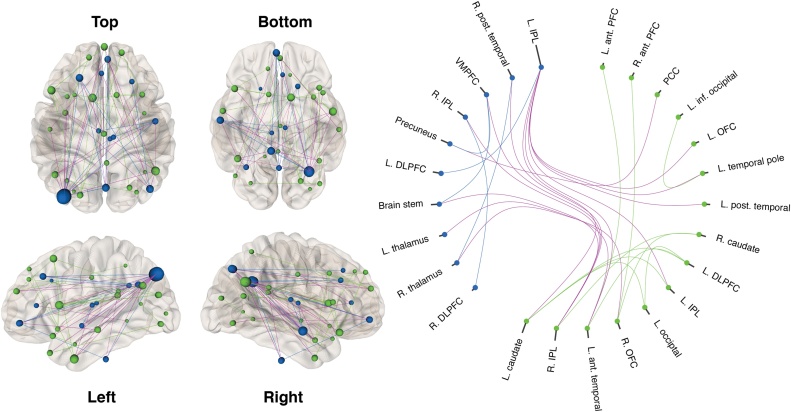
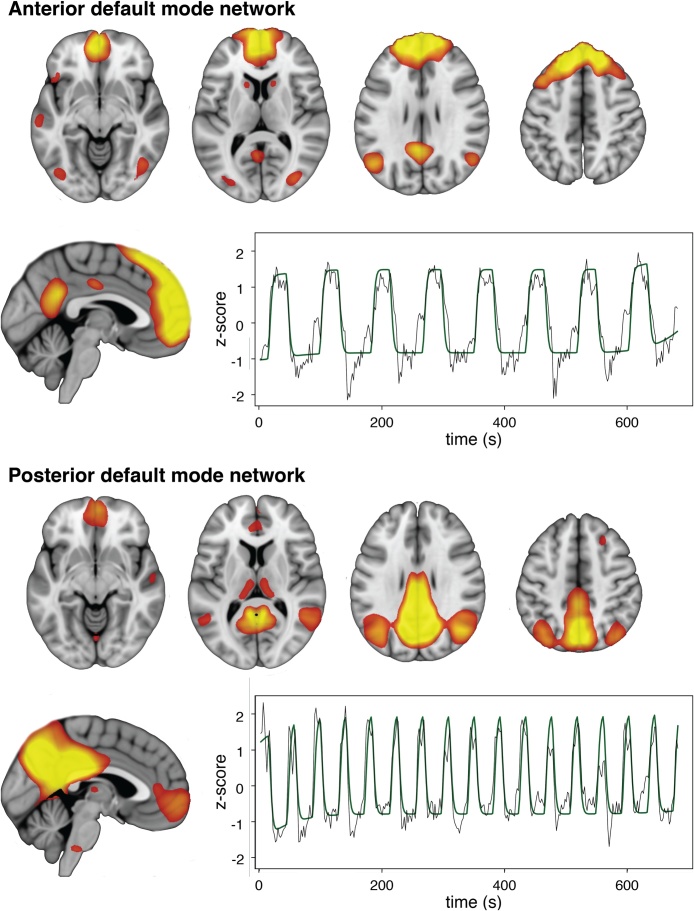
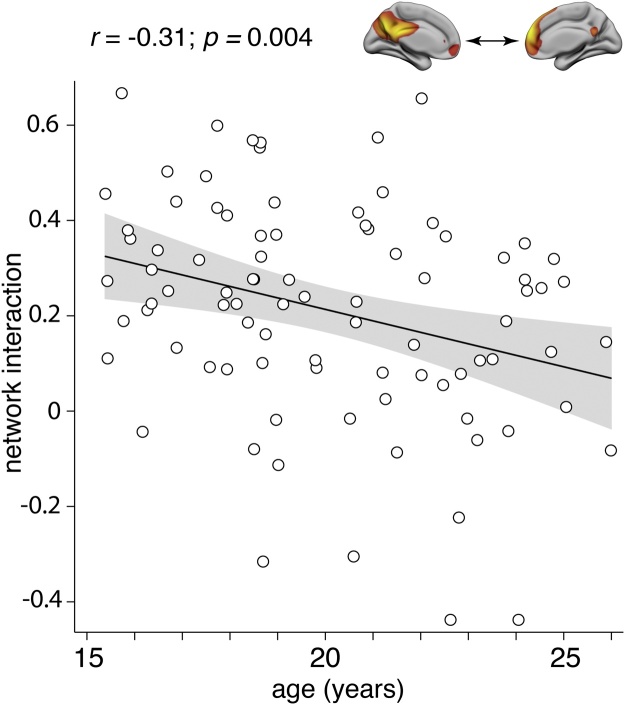
The self-concept - the set of beliefs that a person has about themselves - shows significant development from adolescence to early adulthood, in parallel with brain development over the same period. We sought to investigate how age-related changes in self-appraisal processes corresponded with brain network segregation and integration in healthy adolescents and young adults. We scanned 88 participants (46 female), aged from 15 to 25 years, as they performed a self-appraisal task. We first examined their patterns of activation to self-appraisal, and replicated prior reports of reduced dorsomedial prefrontal cortex activation with older age, with similar reductions in precuneus, right anterior insula/operculum, and a region extending from thalamus to striatum. We used independent component analysis to identify distinct anterior and posterior components of the default mode network (DMN), which were associated with the self-appraisal and rest-fixation parts of the task, respectively. Increasing age was associated with reduced functional connectivity between the two components. Finally, analyses of task-evoked interactions between pairs of nodes within the DMN identified a subnetwork that demonstrated reduced connectivity with increasing age. Decreased network integration within the DMN appears to be an important higher-order maturational process supporting the emerging adult self.
自我概念——一个人对自己的信念集合——在青少年到成年早期与大脑发育同时呈现出显著的发展。我们试图研究自我评价过程的年龄相关变化如何与健康青少年和年轻人的大脑网络分离和整合相对应。我们对 88 名参与者(46 名女性)进行了扫描,年龄在 15 至 25 岁之间,让他们执行自我评价任务。我们首先检查了他们对自我评价的激活模式,并复制了先前关于随着年龄增长背内侧前额叶皮层激活减少的报告,同时还观察到楔前叶、右侧前岛叶/脑岛和从丘脑延伸到纹状体的区域也有类似的减少。我们使用独立成分分析来识别默认模式网络 (DMN) 的前后两个不同成分,这两个成分分别与任务的自我评价和休息固定部分相关。年龄的增长与两个成分之间的功能连接减少有关。最后,对 DMN 内节点对之间的任务诱发相互作用的分析确定了一个子网络,该网络的连接性随着年龄的增长而减少。DMN 内的网络集成减少似乎是支持新兴成年自我的一个重要的高级成熟过程。