National Laboratory of Biomacromolecules, CAS Center for Excellence in Biomacromolecules, Institute of Biophysics, Chinese Academy of Sciences, Beijing 100101, China; College of Life Sciences, University of Chinese Academy of Sciences, Beijing 100049, China.
Protein Quality Control and Diseases Laboratory, Zhejiang Provincial Key Laboratory of Medical Genetics, Key Laboratory of Laboratory Medicine, Ministry of Education, School of Laboratory Medicine and Life Sciences, Wenzhou Medical University, Wenzhou, Zhejiang 325035, China.
EBioMedicine. 2019 Mar;41:408-419. doi: 10.1016/j.ebiom.2019.02.041. Epub 2019 Feb 27.
Endoplasmic reticulum (ER) oxidoreductin-1α (Ero1α) and protein disulfide isomerase (PDI) constitute the pivotal pathway of oxidative protein folding, and are highly expressed in many cancers. However, whether targeting the functional interplay between Ero1α and PDI could be a new approach for cancer therapy remains unknown.
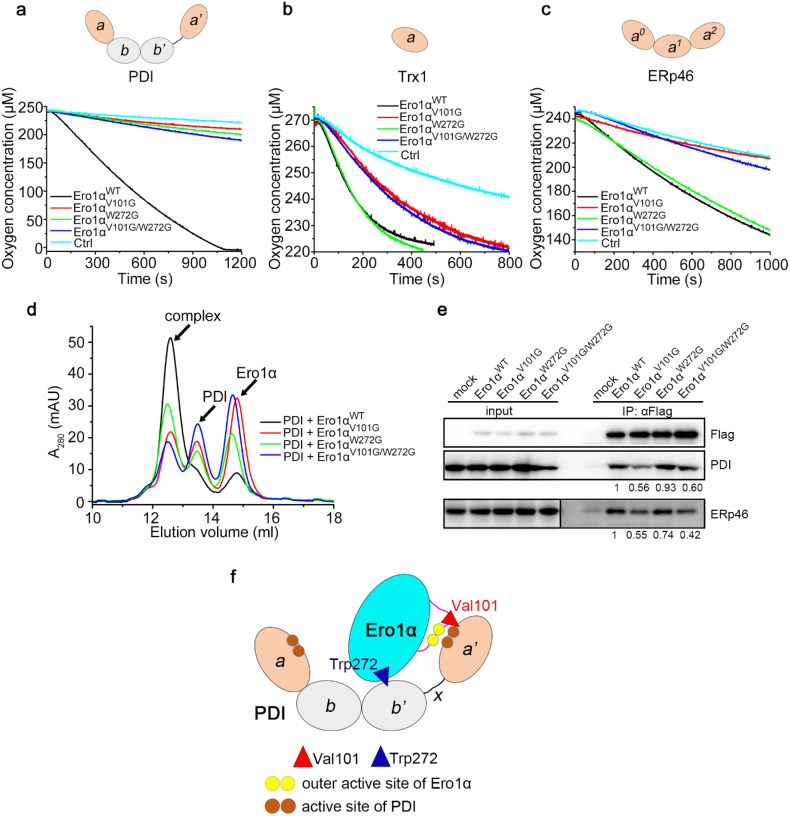
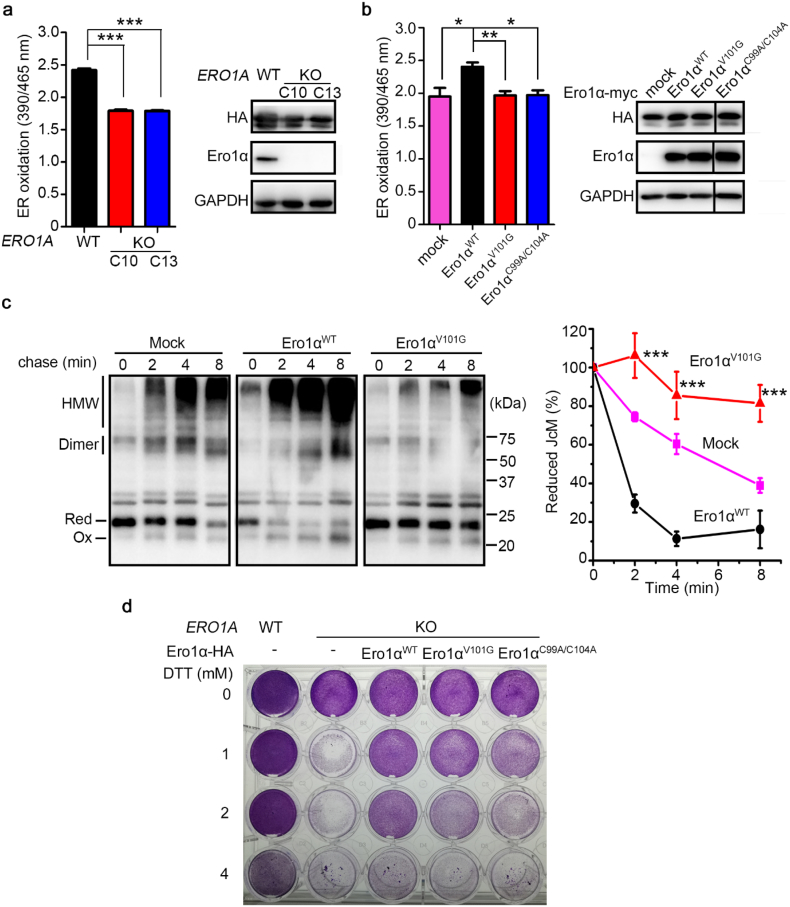
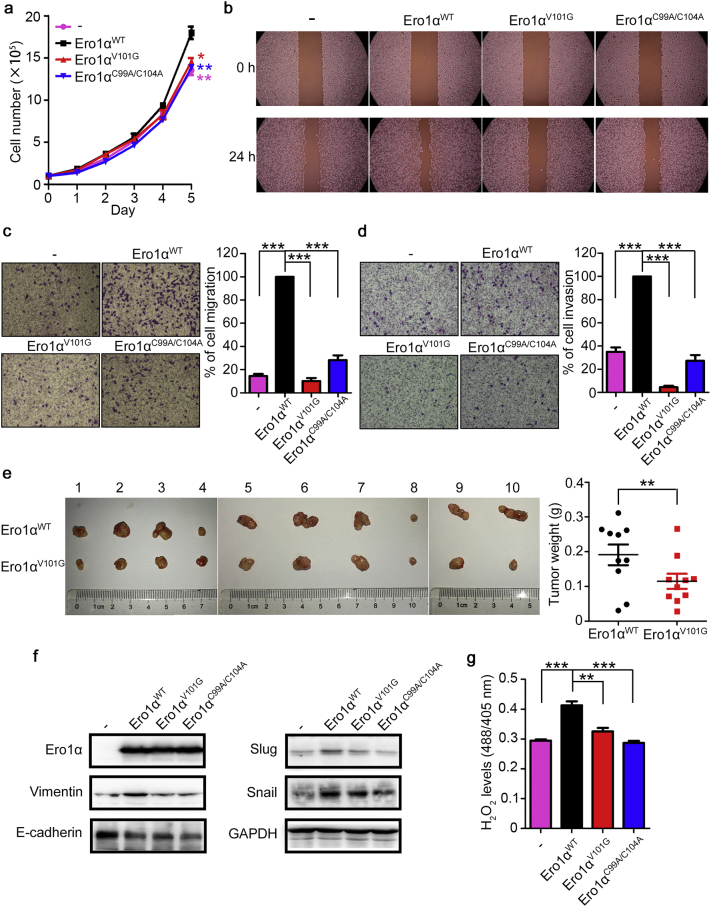
We performed wound healing assays, transwell migration and invasion assays and xenograft assays to assess cell migration, invasion and tumorigenesis; gel filtration chromatography, oxygen consumption assay and in cells folding assays were used to detect Ero1α-PDI interaction and Ero1α oxidase activity.
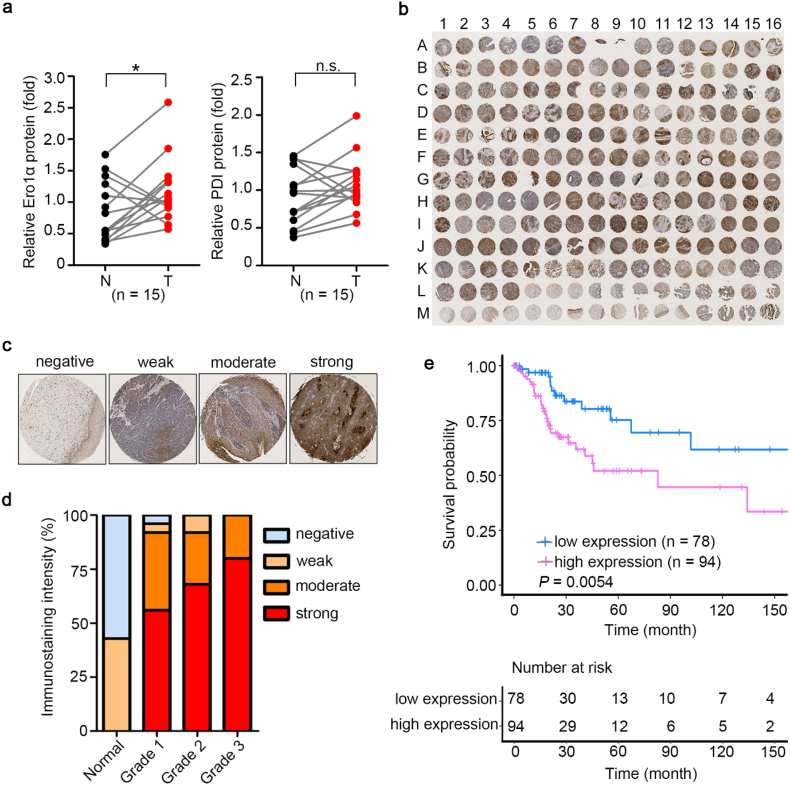
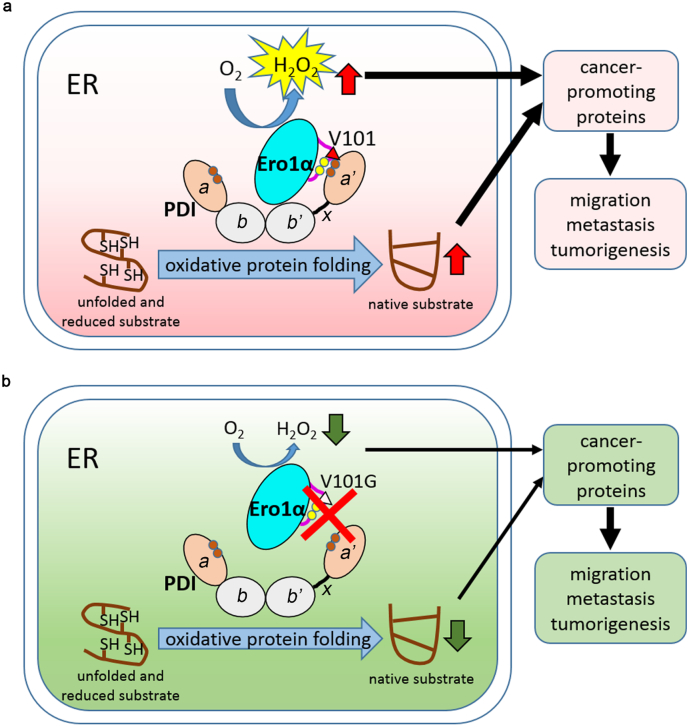
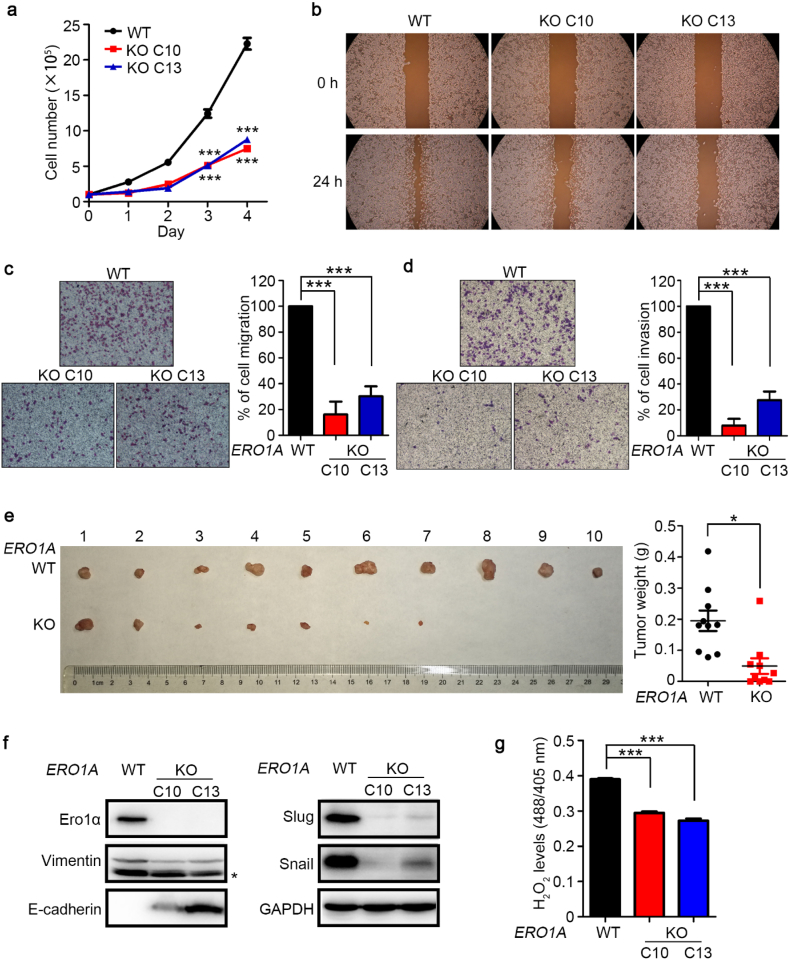
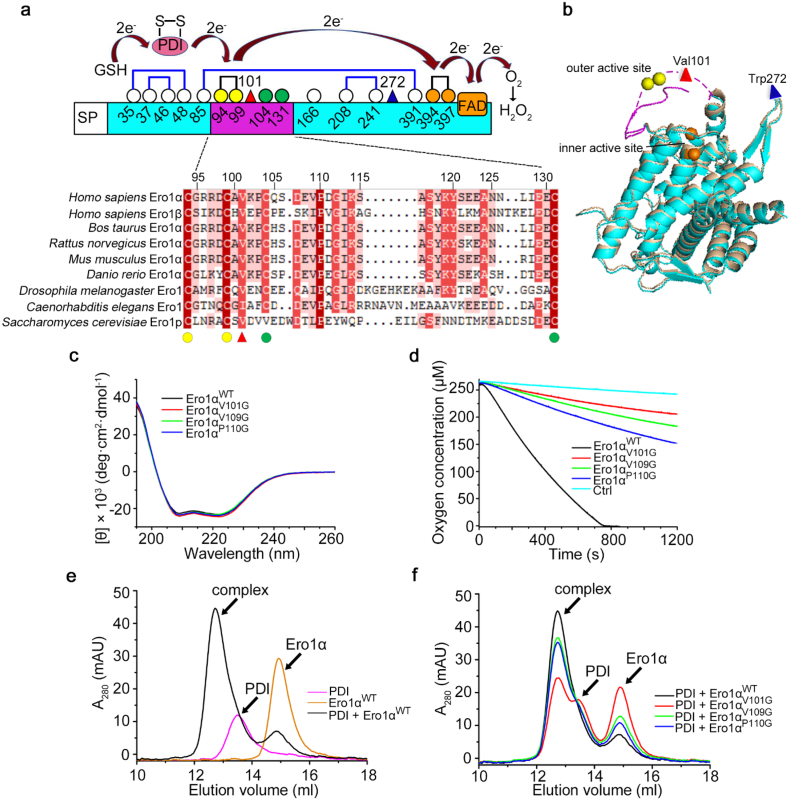
Here, we report that elevated expression of Ero1α is correlated with poor prognosis in human cervical cancer. Knockout of ERO1A decreases the growth, migration and tumorigenesis of cervical cancer cells, through downregulation of the HO-correlated epithelial-mesenchymal transition. We identify that the conserved valine (Val) 101 of Ero1α is critical for Ero1α-PDI complex formation and Ero1α oxidase activity. Val101 of Ero1α is specifically involved in the recognition of PDI catalytic domain. Mutation of Val101 results in a reduced ER, retarded oxidative protein folding and decreased HO levels in the ER of cervical cancer cells and further impairs cell migration, invasion, and tumor growth.
Our study identifies the critical residue of Ero1α for recognizing PDI, which underlines the molecular mechanism of oxidative protein folding for tumorigenesis and provides a proof-of-concept for cancer therapy by targeting Ero1α-PDI interaction. FUND: This work was supported by National Key R&D Program of China, National Natural Science Foundation of China, and Youth Innovation Promotion Association, CAS.
内质网(ER)氧化还原酶 1α(Ero1α)和蛋白二硫键异构酶(PDI)构成氧化蛋白折叠的关键途径,在许多癌症中高度表达。然而,靶向 Ero1α 和 PDI 之间的功能相互作用是否可以成为癌症治疗的新方法尚不清楚。
我们进行了划痕愈合试验、Transwell 迁移和侵袭试验以及异种移植试验,以评估细胞迁移、侵袭和肿瘤发生;凝胶过滤色谱、耗氧测定和细胞折叠试验用于检测 Ero1α-PDI 相互作用和 Ero1α 氧化酶活性。
在这里,我们报告 Ero1α 的高表达与人类宫颈癌的预后不良相关。ERO1A 的敲除通过下调 HO 相关上皮间质转化,降低了宫颈癌细胞的生长、迁移和肿瘤发生。我们确定 Ero1α 的保守缬氨酸(Val)101 对于 Ero1α-PDI 复合物形成和 Ero1α 氧化酶活性至关重要。Ero1α 的 Val101 特异性参与 PDI 催化结构域的识别。Val101 突变导致 ER 中 Ero1α 的氧化还原酶活性降低,氧化蛋白折叠延迟,HO 水平降低,进一步损害了宫颈癌细胞的迁移、侵袭和肿瘤生长。
我们的研究确定了 Ero1α 识别 PDI 的关键残基,这突显了氧化蛋白折叠促进肿瘤发生的分子机制,并为通过靶向 Ero1α-PDI 相互作用治疗癌症提供了概念验证。
本工作得到了中国国家重点研发计划、国家自然科学基金和中国科学院青年创新促进会的支持。