San Raffaele Telethon Institute for Gene Therapy, Milan, Italy.
Vita-Salute San Raffaele University, Milan, Italy.
Aging Cell. 2019 Jun;18(3):e12933. doi: 10.1111/acel.12933. Epub 2019 Mar 3.
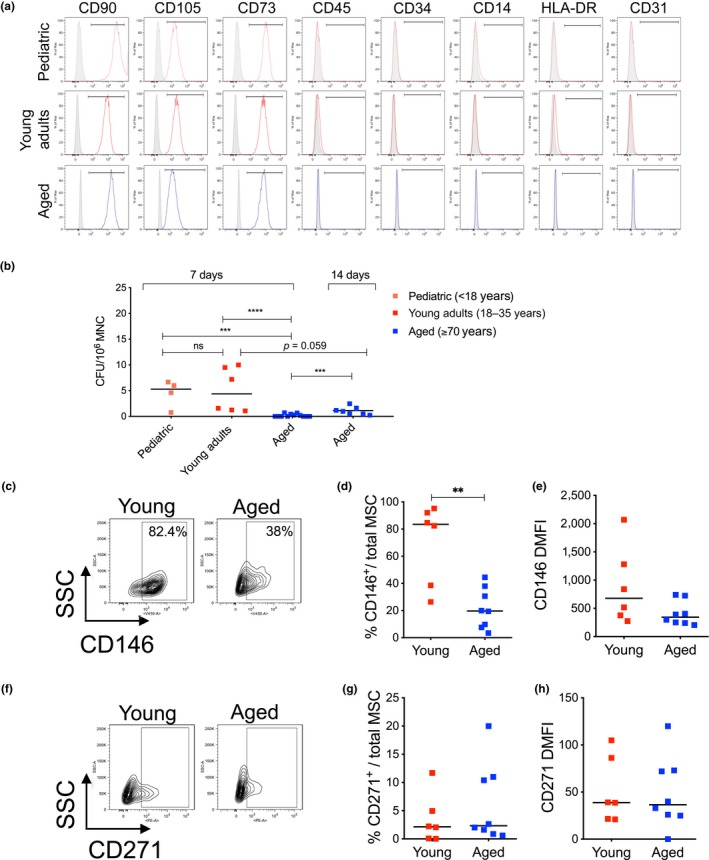
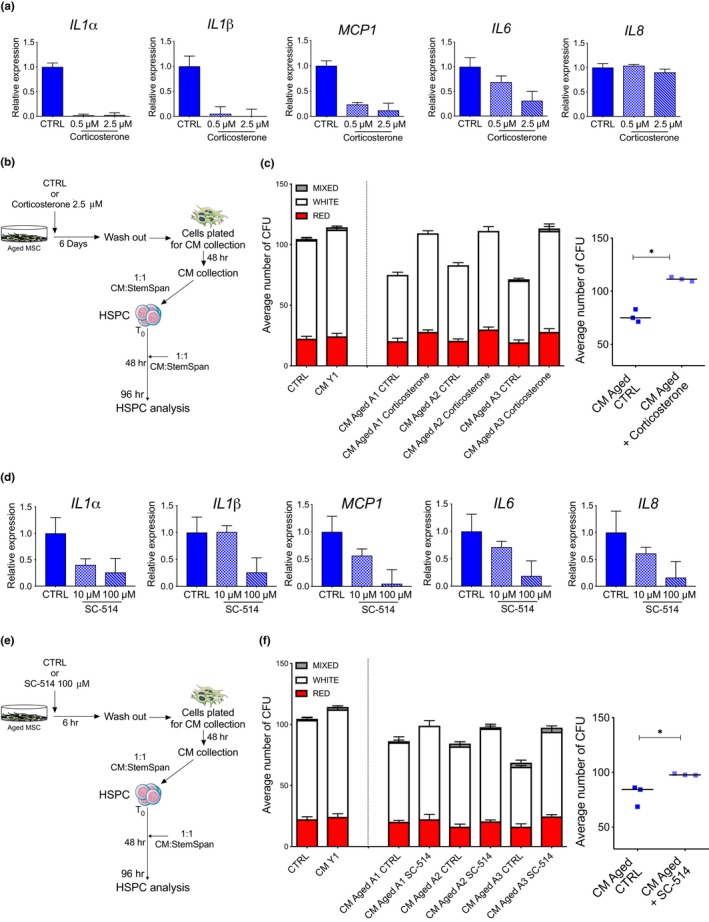
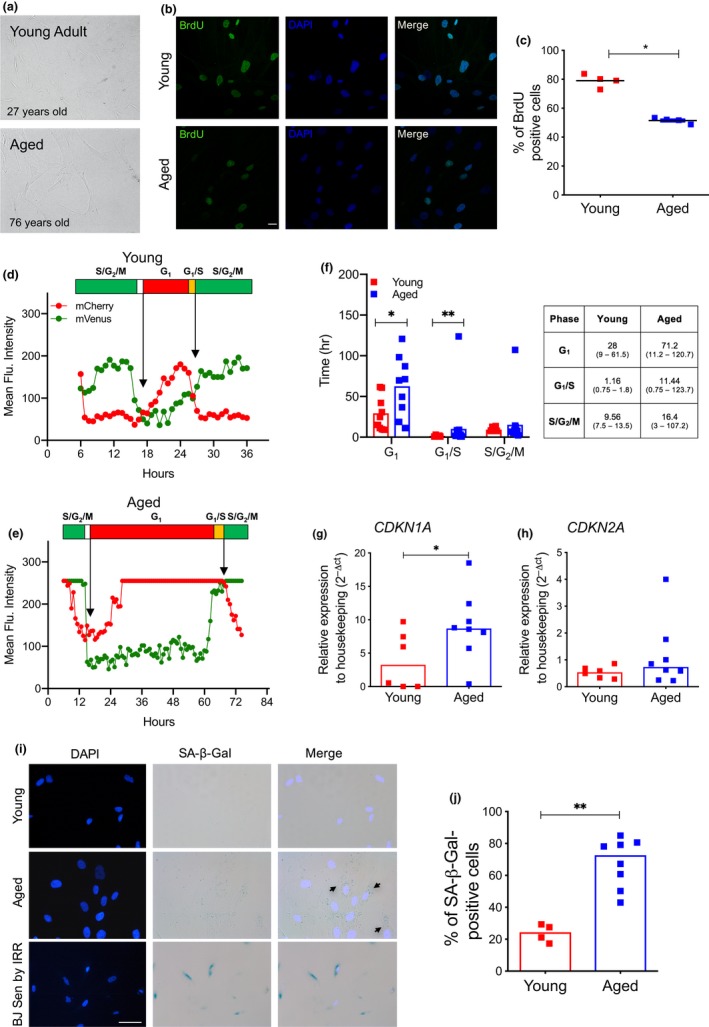
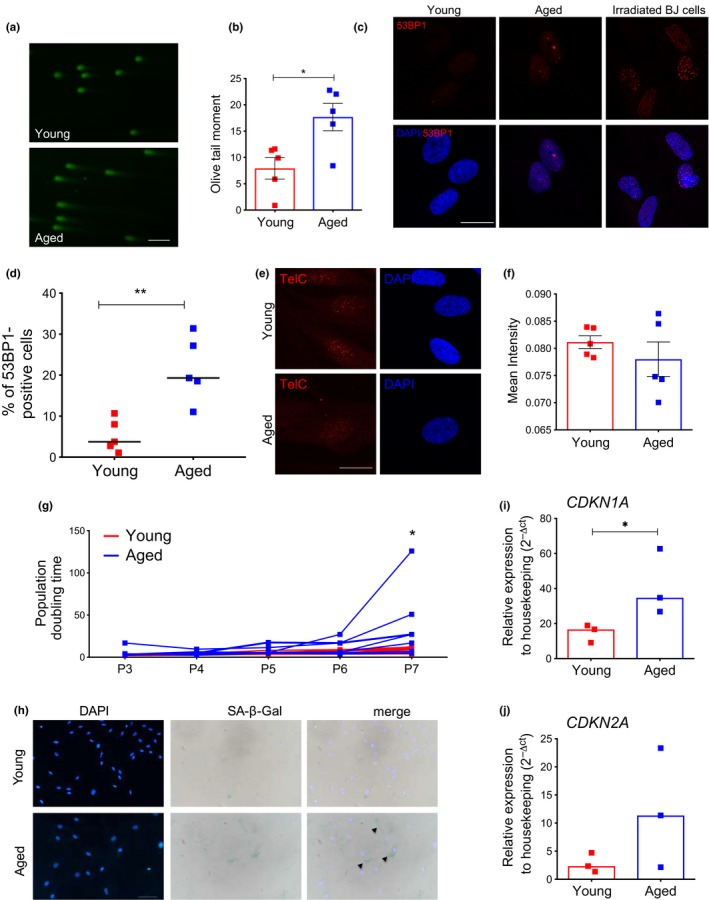
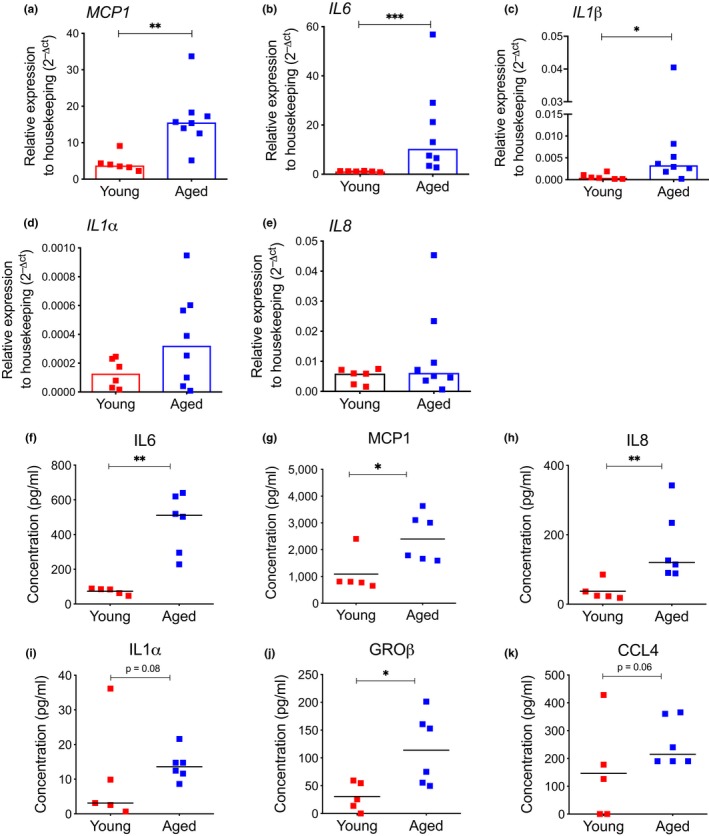
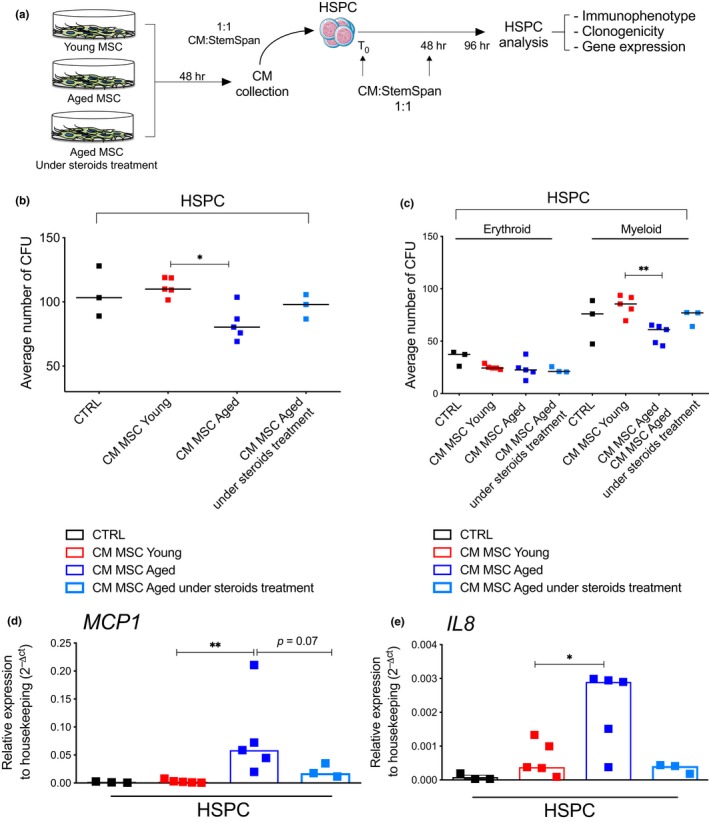
Hematopoietic stem and progenitor cells (HSPC) reside in the bone marrow (BM) niche and serve as a reservoir for mature blood cells throughout life. Aging in the BM is characterized by low-grade chronic inflammation that could contribute to the reduced functionality of aged HSPC. Mesenchymal stromal cells (MSC) in the BM support HSPC self-renewal. However, changes in MSC function with age and the crosstalk between MSC and HSPC remain understudied. Here, we conducted an extensive characterization of senescence features in BM-derived MSC from young and aged healthy donors. Aged MSC displayed an enlarged senescent-like morphology, a delayed clonogenic potential and reduced proliferation ability when compared to younger counterparts. Of note, the observed proliferation delay was associated with increased levels of SA-β-galactosidase (SA-β-Gal) and lipofuscin in aged MSC at early passages and a modest but consistent accumulation of physical DNA damage and DNA damage response (DDR) activation. Consistent with the establishment of a senescence-like state in aged MSC, we detected an increase in pro-inflammatory senescence-associated secretory phenotype (SASP) factors, both at the transcript and protein levels. Conversely, the immunomodulatory properties of aged MSC were significantly reduced. Importantly, exposure of young HSPC to factors secreted by aged MSC induced pro-inflammatory genes in HSPC and impaired HSPC clonogenic potential in a SASP-dependent manner. Altogether, our results reveal that BM-derived MSC from aged healthy donors display features of senescence and that, during aging, MSC-associated secretomes contribute to activate an inflammatory transcriptional program in HSPC that may ultimately impair their functionality.
造血干细胞和祖细胞 (HSPC) 存在于骨髓 (BM) 龛位中,是终生成熟血细胞的储备库。BM 中的衰老以低度慢性炎症为特征,这可能导致衰老 HSPC 功能降低。BM 中的间充质基质细胞 (MSC) 支持 HSPC 自我更新。然而,MSC 功能随年龄的变化以及 MSC 和 HSPC 之间的串扰仍研究不足。在这里,我们对来自年轻和老年健康供体的 BM 来源 MSC 的衰老特征进行了广泛表征。与年轻对应物相比,衰老 MSC 表现出增大的衰老样形态、延迟的集落形成潜力和降低的增殖能力。值得注意的是,观察到的增殖延迟与衰老 MSC 早期传代时 SA-β-半乳糖苷酶 (SA-β-Gal) 和脂褐素水平升高以及物理 DNA 损伤和 DNA 损伤反应 (DDR) 激活的适度但一致积累有关。与衰老 MSC 中建立衰老样状态一致,我们在转录和蛋白质水平上都检测到促炎衰老相关分泌表型 (SASP) 因子的增加。相反,衰老 MSC 的免疫调节特性显著降低。重要的是,年轻 HSPC 暴露于衰老 MSC 分泌的因子会在 HSPC 中诱导促炎基因,并以 SASP 依赖的方式损害 HSPC 的集落形成潜力。总的来说,我们的结果表明,来自老年健康供体的 BM 来源 MSC 表现出衰老的特征,并且在衰老过程中,MSC 相关的分泌组有助于在 HSPC 中激活炎症转录程序,这可能最终损害它们的功能。