CAS Key Laboratory of Special Pathogens and Biosafety, Wuhan Institute of Virology, Chinese Academy of Sciences, Wuhan 430071, China.
University of Chinese Academy of Sciences, Beijing 100049, China.
Viruses. 2019 Mar 2;11(3):210. doi: 10.3390/v11030210.
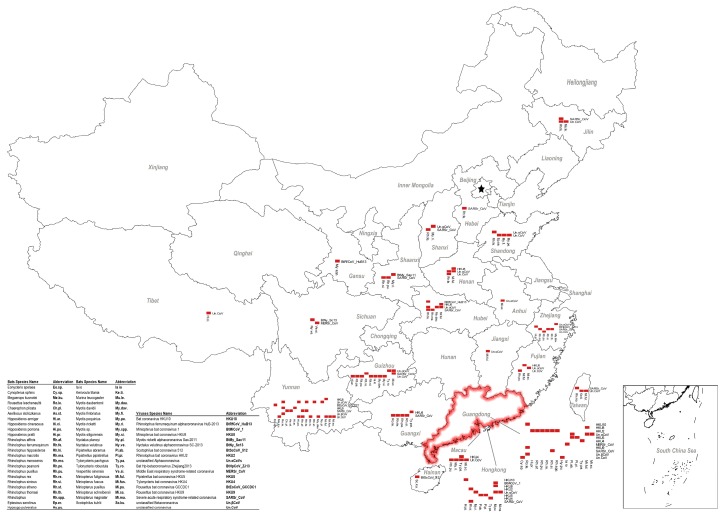
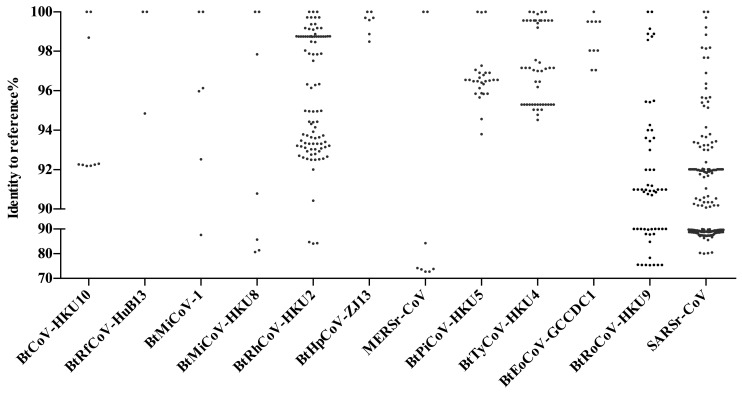
During the past two decades, three zoonotic coronaviruses have been identified as the cause of large-scale disease outbreaks⁻Severe Acute Respiratory Syndrome (SARS), Middle East Respiratory Syndrome (MERS), and Swine Acute Diarrhea Syndrome (SADS). SARS and MERS emerged in 2003 and 2012, respectively, and caused a worldwide pandemic that claimed thousands of human lives, while SADS struck the swine industry in 2017. They have common characteristics, such as they are all highly pathogenic to humans or livestock, their agents originated from bats, and two of them originated in China. Thus, it is highly likely that future SARS- or MERS-like coronavirus outbreaks will originate from bats, and there is an increased probability that this will occur in China. Therefore, the investigation of bat coronaviruses becomes an urgent issue for the detection of early warning signs, which in turn minimizes the impact of such future outbreaks in China. The purpose of the review is to summarize the current knowledge on viral diversity, reservoir hosts, and the geographical distributions of bat coronaviruses in China, and eventually we aim to predict virus hotspots and their cross-species transmission potential.
在过去的二十年中,三种人畜共患冠状病毒已被确定为大规模疾病爆发的原因——严重急性呼吸综合征(SARS)、中东呼吸综合征(MERS)和猪急性腹泻综合征(SADS)。SARS 和 MERS 分别于 2003 年和 2012 年出现,导致了一场全球大流行,夺走了数千人的生命,而 SADS 则于 2017 年袭击了养猪业。它们具有共同的特征,例如它们对人类或牲畜都具有高度致病性,它们的病原体来自蝙蝠,其中两种起源于中国。因此,未来类似 SARS 或 MERS 的冠状病毒爆发极有可能来自蝙蝠,而且在中国发生的可能性增加。因此,调查蝙蝠冠状病毒成为检测早期预警信号的紧迫问题,这反过来又最大限度地减少了此类未来爆发在中国的影响。本综述的目的是总结中国蝙蝠冠状病毒的病毒多样性、储存宿主和地理分布的现有知识,并最终预测病毒热点及其跨物种传播的潜力。