Department of Animal Genetics, Centre for Research in Agricultural Genomics (CRAG), CSIC-IRTA-UAB-UB, Universitat Autònoma de Barcelona, 08193, Bellaterra, Spain.
Animal Breeding and Genetics Program, Institute for Research and Technology in Food and Agriculture (IRTA), Rovira Roure 191, 25198, Lleida, Spain.
BMC Genomics. 2019 Mar 4;20(1):170. doi: 10.1186/s12864-019-5557-9.
Intramuscular fat (IMF) content and composition have a strong impact on the nutritional and organoleptic properties of porcine meat. The goal of the current work was to compare the patterns of gene expression and the genetic determinism of IMF traits in the porcine gluteus medius (GM) and longissimus dorsi (LD) muscles.
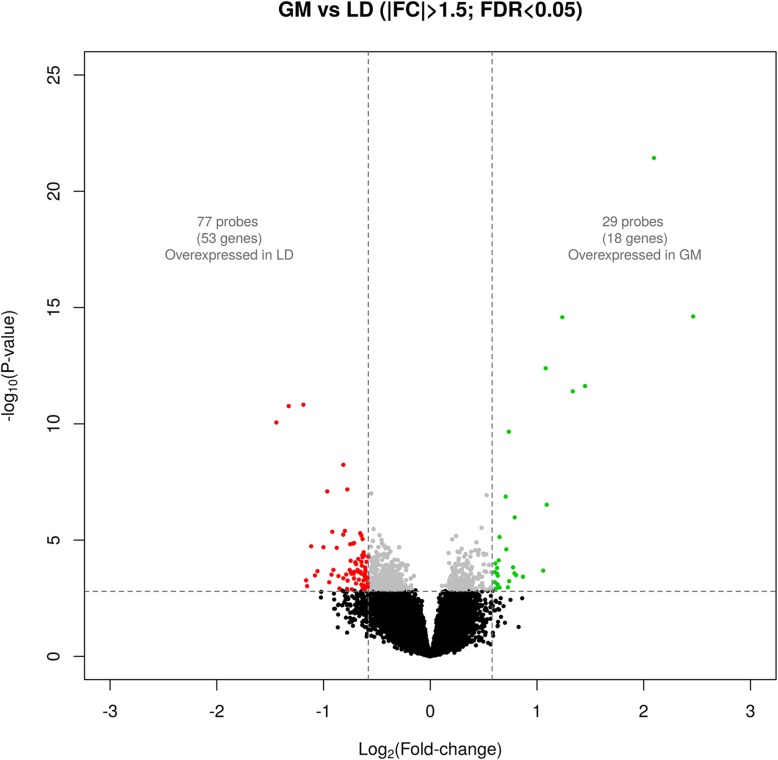
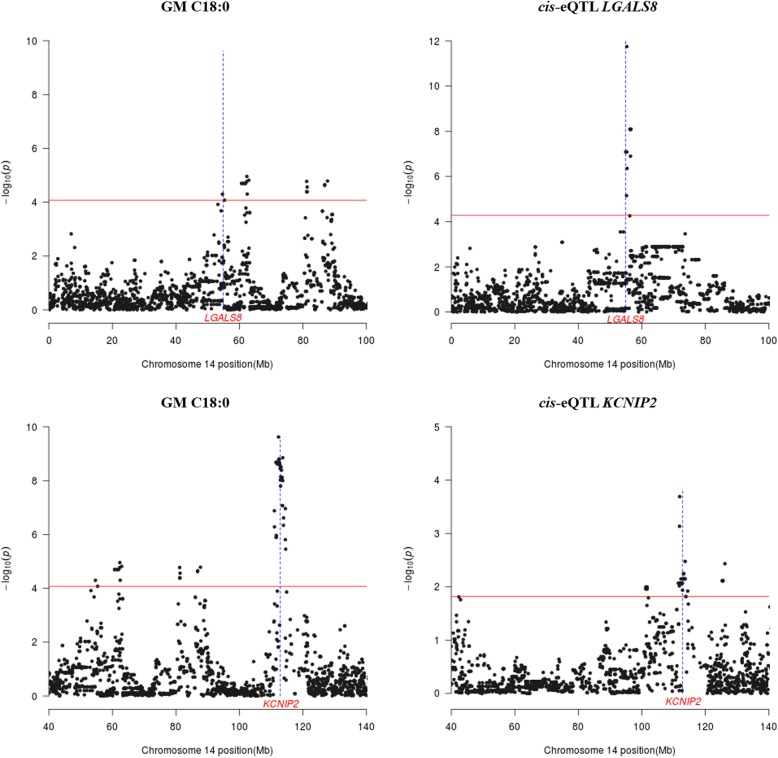
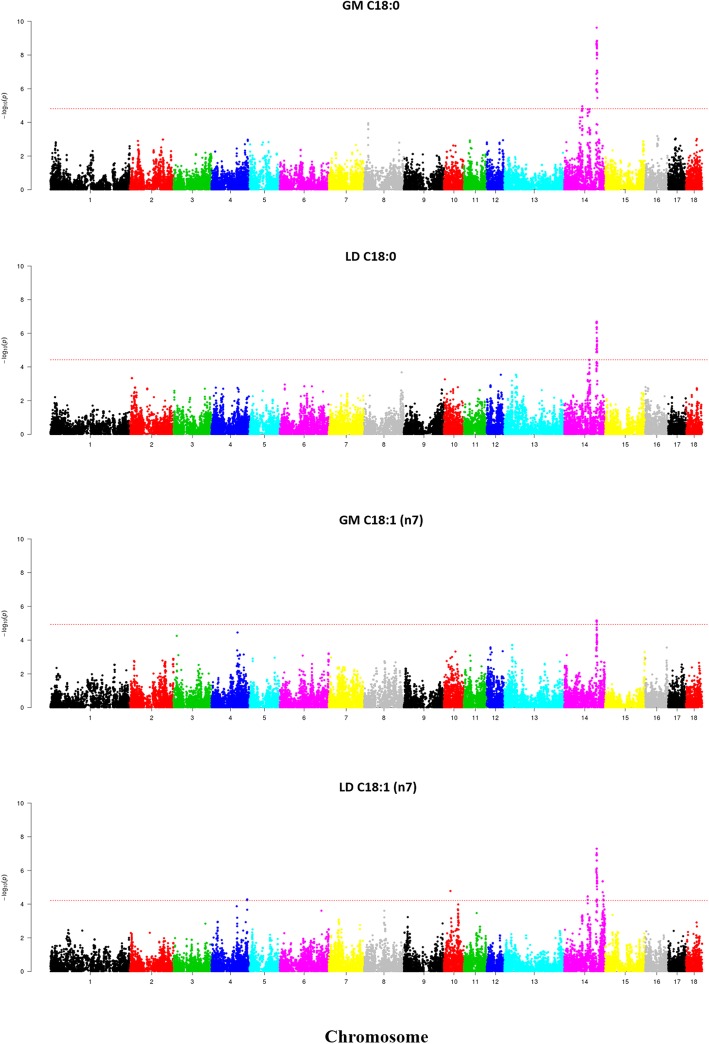
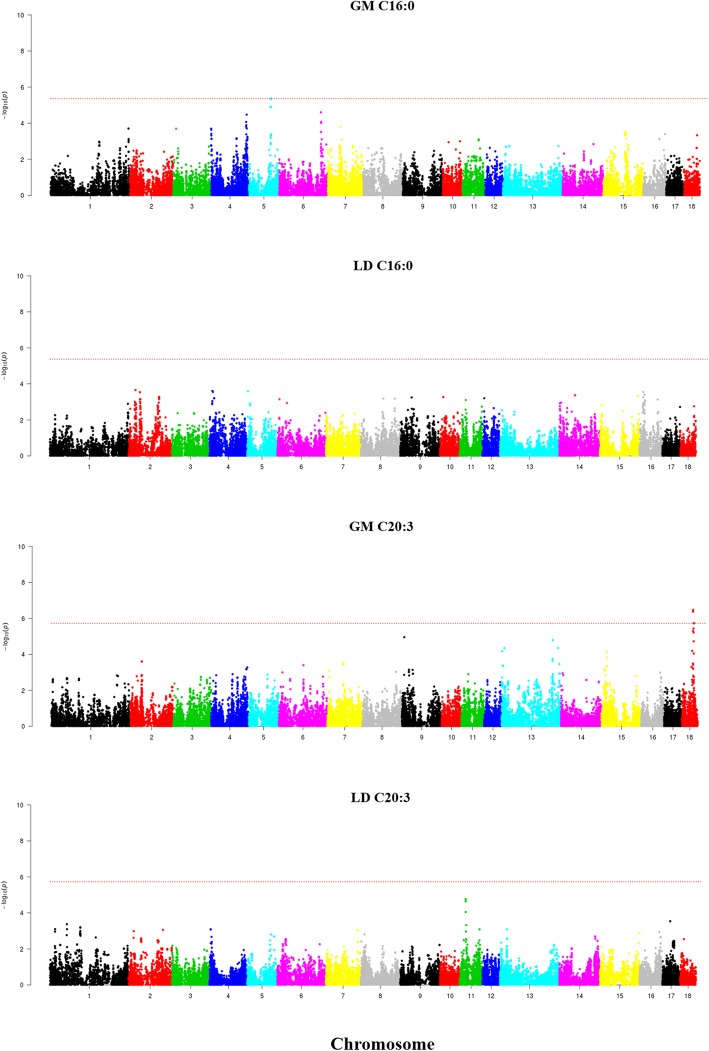
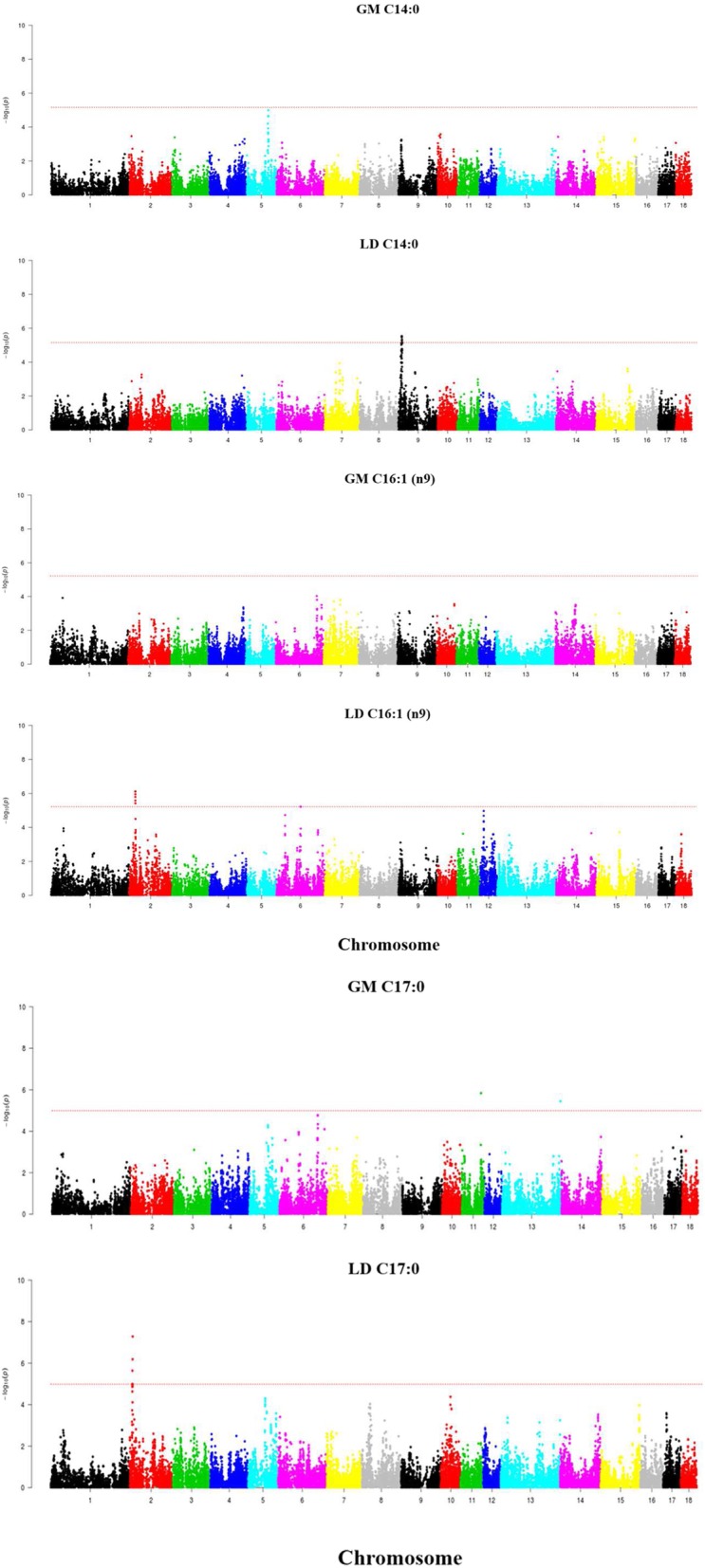
A comparative analysis of the mRNA expression profiles of the pig GM and LD muscles in 16 Duroc pigs with available microarray mRNA expression measurements revealed the existence of 106 differentially expressed probes (fold-change > 1.5 and q-value < 0.05). Amongst the genes displaying the most significant differential expression, several loci belonging to the Hox transcription factor family were either upregulated (HOXA9, HOXA10, HOXB6, HOXB7 and TBX1) or downregulated (ARX) in the GM muscle. Differences in the expression of genes with key roles in carbohydrate and lipid metabolism (e.g. FABP3, ORMDL1 and SLC37A1) were also detected. By performing a GWAS for IMF content and composition traits recorded in the LD and GM muscles of 350 Duroc pigs, we identified the existence of one region on SSC14 (110-114 Mb) displaying significant associations with C18:0, C18:1(n-7), saturated and unsaturated fatty acid contents in both GM and LD muscles. Moreover, we detected several genome-wide significant associations that were not consistently found in both muscles. Further studies should be performed to confirm whether these associations are muscle-specific. Finally, the performance of an eQTL scan for 74 genes, located within GM QTL regions and with available microarray measurements of gene expression, made possible to identify 14 cis-eQTL regulating the expression of 14 loci, and six of them were confirmed by RNA-Seq.
We have detected significant differences in the mRNA expression patterns of the porcine LD and GM muscles, evidencing that the transcriptomic profile of the skeletal muscle tissue is affected by anatomical, metabolic and functional factors. A highly significant association with IMF composition on SSC14 was replicated in both muscles, highlighting the existence of a common genetic determinism, but we also observed the existence of a few associations whose magnitude and significance varied between LD and GM muscles.
肌内脂肪(IMF)含量和组成对猪肉的营养和感官特性有很大影响。本研究的目的是比较猪臀中肌(GM)和背最长肌(LD)肌肉中 IMF 性状的基因表达模式和遗传决定因素。
对 16 头杜洛克猪 GM 和 LD 肌肉的 mRNA 表达谱进行比较分析,发现 106 个差异表达探针(fold-change > 1.5 和 q-value < 0.05)。在所显示的差异最显著的基因中,HOX 转录因子家族的几个基因座要么在 GM 肌肉中上调(HOXA9、HOXA10、HOXB6、HOXB7 和 TBX1),要么下调(ARX)。还检测到一些在碳水化合物和脂质代谢中起关键作用的基因(如 FABP3、ORMDL1 和 SLC37A1)的表达差异。对 350 头杜洛克猪 LD 和 GM 肌肉中记录的 IMF 含量和组成性状进行 GWAS 分析,发现 SSCl4 上存在一个与 GM 和 LD 肌肉中 C18:0、C18:1(n-7)、饱和和不饱和脂肪酸含量显著相关的区域(110-114 Mb)。此外,还检测到一些在两块肌肉中均未发现的全基因组显著关联。应进一步开展研究以确认这些关联是否为肌肉特异性。最后,对位于 GM QTL 区域内的 74 个基因进行 eQTL 扫描,对这些基因的表达进行微阵列测量,确定了 14 个 cis-eQTL 调控 14 个基因座的表达,其中 6 个通过 RNA-Seq 得到了验证。
我们检测到猪 LD 和 GM 肌肉之间的 mRNA 表达模式存在显著差异,证明了骨骼肌组织的转录组图谱受解剖学、代谢和功能因素的影响。在 SSCl4 上与 IMF 组成的高度显著关联在两块肌肉中均得到了复制,突出了存在共同的遗传决定因素,但我们也观察到存在一些关联,其幅度和显著性在 LD 和 GM 肌肉之间存在差异。