Cipolletta Sabrina, Simonato Camilla, Faccio Elena
Department of General Psychology, University of Padua, Padua, Italy.
Department of Philosophy, Sociology, Education and Applied Psychology, University of Padua, Padua, Italy.
Front Psychol. 2019 Feb 18;10:288. doi: 10.3389/fpsyg.2019.00288. eCollection 2019.
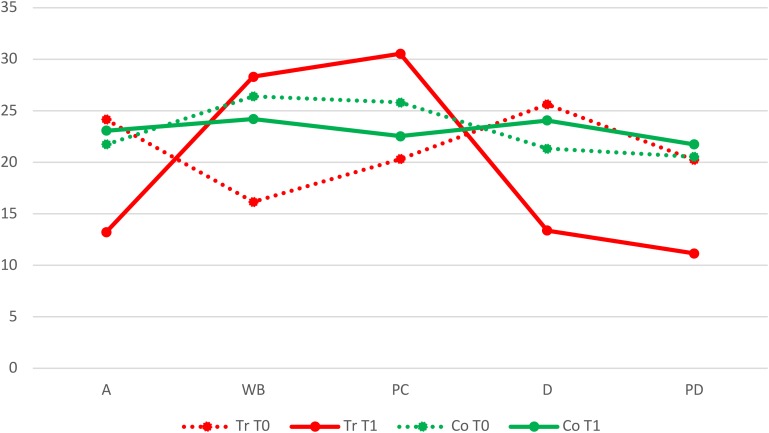
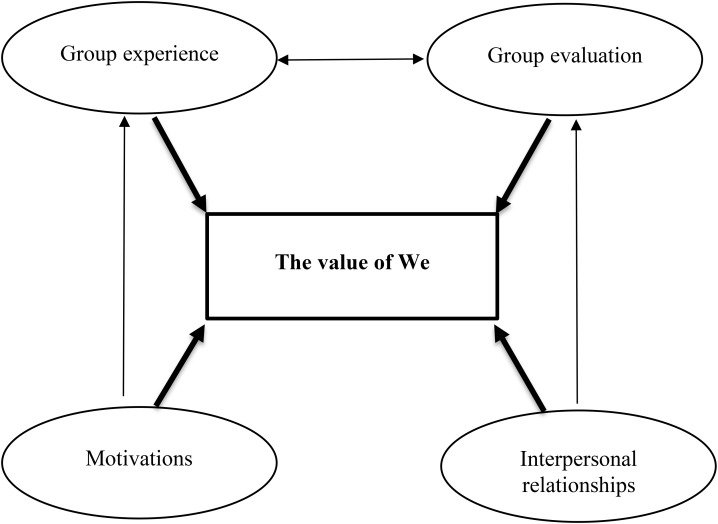
Previous studies on the effectiveness of psychological interventions in oncology mainly used quantitative measures and no study was conducted with regard to both caregivers and patients. This study evaluates the effectiveness of psychoeducational support groups, both for women with breast cancer, and for their informal caregivers through the use of quantitative and qualitative measures. A longitudinal design was used comparing two psychoeducational support groups with other two groups in a standard care control condition. Participants were 28 women with a diagnosis of breast cancer in the care of a hospital in Northern Italy, and 21 family caregivers. The quantitative data were collected by Cognitive Behavioral Assessment for Outcome Evaluation (CBA-OE) and the qualitative data through the use of semi-structured interviews. The statistical analysis showed a significant change attributable to the psychological intervention that proves the effectiveness of such an intervention in the patients' and caregivers' group. The qualitative analysis allowed us to interpret the behavioral and psychological profile emerging from CBA-OE, by considering the subjective experience of the treatment groups. The group experience offered affective, relational and informative support, and allowed participants to create a network and to feel understood and reassured. The results suggest the usefulness of psychoeducational support groups for women with breast cancer and for their caregivers. The value of this kind of intervention is not only at an individual level but also at a systems level, and family involvement ensures the best positive outcomes.
先前关于心理干预在肿瘤学中有效性的研究主要采用定量测量方法,且没有针对照顾者和患者双方进行研究。本研究通过使用定量和定性测量方法,评估了心理教育支持小组对乳腺癌女性患者及其非正式照顾者的有效性。采用纵向设计,将两个心理教育支持小组与处于标准护理对照条件下的另外两个小组进行比较。参与者包括意大利北部一家医院收治的28名被诊断患有乳腺癌的女性患者以及21名家庭照顾者。定量数据通过认知行为结果评估(CBA - OE)收集,定性数据则通过半结构化访谈收集。统计分析表明,心理干预带来了显著变化,证明了这种干预对患者组和照顾者组的有效性。定性分析使我们能够通过考虑治疗组的主观体验来解读CBA - OE中呈现出的行为和心理特征。小组体验提供了情感、关系和信息支持,让参与者能够建立一个网络,并感到被理解和安心。结果表明心理教育支持小组对乳腺癌女性患者及其照顾者是有用的。这种干预的价值不仅体现在个体层面,也体现在系统层面,并且家庭参与能确保获得最佳的积极结果。