Fragkos Konstantinos C, Keetarut Katie, Cox Anna, Eady Johanna, Emmanuel Anton V, Zarate-Lopez Natalia
GI Physiology Unit, Department of Gastroenterology, University College London Hospitals NHS Foundation Trust, 250 Euston Road, London NW1 2PG, UK.
Dietetics Department, University College London Hospitals NHS Foundation Trust, 250 Euston Road, London NW1 2PG, UK.
Gastroenterology Res. 2019 Feb;12(1):27-36. doi: 10.14740/gr1133. Epub 2019 Feb 26.
The low fermentable oligosaccharide, disaccharide, monosaccharide and polyol (FODMAP) diet causes significant clinical improvement in patients with irritable bowel syndrome (IBS). Joint hypermobility syndrome (JHS), defined as musculoskeletal symptoms in a hypermobile individual in the absence of systemic rheumatological disease, may be associated with functional gastrointestinal symptoms, including IBS. The aim of this study is to examine whether JHS can affect the response to the low FODMAP diet in patients with IBS.
In this retrospective study, we included patients with IBS according to Rome III criteria who had followed a low FODMAP diet. Symptoms scores were measured before and after the low FODMAP diet.
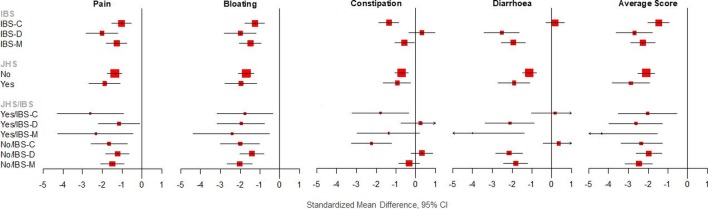
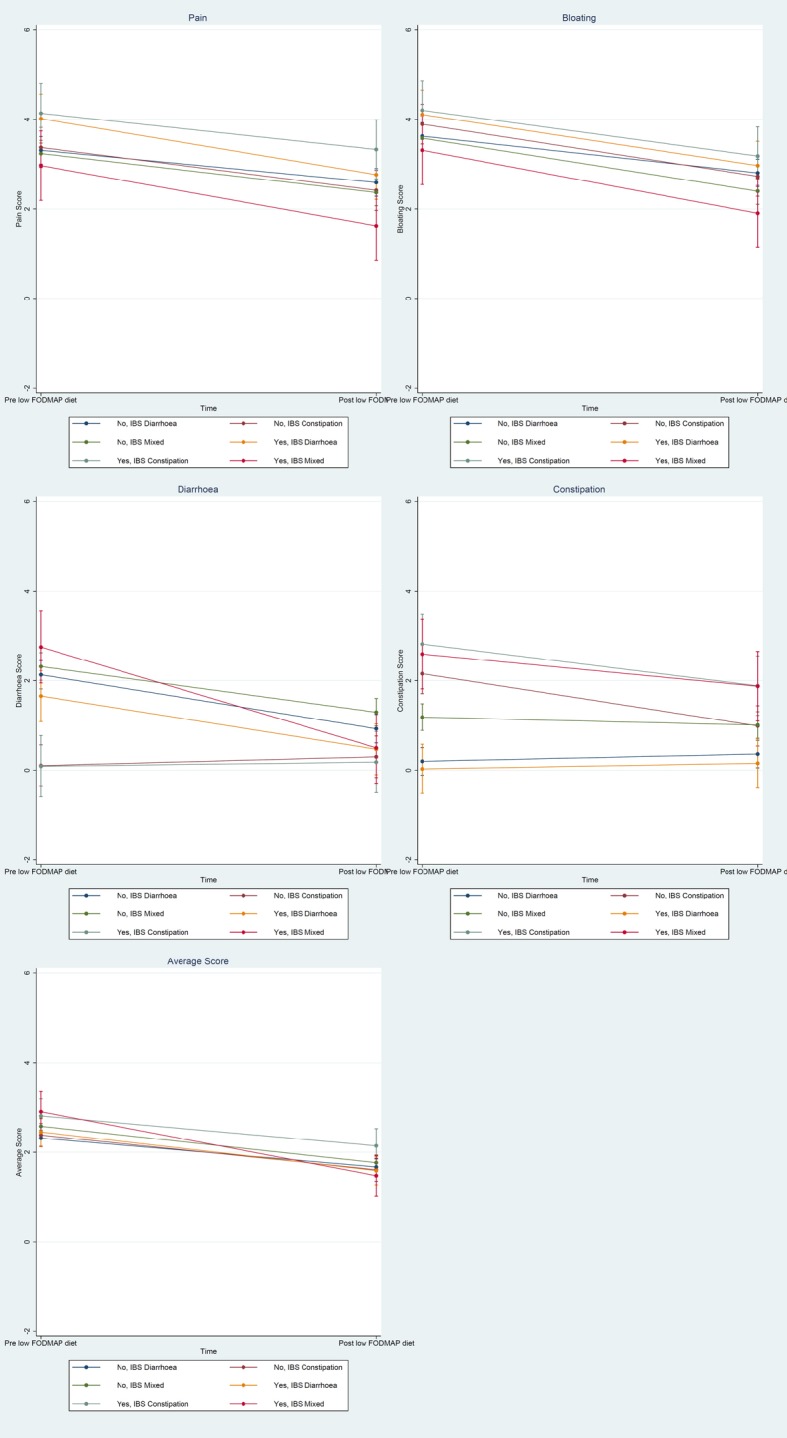
A total of 165 patients (130 females, age 44 ± 14 years) were included. Diarrhea predominant IBS (IBS-D) was present in 40.6% of our patients while JHS was present in 21.2%. The score for abdominal pain was higher for JHS compared to non-JHS prior to intervention (P = 0.011). Symptoms improved in both groups of patients after a low FODMAP diet (P < 0.0001). The largest effects were shown with significant decreases of the average score and bloating. When broken down by JHS and IBS type, a low FODMAP diet significantly improved pain, bloating, diarrhea, constipation, and the average score with the largest effect in JHS/constipation predominant IBS (IBS-C), JHS/mixed IBS and unclassified IBS (IBS-M), JHS/IBS-D, non-JHS/IBS-C and JHS/IBS-M, respectively.
Our study suggests that a low FODMAP diet has a greater effect on IBS symptoms in JHS than non-JHS patients.
低可发酵寡糖、双糖、单糖和多元醇(FODMAP)饮食可使肠易激综合征(IBS)患者的临床症状得到显著改善。关节活动过度综合征(JHS)定义为无系统性风湿性疾病的活动过度个体出现的肌肉骨骼症状,可能与包括IBS在内的功能性胃肠道症状有关。本研究的目的是探讨JHS是否会影响IBS患者对低FODMAP饮食的反应。
在这项回顾性研究中,我们纳入了符合罗马III标准且遵循低FODMAP饮食的IBS患者。在低FODMAP饮食前后测量症状评分。
共纳入165例患者(130例女性,年龄44±14岁)。40.6%的患者为腹泻型IBS(IBS-D),21.2%的患者存在JHS。干预前,JHS患者的腹痛评分高于非JHS患者(P = 0.011)。两组患者在低FODMAP饮食后症状均有改善(P < 0.0001)。最大的改善体现在平均评分和腹胀显著降低。按JHS和IBS类型细分时,低FODMAP饮食显著改善了疼痛、腹胀、腹泻、便秘和平均评分,对JHS/便秘型IBS(IBS-C)、JHS/混合型IBS和未分类IBS(IBS-M)、JHS/IBS-D、非JHS/IBS-C和JHS/IBS-M的改善效果最为明显。
我们的研究表明,低FODMAP饮食对JHS患者的IBS症状的影响大于非JHS患者。