Liu Xiaoxiao, Wang Bilan, Li Yanyan, Hu Yuzhu, Li Xiaoling, Yu Ting, Ju Yan, Sun Tao, Gao Xiang, Wei Yuquan
Department of Neurosurgery and Institute of Neurosurgery, State Key Laboratory of Biotherapy/Collaborative Innovation Center for Biotherapy, West China Hospital, West China Medical School, Sichuan University, Chengdu, 610041, PR China.
Department of Radiation Oncology, Cancer Center, Affiliated Hospital of Xuzhou Medical University; Jiangsu Center for the Collaboration and Innovation of Cancer Biotherapy, Cancer Institute, Xuzhou Medical University, Xuzhou, 221000, China.
ACS Cent Sci. 2019 Feb 27;5(2):277-289. doi: 10.1021/acscentsci.8b00688. Epub 2019 Jan 28.
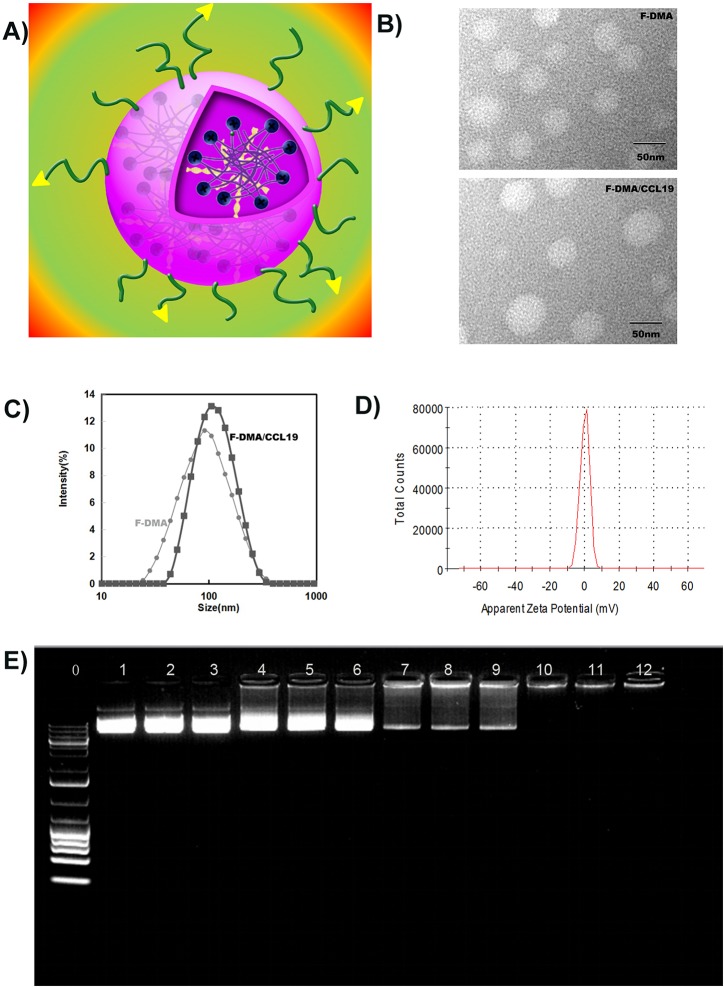
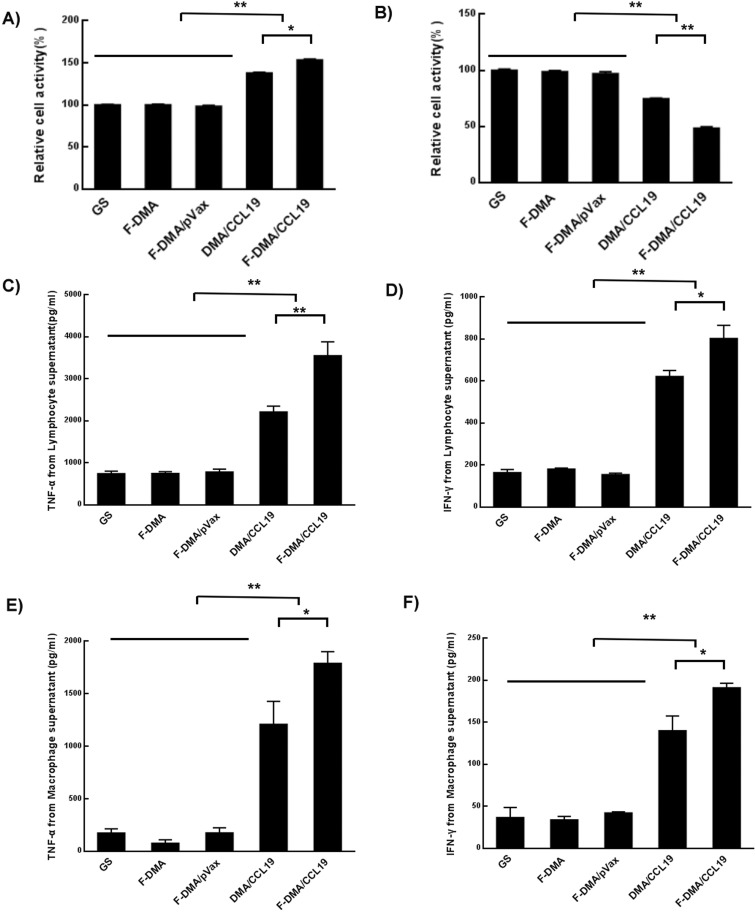
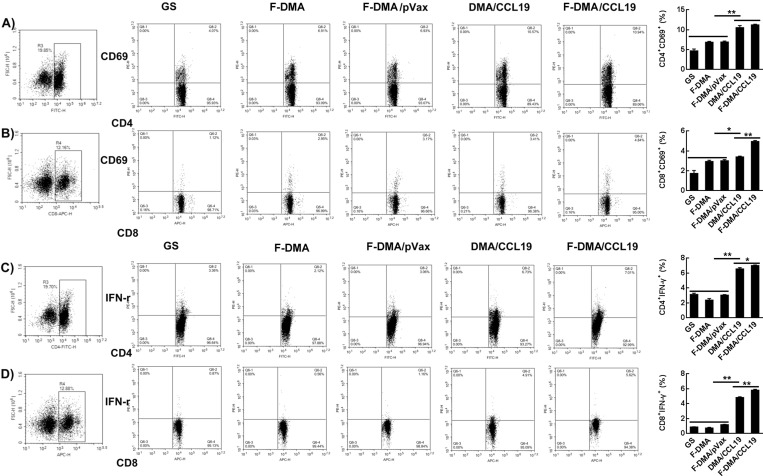
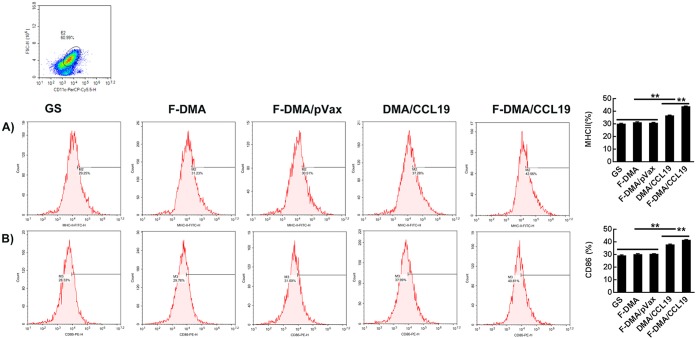
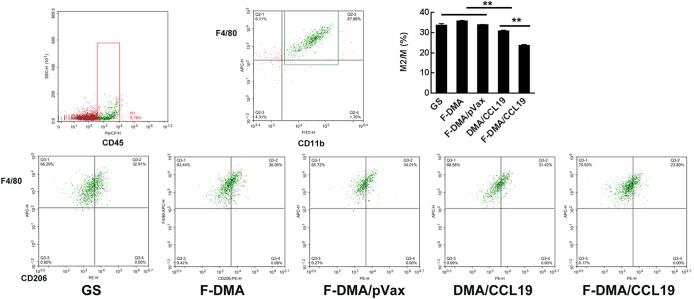
Targeted gene delivery systems have recently shown potential clinical benefits in cancer treatment. Recently, the immunologic therapies application in cancer therapy also showed a continuously increase. CCL19 has shown its great potential as a candidate immunomodulator for colon cancer therapy by increasing the possibility of interaction among dendritic cells, T and B cells in secondary lymphatic tissue, thus regulating the primary (or secondary) adaptive immune responses. In this work, a folic acid modified targeted gene-delivery system consisting of DOTAP, MPEG-PLA, and Fa-PEG-PLA (F-DMA) was developed successfully through a self-assembly approach. We proved that CCL19 expression was much higher in cancer cells after transfection with F-DMA/CCL19 than after transfection with DMA/CCL19. The supernatant from cancer cells transfected with both F-DMA/CCL19 and DMA/CCL19 stimulated the activation and cytotoxicity of T lymphocytes, the maturation of DCs, and the polarization of macrophages in vitro. Moreover, the administration of F-DMA/CCL19 complex to treat tumor-bearing mice has shown significant cancer growth repression in both subcutaneous and peritoneal models. The underling antitumor mechanism is established through repressing neovascularization, promoting apoptosis, as well as reducing proliferation by activating the immune system. The CCL19 plasmid and F-DMA complex may be used as a novel method for colorectal cancer therapy in the clinic.
靶向基因递送系统最近在癌症治疗中显示出潜在的临床益处。最近,免疫疗法在癌症治疗中的应用也呈持续增长趋势。CCL19已显示出作为结肠癌治疗候选免疫调节剂的巨大潜力,它通过增加二级淋巴组织中树突状细胞、T细胞和B细胞之间相互作用的可能性,从而调节初次(或二次)适应性免疫反应。在这项工作中,通过自组装方法成功开发了一种由DOTAP、MPEG-PLA和Fa-PEG-PLA(F-DMA)组成的叶酸修饰靶向基因递送系统。我们证明,用F-DMA/CCL19转染后的癌细胞中CCL19表达比用DMA/CCL19转染后高得多。用F-DMA/CCL19和DMA/CCL19转染的癌细胞的上清液在体外刺激了T淋巴细胞的活化和细胞毒性、DC的成熟以及巨噬细胞的极化。此外,给予F-DMA/CCL19复合物治疗荷瘤小鼠在皮下和腹腔模型中均显示出显著的肿瘤生长抑制作用。其潜在的抗肿瘤机制是通过抑制新血管形成、促进细胞凋亡以及通过激活免疫系统减少增殖来建立的。CCL19质粒和F-DMA复合物可能作为一种新型的临床结直肠癌治疗方法。