Cancer Research UK Beatson Institute, Glasgow, UK.
Institute of Cancer Sciences, University of Glasgow, Glasgow, UK.
Cancer Discov. 2019 May;9(5):617-627. doi: 10.1158/2159-8290.CD-18-1212. Epub 2019 Mar 5.
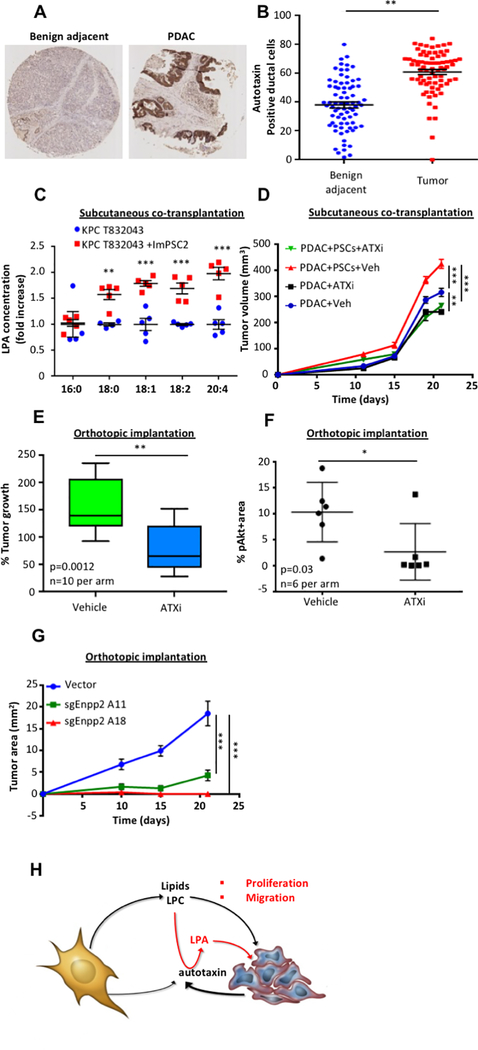
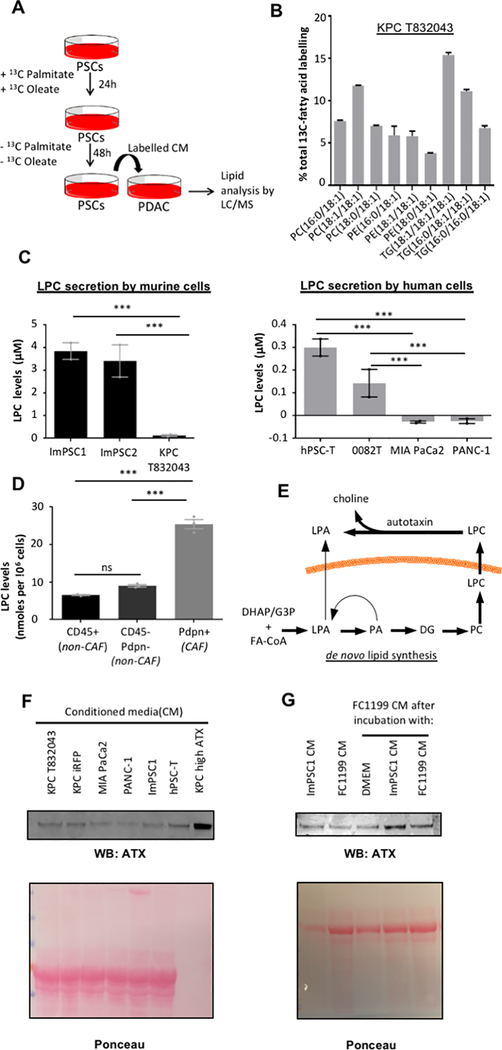
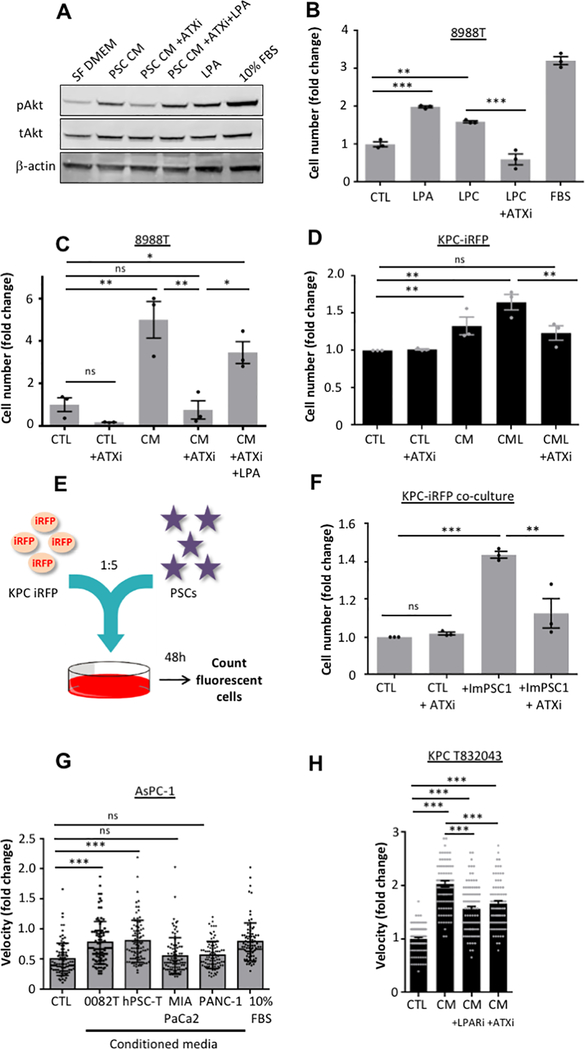
Pancreatic ductal adenocarcinoma (PDAC) develops a pronounced stromal response reflecting an aberrant wound-healing process. This stromal reaction features transdifferentiation of tissue-resident pancreatic stellate cells (PSC) into activated cancer-associated fibroblasts, a process induced by PDAC cells but of unclear significance for PDAC progression. Here, we show that PSCs undergo a dramatic lipid metabolic shift during differentiation in the context of pancreatic tumorigenesis, including remodeling of the intracellular lipidome and secretion of abundant lipids in the activated, fibroblastic state. Specifically, stroma-derived lysophosphatidylcholines support PDAC cell synthesis of phosphatidylcholines, key components of cell membranes, and also facilitate production of the potent wound-healing mediator lysophosphatidic acid (LPA) by the extracellular enzyme autotaxin, which is overexpressed in PDAC. The autotaxin-LPA axis promotes PDAC cell proliferation, migration, and AKT activation, and genetic or pharmacologic autotaxin inhibition suppresses PDAC growth . Our work demonstrates how PDAC cells exploit the local production of wound-healing mediators to stimulate their own growth and migration. SIGNIFICANCE: Our work highlights an unanticipated role for PSCs in producing the oncogenic LPA signaling lipid and demonstrates how PDAC tumor cells co-opt the release of wound-healing mediators by neighboring PSCs to promote their own proliferation and migration...
胰腺导管腺癌 (PDAC) 会产生明显的基质反应,反映出异常的伤口愈合过程。这种基质反应的特征是组织驻留的胰腺星状细胞 (PSC) 向激活的癌相关成纤维细胞转化,这一过程由 PDAC 细胞诱导,但对 PDAC 进展的意义尚不清楚。在这里,我们表明 PSC 在胰腺肿瘤发生过程中的分化过程中会经历剧烈的脂质代谢转变,包括细胞内脂质组的重塑和激活的成纤维状态下丰富脂质的分泌。具体而言,基质衍生的溶血磷脂酰胆碱支持 PDAC 细胞合成磷脂酰胆碱,这是细胞膜的关键成分,并且还促进细胞外酶自分泌酶产生强效伤口愈合介质溶血磷脂酸 (LPA),自分泌酶在 PDAC 中过表达。自分泌酶-LPA 轴促进 PDAC 细胞增殖、迁移和 AKT 激活,并且遗传或药理学自分泌酶抑制抑制 PDAC 生长。我们的工作证明了 PDAC 细胞如何利用局部产生的伤口愈合介质来刺激自身的生长和迁移。意义:我们的工作突出了 PSC 产生致癌 LPA 信号脂质的意外作用,并展示了 PDAC 肿瘤细胞如何利用邻近 PSC 释放的伤口愈合介质来促进自身的增殖和迁移。