Covasa Mihai, Stephens Richard W, Toderean Roxana, Cobuz Claudiu
Department of Health and Human Development, University of Suceava, Suceava, Romania.
Department of Basic Medical Sciences, College of Osteopathic Medicine, Western University of Health Sciences, Pomona, CA, United States.
Front Endocrinol (Lausanne). 2019 Feb 19;10:82. doi: 10.3389/fendo.2019.00082. eCollection 2019.
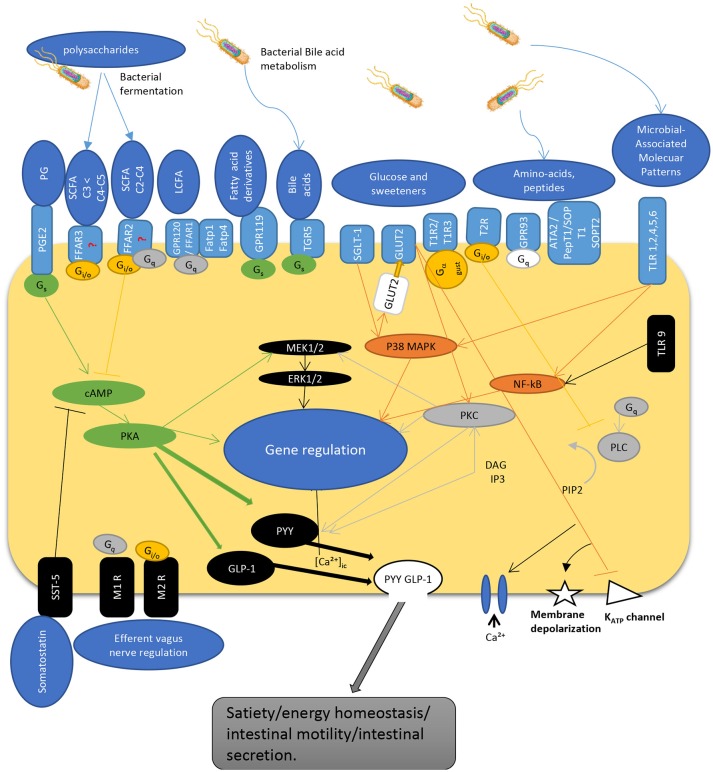
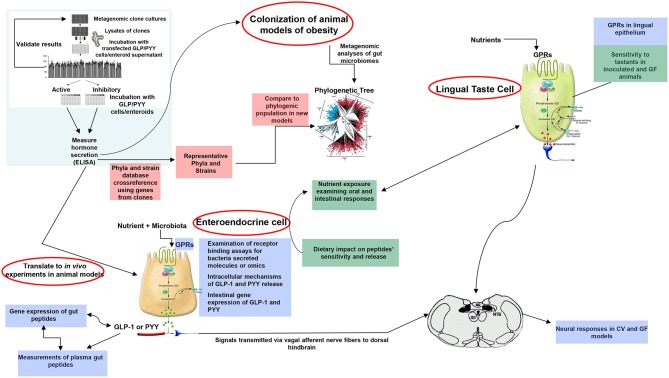
There are more than 2 billion overweight and obese individuals worldwide, surpassing for the first time, the number of people affected by undernutrition. Obesity and its comorbidities inflict a heavy burden on the global economies and have become a serious threat to individuals' wellbeing with no immediate cure available. The causes of obesity are manifold, involving several factors including physiological, metabolic, neural, psychosocial, economic, genetics and the environment, among others. Recent advances in genome sequencing and metagenomic profiling have added another dimension to this complexity by implicating the gut microbiota as an important player in energy regulation and the development of obesity. As such, accumulating evidence demonstrate the impact of the gut microbiota on body weight, adiposity, glucose, lipid metabolism, and metabolic syndrome. This also includes the role of microbiota as a modulatory signal either directly or through its bioactive metabolites on intestinal lumen by releasing chemosensing factors known to have a major role in controlling food intake and regulating body weight. The importance of gut signaling by microbiota signaling is further highlighted by the presence of taste and nutrient receptors on the intestinal epithelium activated by the microbial degradation products as well as their role in release of peptides hormones controlling appetite and energy homeostasis. This review present evidence on how gut microbiota interacts with intestinal chemosensing and modulates the release and activity of gut peptides, particularly GLP-1 and PYY.
全球有超过20亿超重和肥胖个体,人数首次超过了营养不良人群。肥胖及其合并症给全球经济带来了沉重负担,并已成为对个人健康的严重威胁,且目前尚无直接的治愈方法。肥胖的成因是多方面的,涉及生理、代谢、神经、心理社会、经济、遗传和环境等多个因素。基因组测序和宏基因组分析的最新进展表明,肠道微生物群在能量调节和肥胖发展中起着重要作用,这为肥胖成因的复杂性增添了新的维度。因此,越来越多的证据表明肠道微生物群对体重、肥胖、葡萄糖、脂质代谢和代谢综合征有影响。这还包括微生物群作为一种调节信号的作用,它可以直接或通过其生物活性代谢产物,通过释放已知在控制食物摄入和调节体重中起主要作用的化学感应因子来影响肠腔。肠道上皮细胞上存在由微生物降解产物激活的味觉和营养受体,以及它们在释放控制食欲和能量稳态的肽类激素中的作用,进一步凸显了微生物群信号传导在肠道信号传导中的重要性。本综述提供了关于肠道微生物群如何与肠道化学感应相互作用以及调节肠道肽,特别是胰高血糖素样肽-1(GLP-1)和肽YY(PYY)的释放及活性的证据。