Yohannan Binoy, Feldman Mark
Department of Internal Medicine, Texas Health Presbyterian Hospital Dallas, Dallas 75231, USA.
Case Rep Infect Dis. 2019 Jan 31;2019:9315756. doi: 10.1155/2019/9315756. eCollection 2019.
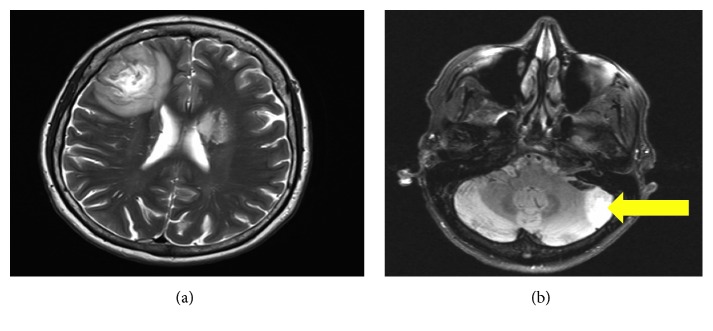
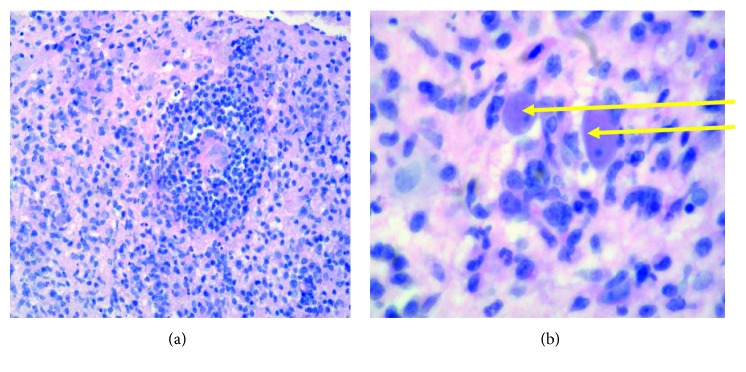
is a rare cause of granulomatous meningoencephalitis associated with high mortality. We report a 69-year-old Caucasian female who presented with a 3-day history of worsening confusion and difficulty with speech. On admission, she was disoriented and had expressive dysphasia. Motor examination revealed a right arm pronator drift. Cerebellar examination showed slowing of finger-nose testing on the left. She was HIV-negative, but the absolute CD4 count was low. Neuroimaging showed three cavitary, peripherally enhancing brain lesions, involving the right frontal lobe, the left basal ganglia, and the left cerebellar hemisphere. She underwent right frontal craniotomy with removal of tan, creamy, partially liquefied necrotic material from the brain, consistent with granulomatous amoebic encephalitis on tissue staining. Immunohistochemical studies and PCR tests confirmed infection with . She was started on pentamidine, sulfadiazine, azithromycin, fluconazole, flucytosine, and miltefosine. The postoperative course was complicated by an ischemic stroke, and she died a few weeks later.
是肉芽肿性脑膜脑炎的罕见病因,死亡率很高。我们报告一名69岁的白种女性,她有3天意识混乱加重和言语困难的病史。入院时,她定向障碍,有表达性失语。运动检查发现右臂旋前肌漂移。小脑检查显示左侧指鼻试验减慢。她HIV阴性,但绝对CD4细胞计数较低。神经影像学显示三个空洞性、周边强化的脑病变,累及右额叶、左基底节和左小脑半球。她接受了右额开颅手术,从脑中取出棕褐色、乳状、部分液化的坏死物质,组织染色符合肉芽肿性阿米巴脑炎。免疫组织化学研究和PCR检测证实感染了 。她开始使用喷他脒、磺胺嘧啶、阿奇霉素、氟康唑、氟胞嘧啶和米替福新治疗。术后病程因缺血性中风而复杂化,几周后死亡。