Takes Frank W, Kosters Walter A, Witte Boyd, Heemskerk Eelke M
1CORPNET, University of Amsterdam, Nieuwe Achtergracht 166, Amsterdam, 1018 WV The Netherlands.
2LIACS, Leiden University, Niels Bohrweg 1, Leiden, 2333 CA The Netherlands.
Appl Netw Sci. 2018;3(1):39. doi: 10.1007/s41109-018-0094-z. Epub 2018 Aug 29.
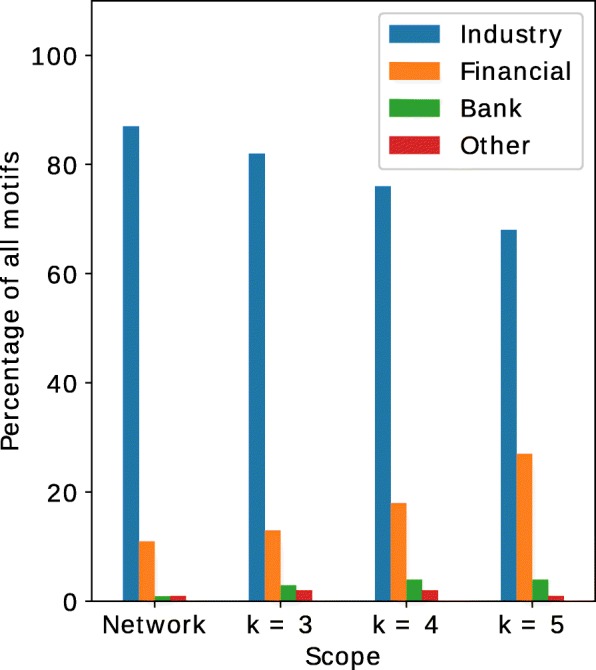
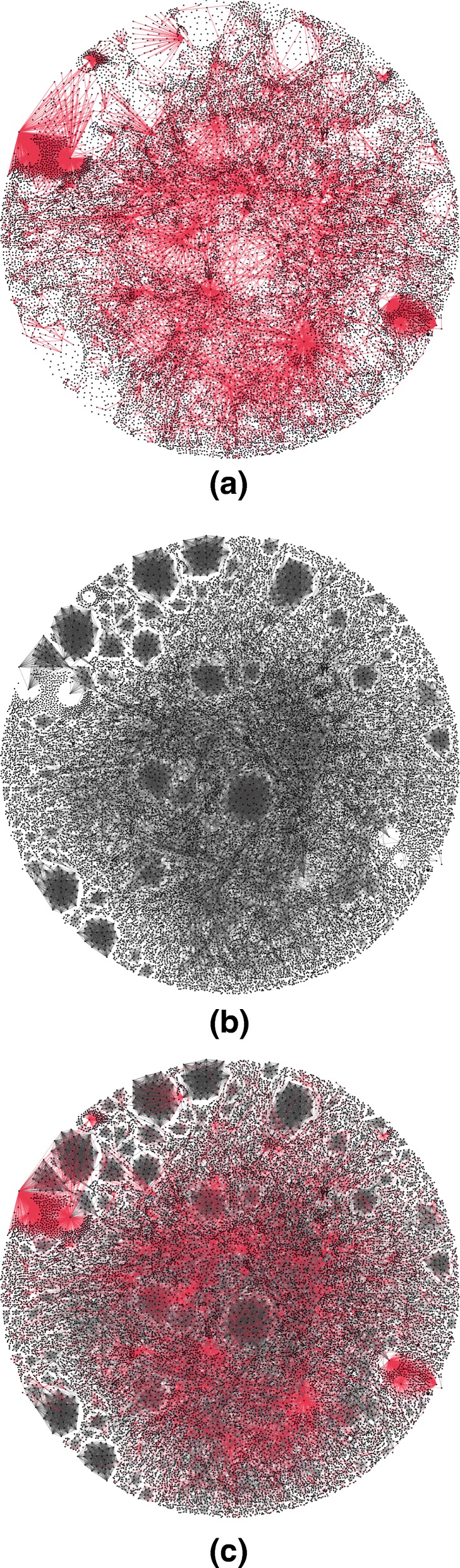
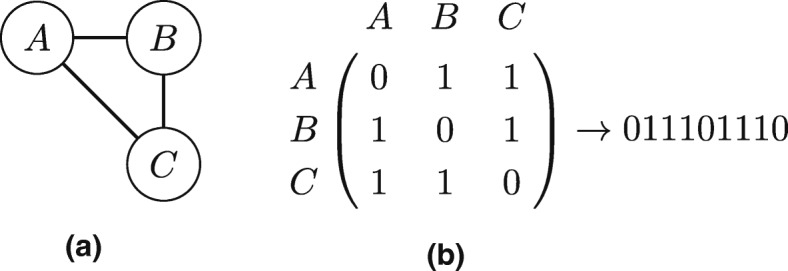
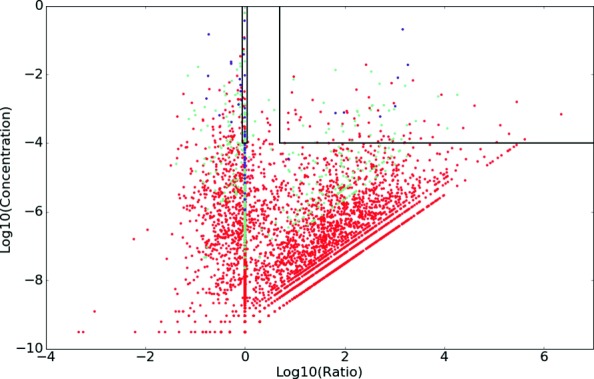
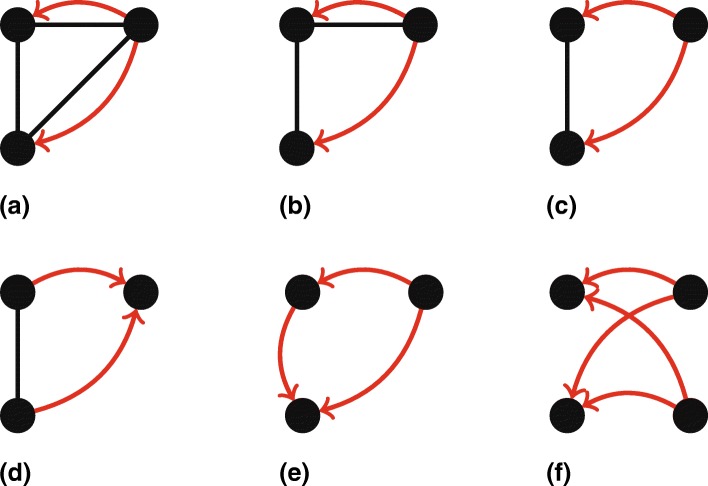
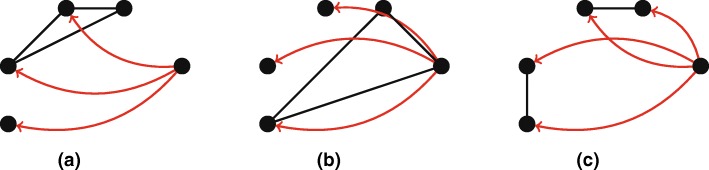
In , firms are connected through links of corporate ownership and shared directors, connecting the control over major economic actors in our economies in meaningful and consequential ways. Most research thus far focused on the connectedness of firms as a result of one particular link type, analyzing node-specific metrics or global network-based methods to gain insights in the modelled corporate system. In this paper, we aim to understand corporate networks with multiple types of connections, specifically investigating the network's essential building blocks: multiplex . Motifs, which are small subgraph patterns occurring at significantly higher frequencies than in similar random networks, have demonstrated their usefulness in understanding the structure of many types of real-world networks. However, detecting motifs in multiplex networks is nontrivial for two reasons. First of all, there are no out-of-the-box subgraph enumeration algorithms for multiplex networks. Second, existing null models to test network motif significance, are unable to incorporate the interlayer dependencies in the multiplex network. We solve these two issues by introducing a layer encoding algorithm that incorporates the multiplex aspect in the subgraph enumeration phase. In addition, we propose a null model that is able to preserve the interlayer connectedness, while taking into account that one of the link types is actually the result of a projection of an underlying bipartite network. The experimental section considers the corporate network of Germany, in which tens of thousands of firms are connected through several hundred thousand links. We demonstrate how incorporating the multiplex aspect in motif detection is able to reveal new insights that could not be obtained by studying only one type of relationship. In a general sense, the motifs reflect known corporate governance practices related to the monitoring of investments and the concentration of ownership. A substantial fraction of the discovered motifs is typical for an industrialized country such as Germany, whereas others seem specific for certain economic sectors. Interestingly, we find that motifs involving financial firms are over-represented amongst the larger and more complex motifs. This demonstrates the prominent role of the financial sector in Germany's largely industry-oriented corporate network.
在[具体情况未提及]中,公司通过企业所有权和共享董事的联系相互关联,以有意义且重要的方式将对我们经济中主要经济行为体的控制权联系起来。迄今为止,大多数研究都聚焦于因一种特定联系类型而形成的公司关联性上,分析特定节点指标或基于全局网络的方法,以深入了解所建模的公司系统。在本文中,我们旨在理解具有多种连接类型的公司网络,具体研究网络的基本构建模块:多重网络基序。基序是在频率上显著高于类似随机网络出现的小子图模式,已证明其在理解多种类型现实世界网络结构方面的有用性。然而,在多重网络中检测基序并非易事,原因有二。首先,多重网络没有现成的子图枚举算法。其次,用于测试网络基序显著性的现有空模型无法纳入多重网络中的层间依赖性。我们通过引入一种在子图枚举阶段纳入多重网络方面的层编码算法来解决这两个问题。此外,我们提出一种空模型,该模型能够保留层间关联性,同时考虑到其中一种联系类型实际上是基础二分网络投影的结果。实验部分考察了德国的公司网络,其中数以万计的公司通过几十万条链接相互连接。我们展示了在基序检测中纳入多重网络方面如何能够揭示仅研究一种关系类型无法获得的新见解。从总体意义上讲,这些基序反映了与投资监控和所有权集中相关的已知公司治理实践。所发现的基序中有很大一部分是德国等工业化国家所特有的,而其他一些似乎特定于某些经济部门。有趣的是,我们发现涉及金融公司的基序在更大且更复杂的基序中占比过高。这表明金融部门在德国以工业为主的公司网络中发挥着突出作用。