Freundt Johanna K, Frommeyer Gerrit, Spieker Tilmann, Wötzel Fabian, Grotthoff Jochen Schulze, Stypmann Jörg, Hempel Georg, Schäfers Michael, Jacobs Andreas H, Eckardt Lars, Lange Philipp S
Department of Cardiology II: Electrophysiology, University Hospital Münster, Münster, Germany.
Department of Pathology, University Hospital Münster, Münster, Germany.
BMC Pharmacol Toxicol. 2019 Mar 6;20(1):16. doi: 10.1186/s40360-019-0294-x.
The development of heart failure is accompanied by complex changes in cardiac electrophysiology and functional properties of cardiomyocytes and fibroblasts. Histone deacetylase (HDAC) inhibitors hold great promise for the pharmaceutical therapy of several malignant diseases. Here, we describe novel effects of the class I HDAC inhibitor Entinostat on electrical and structural remodeling in an in vivo model of pacing induced heart failure.
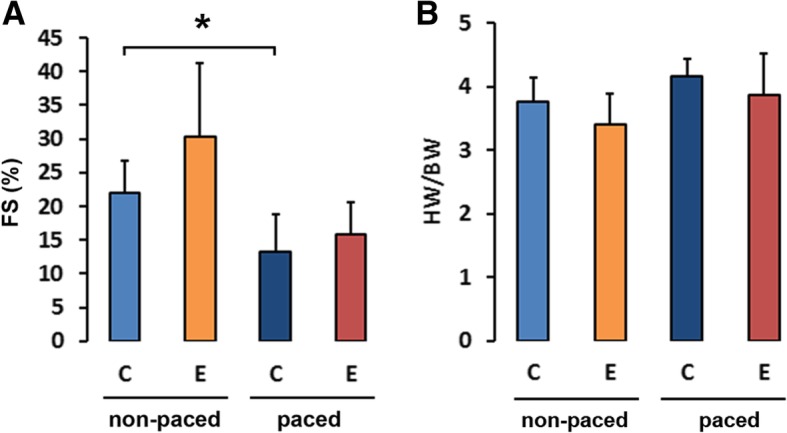
Rabbits were implanted a pacemaker system, subjected to rapid ventricular pacing and treated with Entinostat or placebo, respectively. Following stimulation, rabbit hearts were explanted and subsequently subjected to electrophysiological studies and further immunohistological analyses of left ventricles.
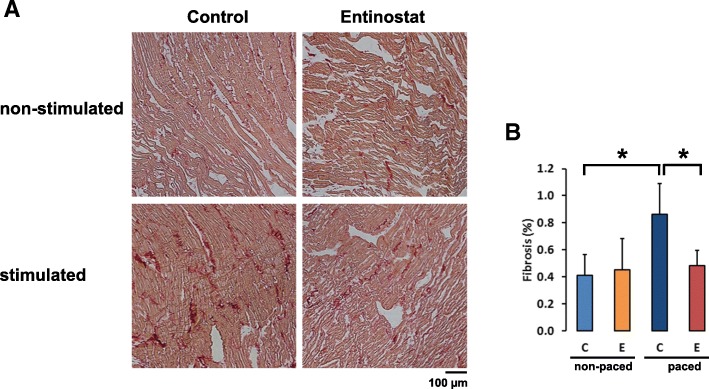
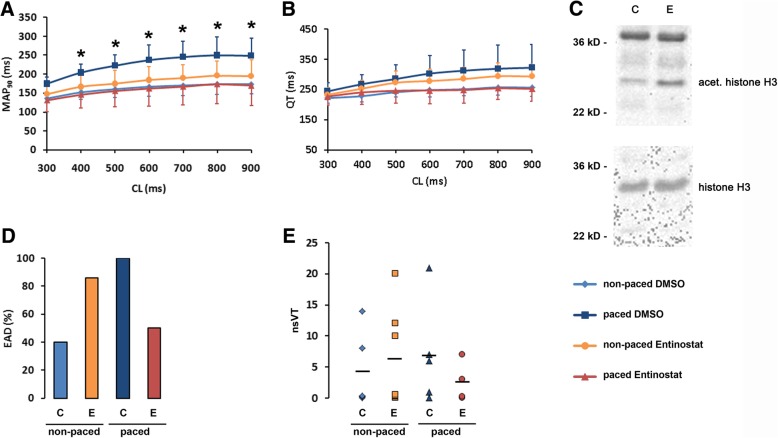
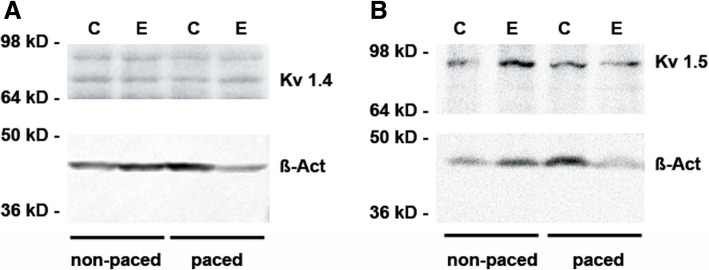
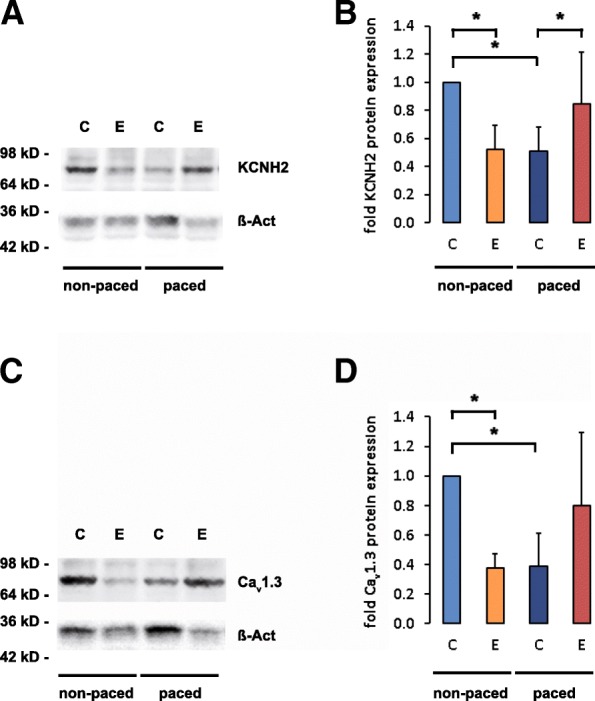
In vivo, rapid ventricular stimulation caused a significant prolongation of monophasic action potential duration compared to sham hearts (from 173 ± 26 ms to 250 ± 41 ms; cycle length 900 ms; p < 0.05) and an increased incidence of Early afterdepolarisations (+ 150%), while treatment with Entinostat in failing hearts could partially prevent this effect (from 250 ± 41 ms to 170 ± 53 ms, p < 0.05; reduction in EAD by 50%). Entinostat treatment partially restored KCNH2 and Cav1.3 gene expressions in failing hearts, and inhibited the development of cardiac fibrosis in vivo.
In a rabbit model of heart failure, Entinostat diminishes heart failure related prolongation of repolarization and partially restores KCNH2 and Cav1.3 expression. In addition, Entinostat exerts antifibrotic properties both in vitro and in vivo. Thus, Entinostat might be an interesting candidate for the pharmaceutical therapy of heart failure directed against structural and electrical remodeling.
心力衰竭的发展伴随着心脏电生理以及心肌细胞和成纤维细胞功能特性的复杂变化。组蛋白脱乙酰酶(HDAC)抑制剂在多种恶性疾病的药物治疗中具有巨大潜力。在此,我们描述了I类HDAC抑制剂恩替诺特在起搏诱导的心力衰竭体内模型中对电重构和结构重构的新作用。
给兔子植入起搏器系统,进行快速心室起搏,并分别用恩替诺特或安慰剂治疗。刺激后,取出兔子心脏,随后进行电生理研究以及左心室的进一步免疫组织学分析。
在体内,与假手术组心脏相比,快速心室刺激导致单相动作电位时程显著延长(从173±26毫秒延长至250±41毫秒;周期长度900毫秒;p<0.05),早期后除极的发生率增加(+150%),而在衰竭心脏中用恩替诺特治疗可部分预防这种作用(从250±41毫秒降至170±53毫秒,p<0.05;早期后除极减少50%)。恩替诺特治疗部分恢复了衰竭心脏中KCNH2和Cav1.3基因的表达,并在体内抑制了心脏纤维化的发展。
在兔子心力衰竭模型中,恩替诺特减少了与心力衰竭相关的复极延长,并部分恢复了KCNH2和Cav1.3的表达。此外,恩替诺特在体外和体内均具有抗纤维化特性。因此,恩替诺特可能是针对结构和电重构的心力衰竭药物治疗的一个有吸引力的候选药物。