Neuroscience Institute, New York University Langone Medical Center, New York, United States.
Department of Experimental Psychology, Ghent University, Ghent, Belgium.
Elife. 2019 Mar 7;8:e41861. doi: 10.7554/eLife.41861.
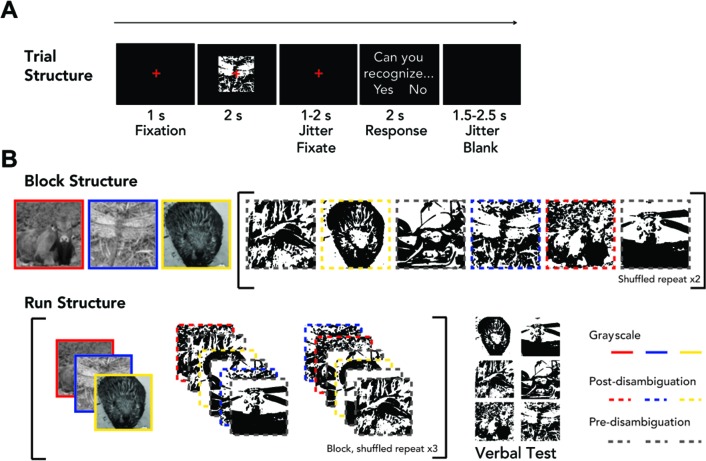
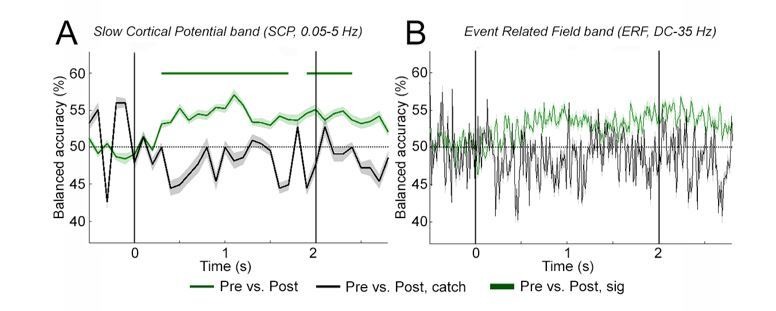
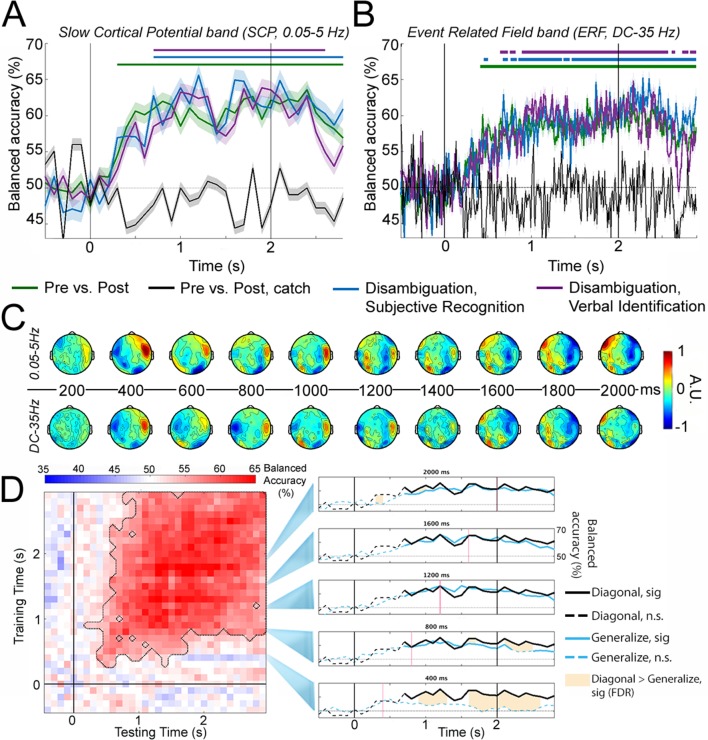
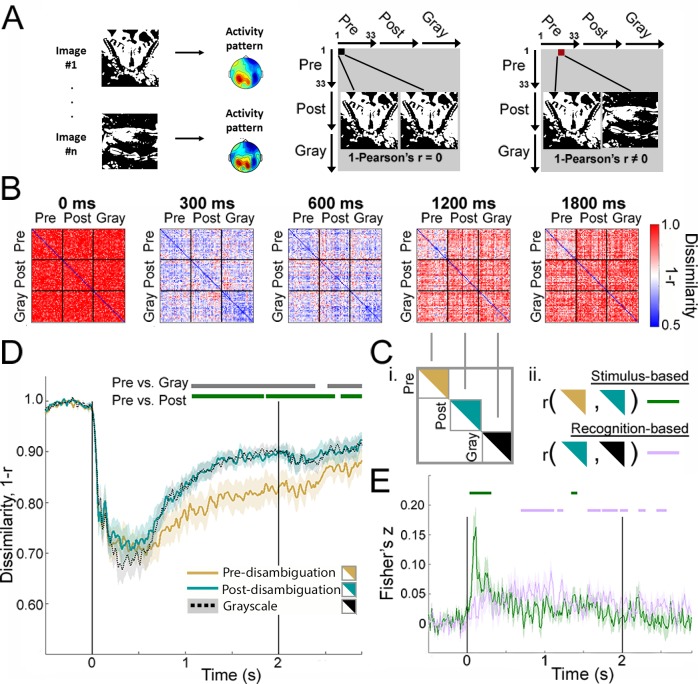
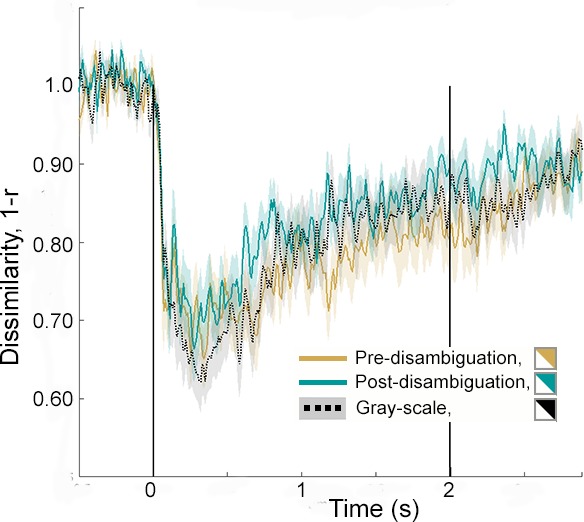
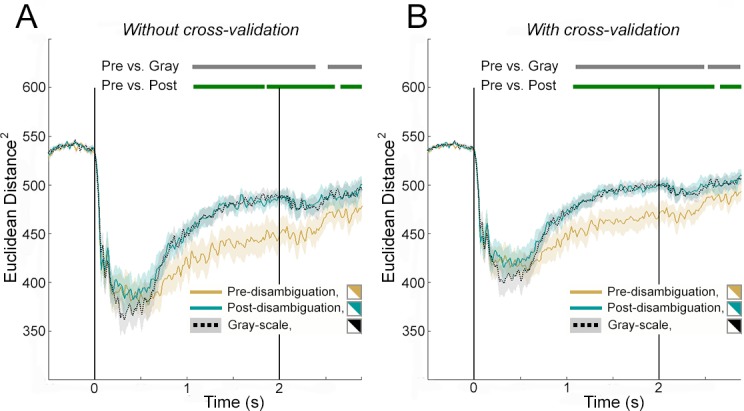
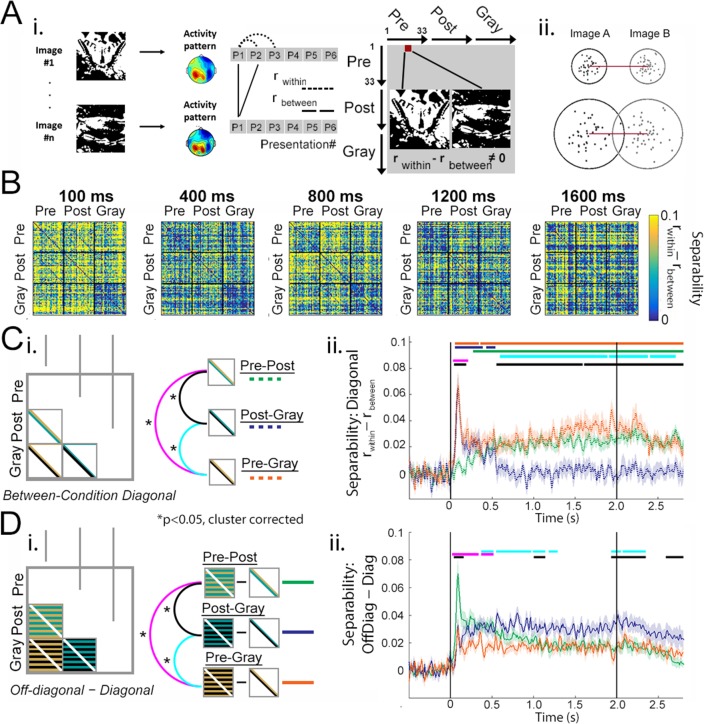
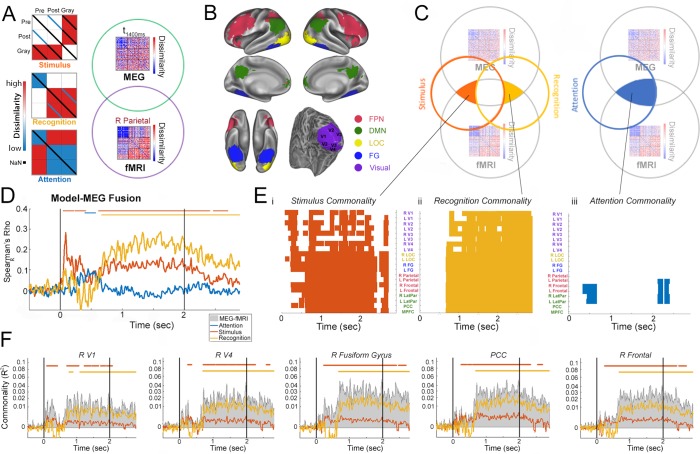
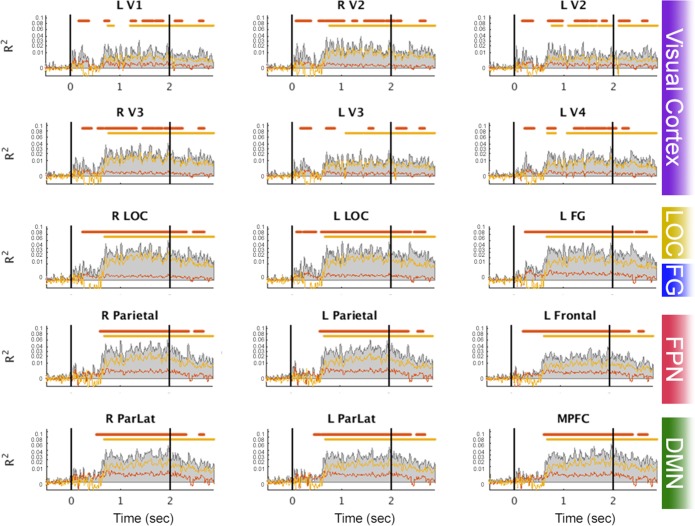
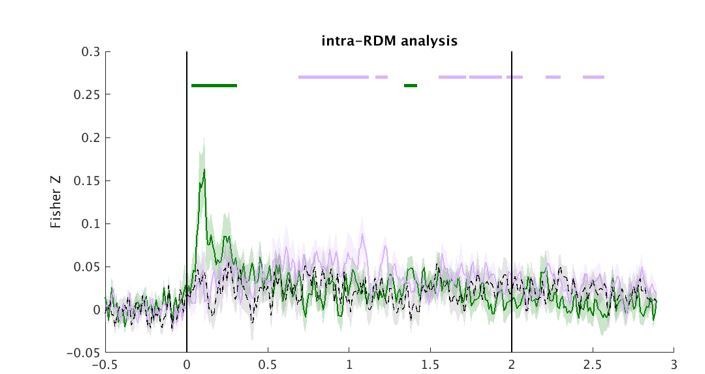
Past experiences have enormous power in shaping our daily perception. Currently, dynamical neural mechanisms underlying this process remain mysterious. Exploiting a dramatic visual phenomenon, where a single experience of viewing a clear image allows instant recognition of a related degraded image, we investigated this question using MEG and 7 Tesla fMRI in humans. We observed that following the acquisition of perceptual priors, different degraded images are represented much more distinctly in neural dynamics starting from ~500 ms after stimulus onset. Content-specific neural activity related to stimulus-feature processing dominated within 300 ms after stimulus onset, while content-specific neural activity related to recognition processing dominated from 500 ms onward. Model-driven MEG-fMRI data fusion revealed the spatiotemporal evolution of neural activities involved in stimulus, attentional, and recognition processing. Together, these findings shed light on how experience shapes perceptual processing across space and time in the brain.
过去的经验在塑造我们的日常感知方面具有巨大的力量。目前,这一过程背后的动态神经机制仍然神秘。利用一种引人注目的视觉现象,即只需观看一次清晰的图像,就可以立即识别相关的降质图像,我们使用 MEG 和 7 特斯拉 fMRI 对人类进行了研究。我们观察到,在获得感知先验后,不同的降质图像在刺激开始后约 500 毫秒时,在神经动力学中的表现更加明显。与刺激特征处理相关的特定于内容的神经活动在刺激开始后 300 毫秒内占主导地位,而与识别处理相关的特定于内容的神经活动则从 500 毫秒开始占主导地位。基于模型的 MEG-fMRI 数据融合揭示了参与刺激、注意和识别处理的神经活动的时空演变。这些发现共同阐明了经验如何在大脑中跨越空间和时间塑造感知处理。