Institute of Cell Biology and Neurobiology, Center for Anatomy, Charité-Universitätsmedizin Berlin, Berlin, Germany.
Institute of Anatomy, Universitätsmedizin Rostock, Rostock, Germany.
Dev Dyn. 2019 May;248(5):375-395. doi: 10.1002/dvdy.23. Epub 2019 Mar 27.
LPA is a small bioactive phospholipid that acts as an extracellular signaling molecule and is involved in cellular processes, including cell proliferation, migration, and differentiation. LPA acts by binding and activating at least six known G protein-coupled receptors: LPA . In recent years, LPA has been suggested to play an important role both in normal neuronal development and under pathological conditions in the nervous system.
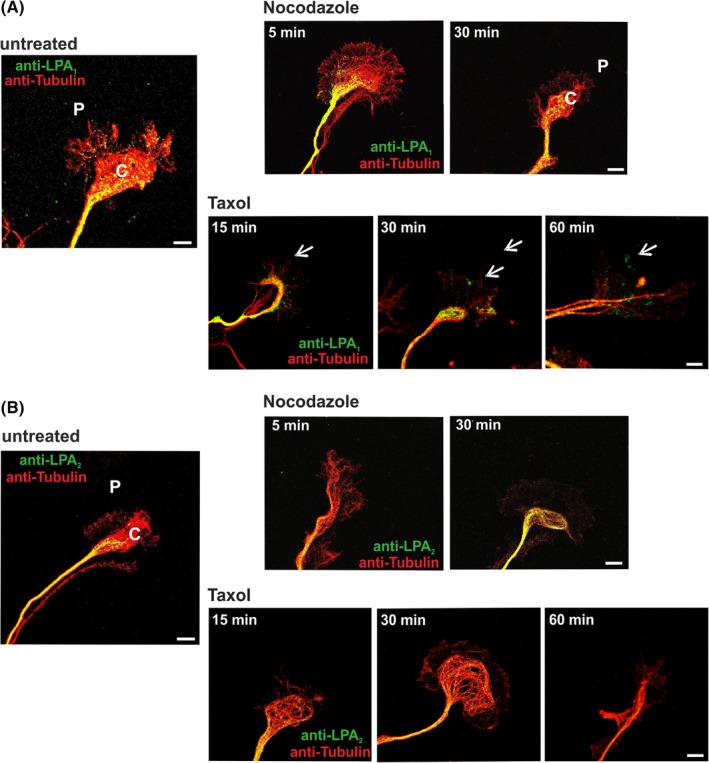
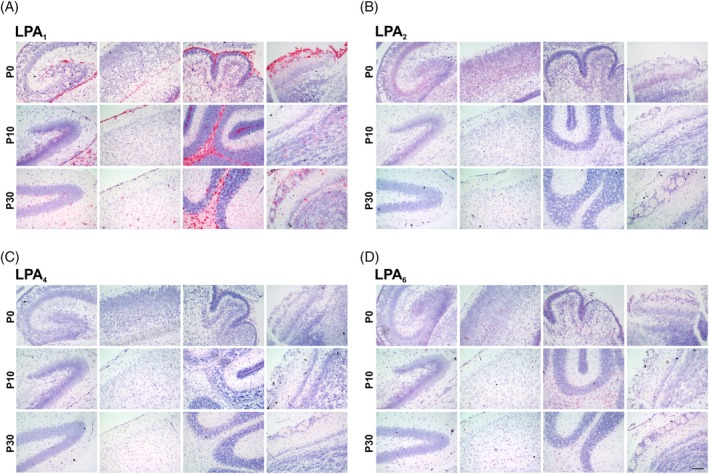
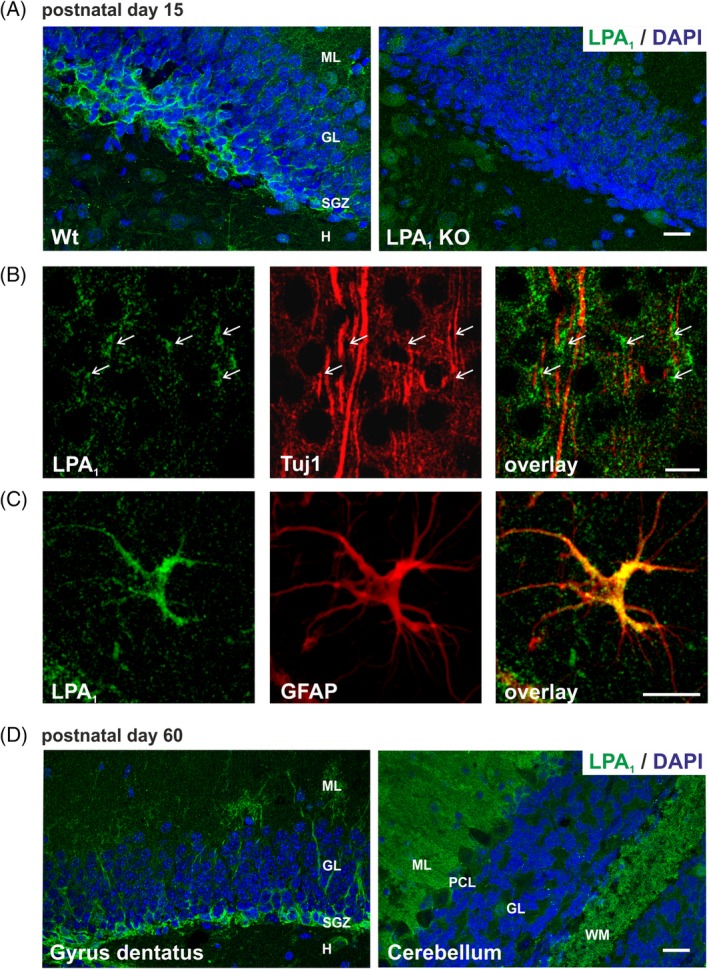
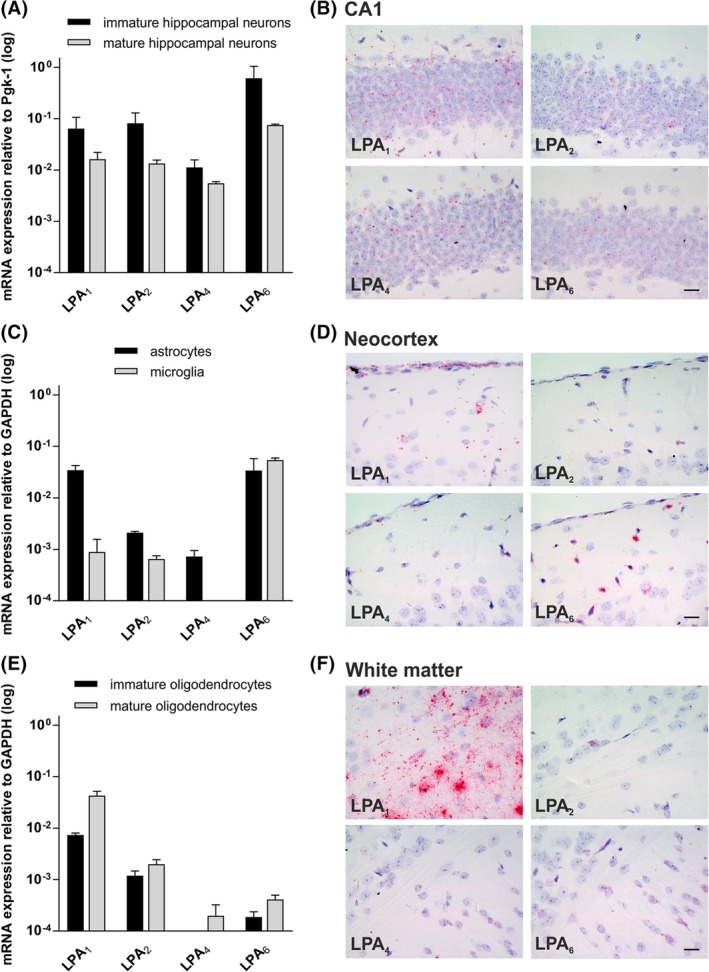
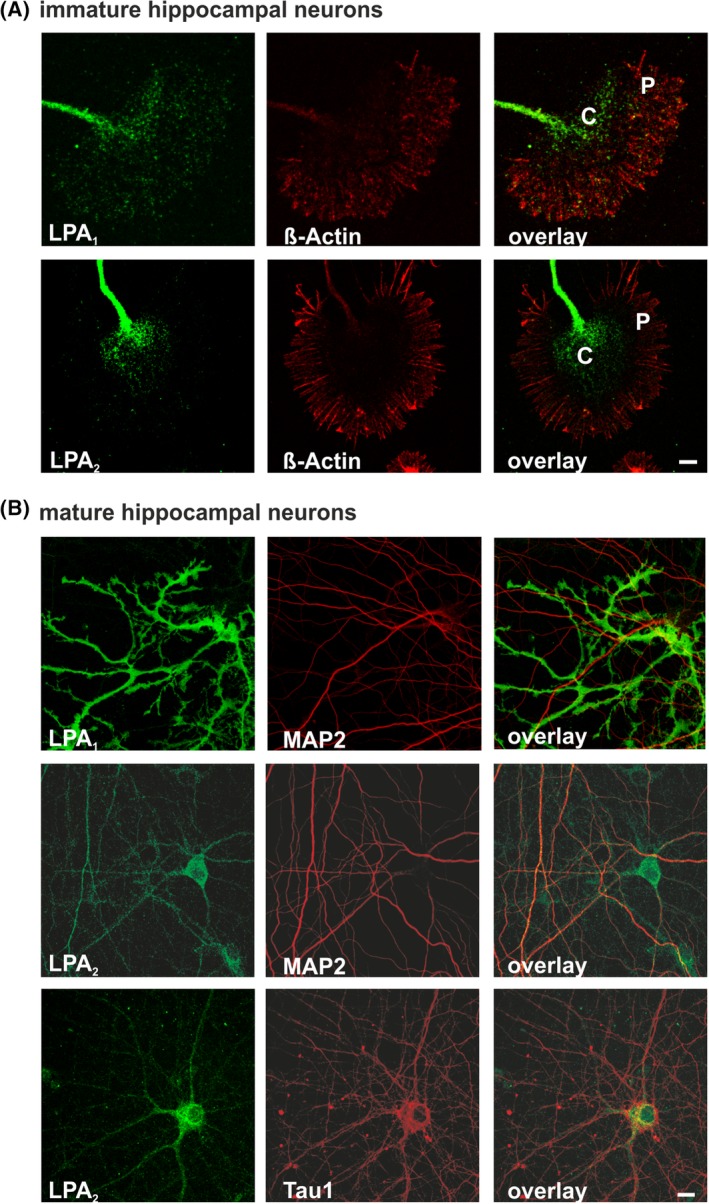
We show the expression pattern of LPA receptors during mouse brain development by using qRT-PCR, in situ hybridization, and immunocytochemistry. Only LPA , LPA LPA and LPA mRNA transcripts were detected throughout development stages from embryonic day 16 until postnatal day 30 of hippocampus, neocortex, cerebellum, and bulbus olfactorius in our experiments, while expression of LPA and LPA genes was below detection level. In addition to our qRT-PCR results, we also analyzed the cellular protein expression of endogenous LPA receptors, with focus on LPA and LPA within postnatal brain slices and primary neuron differentiation with and without cytoskeleton stabilization and destabilization.
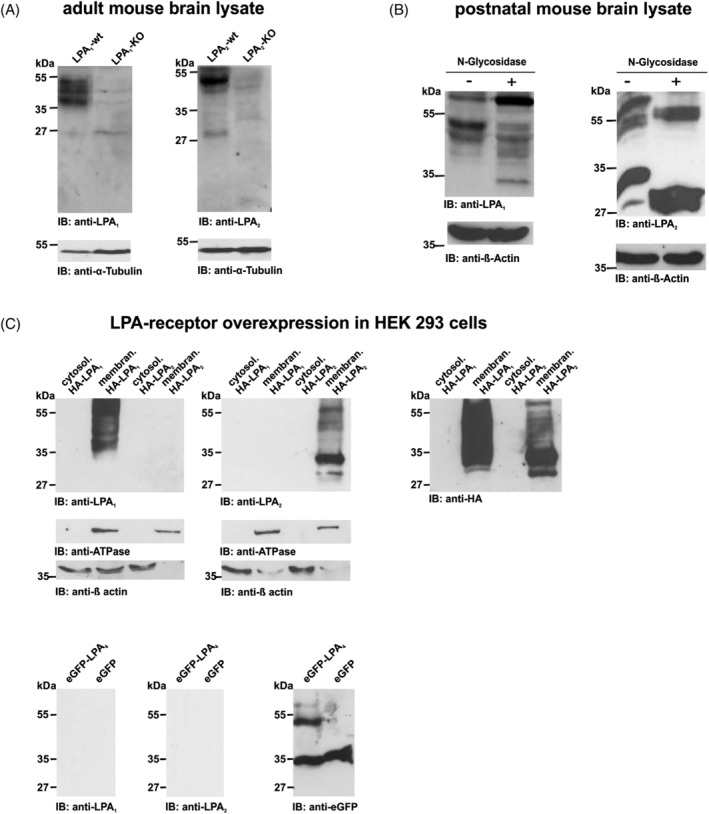
The expression of LPA receptors changes depends on the developmental stage in mouse brain and in cultured hippocampal primary neurons. Interestingly, we found that commercially available antibodies for LPA receptors are largely unspecific.
LPA 是一种小的生物活性磷脂,作为细胞外信号分子发挥作用,参与细胞增殖、迁移和分化等细胞过程。LPA 通过与至少六种已知的 G 蛋白偶联受体结合和激活来发挥作用:LPA1、LPA2、LPA3、LPA4、LPA5 和 LPA6。近年来,LPA 被认为在正常神经元发育以及神经系统的病理条件下发挥重要作用。
我们通过 qRT-PCR、原位杂交和免疫细胞化学技术,展示了 LPA 受体在小鼠大脑发育过程中的表达模式。在我们的实验中,LPA1、LPA2、LPA3、LPA4 和 LPA6 mRNA 转录本在胚胎第 16 天至出生后第 30 天的海马体、新皮层、小脑和嗅球的整个发育阶段均有检测到,而 LPA5 和 LPA6 基因的表达水平低于检测下限。除了 qRT-PCR 结果外,我们还分析了内源性 LPA 受体的细胞蛋白表达,重点是在出生后脑切片和原代神经元分化过程中,以及在细胞骨架稳定和不稳定的情况下,LPA 和 LPA 的表达。
LPA 受体的表达变化取决于小鼠大脑和培养的海马体原代神经元的发育阶段。有趣的是,我们发现市售的 LPA 受体抗体在很大程度上是特异性的。