Department of Biomedical and Applied Sciences, Indiana University School of Dentistry, Indianapolis, IN, 46202, USA.
Department of Anatomy and Cell Biology, Indiana University School of Medicine, Indianapolis, IN, 46202, USA.
Sci Rep. 2019 Mar 8;9(1):3920. doi: 10.1038/s41598-019-40553-2.
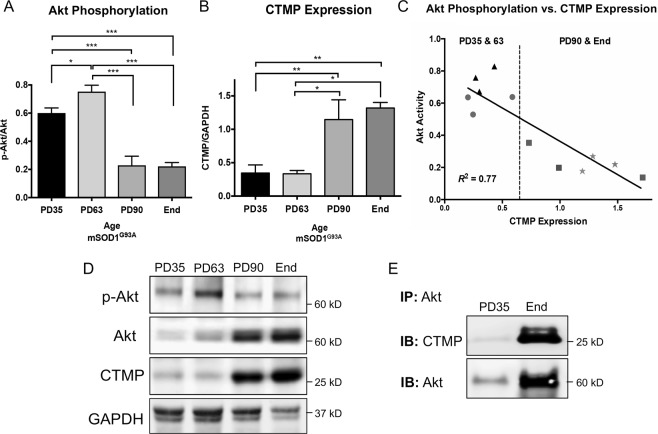
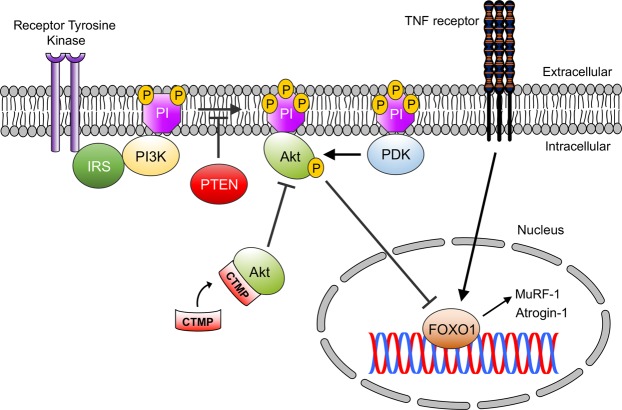
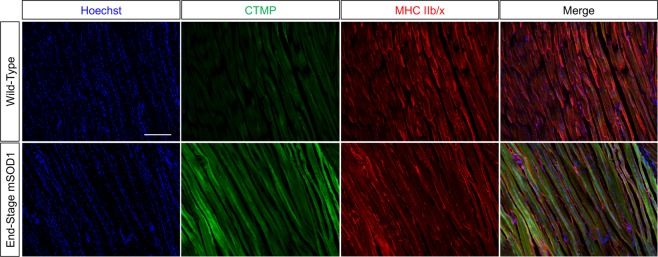
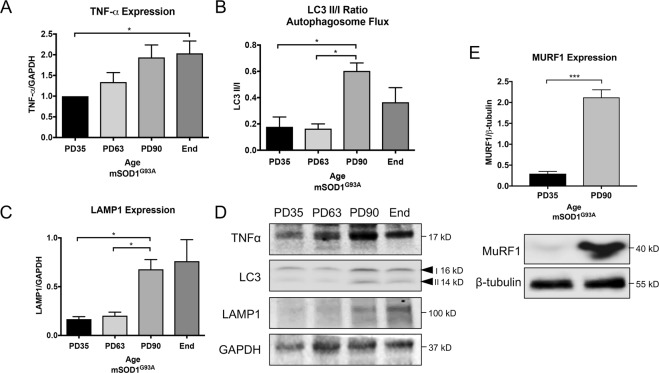
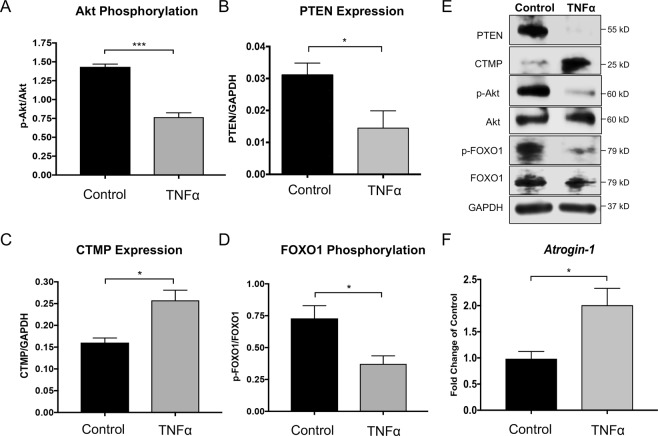
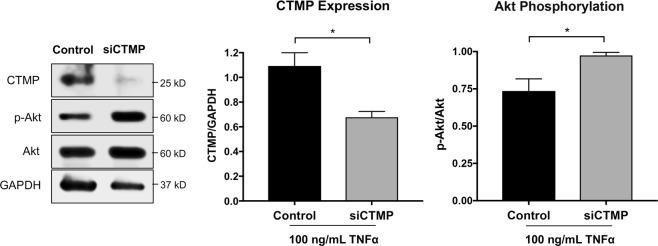
Amyotrophic lateral sclerosis (ALS) is a progressive neuromuscular disease involving motor neuron death, paralysis and, ultimately, respiratory failure. Motor neuron dysfunction leads to target skeletal muscle atrophy involving dysregulation of downstream cell survival, growth and metabolic signaling. Decreased Akt activity is linked to muscle atrophy in ALS and is associated with increased atrophy gene expression. Unfortunately, the regulating mechanism of Akt activity in atrophic muscle remains unclear. Recent research indicates a role of carboxyl-terminal modulator protein (CTMP) in Akt-signaling related neurologic dysfunction and skeletal muscle metabolism. CTMP is known to bind and reduce Akt phosphorylation and activation. We hypothesized that CTMP expression might progressively increase in ALS skeletal muscle as the disease progresses, downregulating Akt activity. We found that CTMP protein expression significantly increased in hindlimb skeletal muscle in the mSOD1 mouse model of ALS in late stages of the disease (P < 0.05), which negatively correlated with Akt phosphorylation over this period (R = -0.77). Co-immunoprecipitation of Akt revealed CTMP binding in pre-symptomatic and end-stage skeletal muscle, suggesting a possible direct role in reduced Akt signaling during disease progression. Inflammatory TNFα and downstream cellular degradation process markers for autophagy, lysosome production, and atrophy significantly increased in a pattern corresponding to increased CTMP expression and reduced Akt phosphorylation. In an in vitro model of skeletal muscle atrophy, differentiated C2C12 cells exhibited reduced Akt activity and decreased FOXO1 phosphorylation, a process known to promote transcription of atrophy genes in skeletal muscle. These results corresponded with increased Atrogin-1 expression compared to healthy control cells (P < 0.05). Transfection with CTMP siRNA significantly increased Akt phosphorylation in atrophic C2C12 cells, corresponding to significantly decreased CTMP expression. In conclusion, this is the first study to provide evidence for a link between elevated CTMP expression, downregulated Akt phosphorylation and muscle atrophy in ALS and clearly demonstrates a direct influence of CTMP on Akt phosphorylation in an in vitro muscle cell atrophy model.
肌萎缩侧索硬化症(ALS)是一种进行性神经肌肉疾病,涉及运动神经元死亡、瘫痪,最终导致呼吸衰竭。运动神经元功能障碍导致靶骨骼肌萎缩,涉及下游细胞存活、生长和代谢信号的失调。在 ALS 中,Akt 活性降低与肌肉萎缩有关,并且与萎缩基因表达增加有关。不幸的是,Akt 活性在萎缩肌肉中的调节机制仍不清楚。最近的研究表明,羧基末端调节剂蛋白(CTMP)在 Akt 信号相关的神经功能障碍和骨骼肌代谢中起作用。已知 CTMP 结合并减少 Akt 磷酸化和激活。我们假设随着疾病的进展,CTMP 的表达可能会在 ALS 骨骼肌中逐渐增加,从而下调 Akt 活性。我们发现,在 mSOD1 肌萎缩侧索硬化症小鼠模型的疾病后期(P<0.05),后肢骨骼肌中的 CTMP 蛋白表达显著增加,在此期间与 Akt 磷酸化呈负相关(R=-0.77)。 Akt 的共免疫沉淀显示 CTMP 在疾病早期和晚期骨骼肌中的结合,表明在疾病进展过程中,CTMP 可能在 Akt 信号转导降低中起直接作用。炎症性 TNFα和下游细胞降解过程标志物,如自噬、溶酶体产生和萎缩,在与 CTMP 表达增加和 Akt 磷酸化减少相对应的模式中显著增加。在骨骼肌萎缩的体外模型中,分化的 C2C12 细胞表现出 Akt 活性降低和 FOXO1 磷酸化减少,这一过程已知可促进骨骼肌中萎缩基因的转录。与健康对照细胞相比(P<0.05),这些结果对应于 Atrogin-1 表达的增加。CTMP siRNA 的转染显著增加了萎缩的 C2C12 细胞中的 Akt 磷酸化,相应地显著降低了 CTMP 的表达。总之,这是第一项研究提供了证据表明 ALS 中 CTMP 表达升高、Akt 磷酸化下调和肌肉萎缩之间存在联系,并清楚地表明 CTMP 在体外肌肉细胞萎缩模型中对 Akt 磷酸化有直接影响。