The Donnelly Center for Cellular and Biomolecular Research, University of Toronto, 160 College Street, Toronto, Ontario M5S3E1, Canada.
Department of Molecular and Cellular Biology, College of Biological Science, University of Guelph, 50 Stone Rd E., Guelph, Ontario N1G2W1, Canada.
Pharmacol Ther. 2019 Jul;199:139-154. doi: 10.1016/j.pharmthera.2019.03.003. Epub 2019 Mar 7.
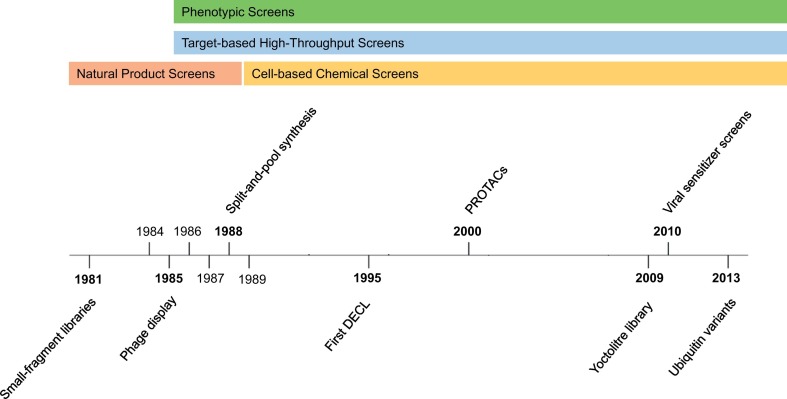
Development of effective cancer therapeutic strategies relies on our ability to interfere with cellular processes that are dysregulated in tumors. Given the essential role of the ubiquitin proteasome system (UPS) in regulating a myriad of cellular processes, it is not surprising that malfunction of UPS components is implicated in numerous human diseases, including many types of cancer. The clinical success of proteasome inhibitors in treating multiple myeloma has further stimulated enthusiasm for targeting UPS proteins for pharmacological intervention in cancer treatment, particularly in the precision medicine era. Unfortunately, despite tremendous efforts, the paucity of potent and selective UPS inhibitors has severely hampered attempts to exploit the UPS for therapeutic benefits. To tackle this problem, many groups have been working on technology advancement to rapidly and effectively screen for potent and specific UPS modulators as intracellular probes or early-phase therapeutic agents. Here, we review several emerging technologies for developing chemical- and protein-based molecules to manipulate UPS enzymatic activity, with the aim of providing an overview of strategies available to target ubiquitination for cancer therapy.
开发有效的癌症治疗策略依赖于我们干扰肿瘤中失调的细胞过程的能力。鉴于泛素蛋白酶体系统 (UPS) 在调节众多细胞过程中的重要作用,UPS 组件的功能障碍与许多人类疾病有关,包括许多类型的癌症,这并不奇怪。蛋白酶体抑制剂在治疗多发性骨髓瘤方面的临床成功进一步激发了人们对针对 UPS 蛋白进行药物干预以治疗癌症的热情,特别是在精准医疗时代。不幸的是,尽管付出了巨大的努力,但缺乏有效和选择性的 UPS 抑制剂严重阻碍了利用 UPS 获得治疗益处的尝试。为了解决这个问题,许多研究小组一直在致力于技术进步,以快速有效地筛选有效的和特异性的 UPS 调节剂作为细胞内探针或早期治疗剂。在这里,我们综述了几种新兴的开发化学和蛋白质基分子的技术,以操纵 UPS 的酶活性,旨在提供针对泛素化治疗癌症的策略概述。