Department of Cellular Biology and Pharmacology, Herbert Wertheim College of Medicine, Florida International University, Miami, FL 33199, USA.
Department of Cellular Biology and Pharmacology, Herbert Wertheim College of Medicine, Florida International University, Miami, FL 33199, USA.
Environ Int. 2019 May;126:585-597. doi: 10.1016/j.envint.2019.02.058. Epub 2019 Mar 8.
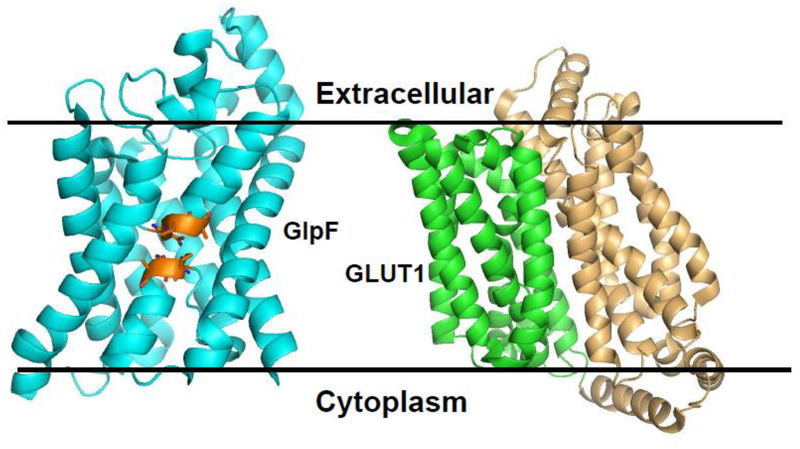
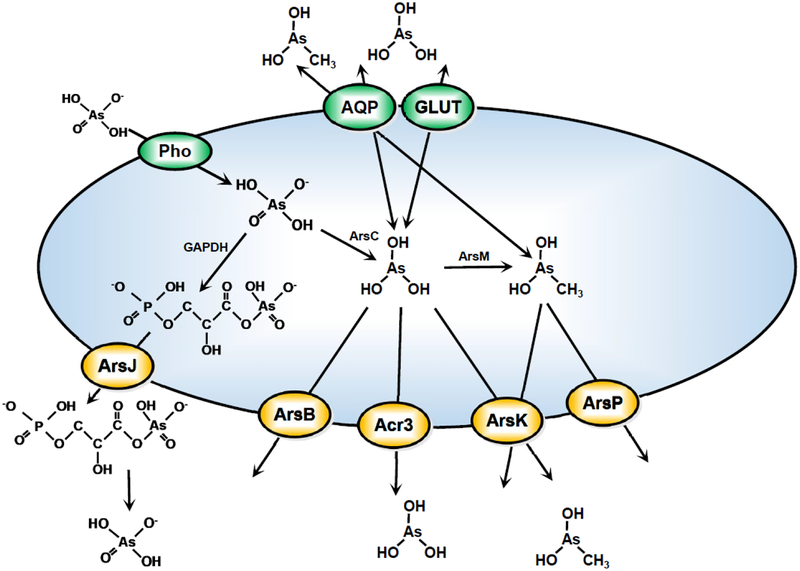
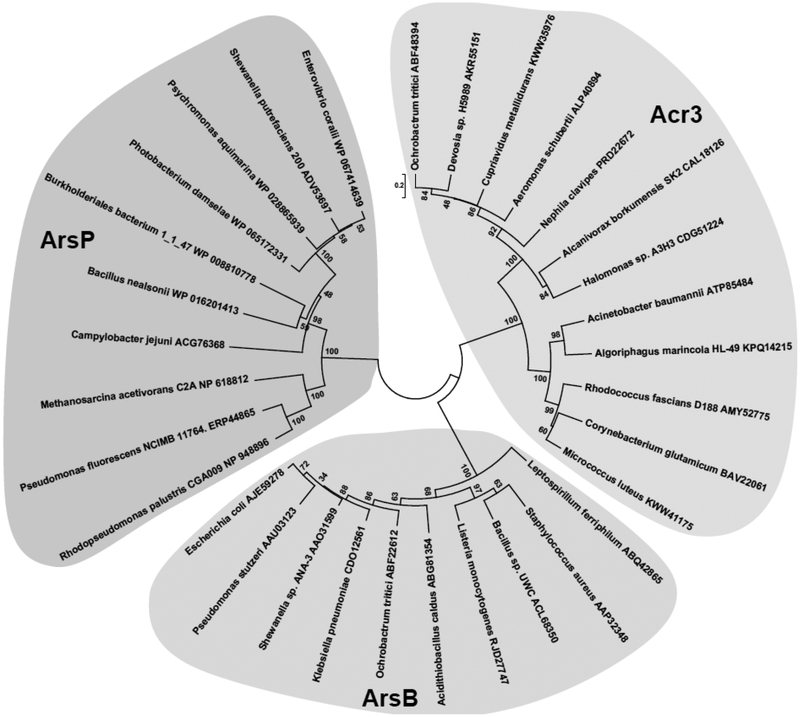
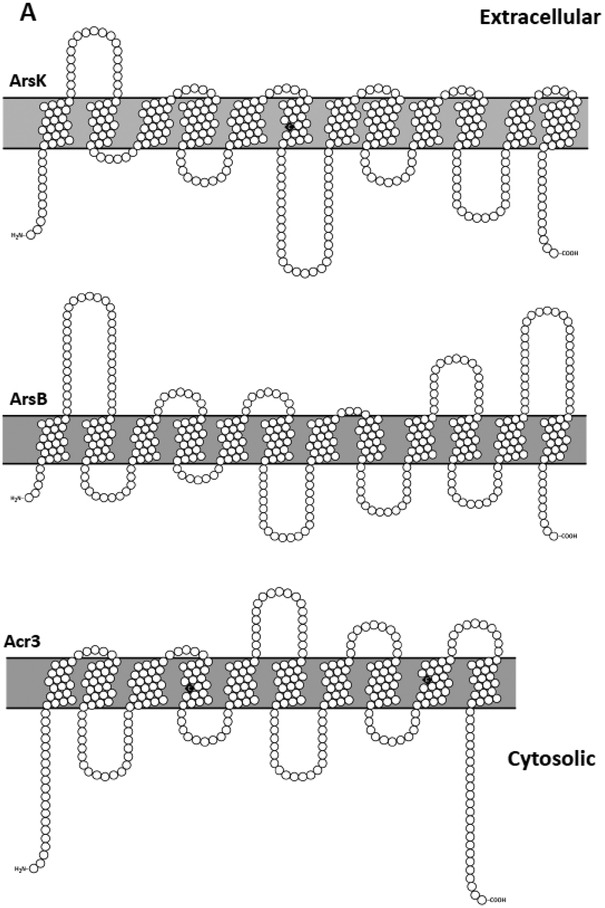
Arsenic is a non-essential, environmentally ubiquitous toxic metalloid. In response to this pervasive environmental challenge, organisms evolved mechanisms to confer resistance to arsenicals. Inorganic pentavalent arsenate is taken into most cells adventitiously by phosphate uptake systems. Similarly, inorganic trivalent arsenite is taken into most cells adventitiously, primarily via aquaglyceroporins or sugar permeases. The most common strategy for tolerance to both inorganic and organic arsenicals is by efflux that extrude them from the cytosol. These efflux transporters span across kingdoms and belong to various families such as aquaglyceroporins, major facilitator superfamily (MFS) transporters, ATP-binding cassette (ABC) transporters and potentially novel, yet to be discovered families. This review will outline the properties and substrates of known arsenic transport systems, the current knowledge gaps in the field, and aims to provide insight into the importance of arsenic transport in the context of the global arsenic biogeocycle and human health.
砷是一种非必需的、环境中普遍存在的有毒类金属元素。为了应对这种普遍存在的环境挑战,生物体进化出了抵抗砷化物的机制。无机五价砷酸盐通过磷酸盐摄取系统偶然进入大多数细胞。同样,无机三价亚砷酸盐也偶然地通过水通道蛋白或糖渗透酶进入大多数细胞。对无机和有机砷化物的耐受性的最常见策略是通过外排将它们从细胞质中排出。这些外排转运蛋白跨越各个领域,属于各种家族,如水通道蛋白、主要易化因子超家族(MFS)转运蛋白、ATP 结合盒(ABC)转运蛋白,以及可能尚未发现的新家族。本综述将概述已知砷转运系统的特性和底物、该领域目前的知识空白,并旨在深入了解砷转运在全球砷生物地球化学循环和人类健康中的重要性。